
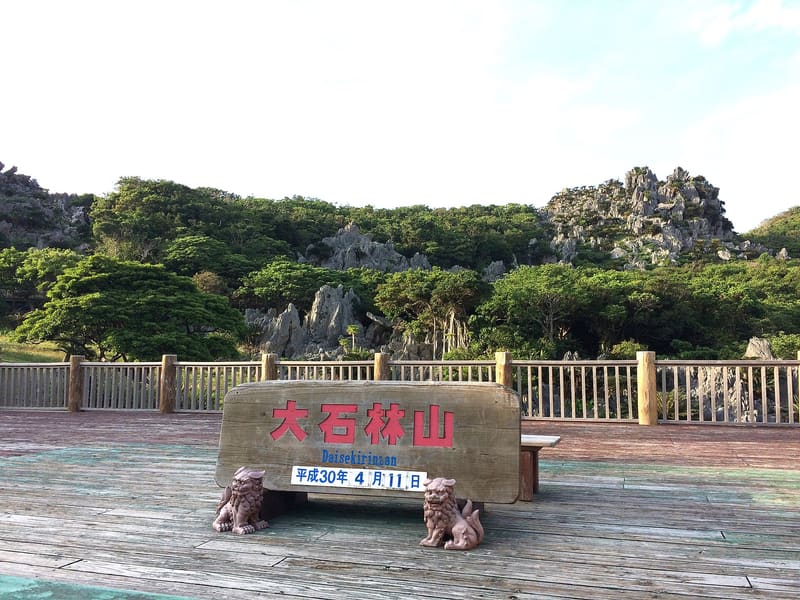
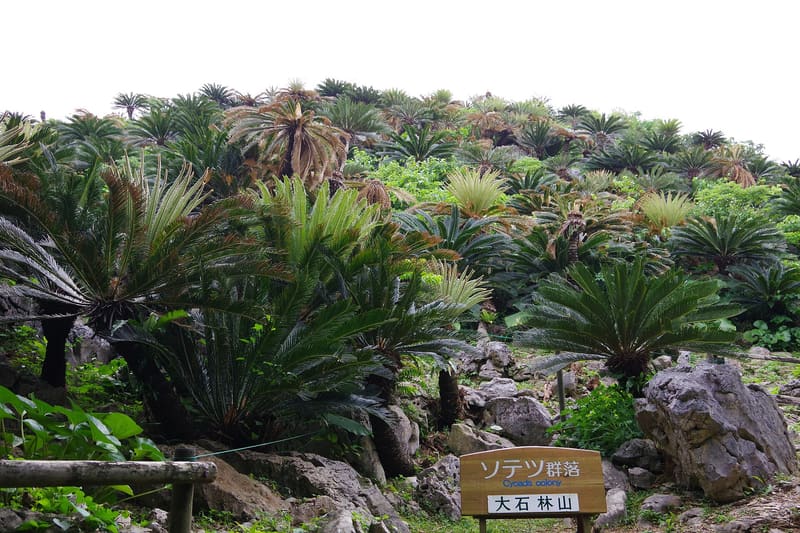
The limestone is two hundred and fifty million years old, and people still pray at sixty spots.
You leave the car at the ticket office and a shuttle takes you up to the top, to the start of the trails. From there the rocks rise in blades and towers and the gajumaru grow on top of them, pushing their roots into the cracks. There are four routes and walkers choose: half an hour, an hour, or the full loop. In winter, from the high point, you can see whales passing and make out Yoron and Okinoerabu.
It is Mount Asumui, which the kingdom's chronicle names as the first sacred place consecrated by Amamikyo, the deity from whom, according to myth, the islands descend. The rock is Palaeozoic limestone raised from the sea floor and shaped into karst forms; the trail with its facilities dates from 2002. It lies within Yanbaru National Park, inscribed as a natural World Heritage Site in 2021. On 17 February 2026 the forest of Hedo was added to the national Place of Scenic Beauty ‘Amamikunumui’, designated in 2015.
ℹ️ Open 9:30–17:30 all year round, last entry at 16:00. Two thousand five hundred yen from age fifteen, one thousand from six to fourteen, free for preschool children: this covers entry, shuttle, audio guide and use of the hall. Booking is not required. ⭐ There is a barrier-free route and there are wheelchairs to borrow; the other trails have steps and changes in level. ⚠️ There are no toilets along the route. You need closed shoes. Cape Hedo, already on the map, is a few minutes away by car.
Holidays in Japan? Plan them with us.Over 2,000 real places, a day-by-day itinerary.FreeOpen the map →Sources: asmui.com · kunishitei.bunka.go.jp · nippon.com · 4travel.jp
Nearby
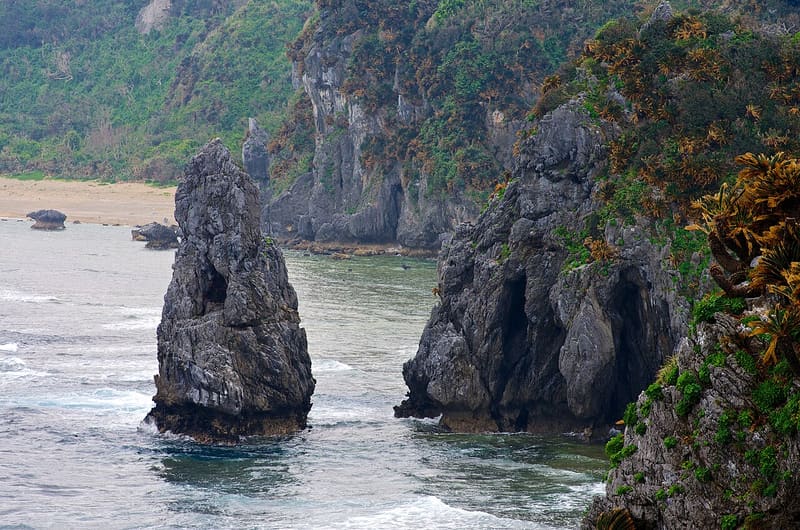 Cape Hedo1.8 kmphoto by FoxyStranger Kawasaki · CC BY-SA 3.0
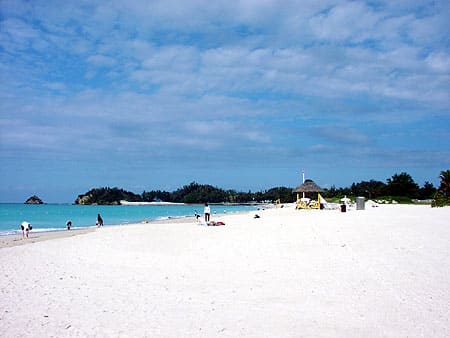 Okuma Beach16.4 kmphoto by N · Public domain
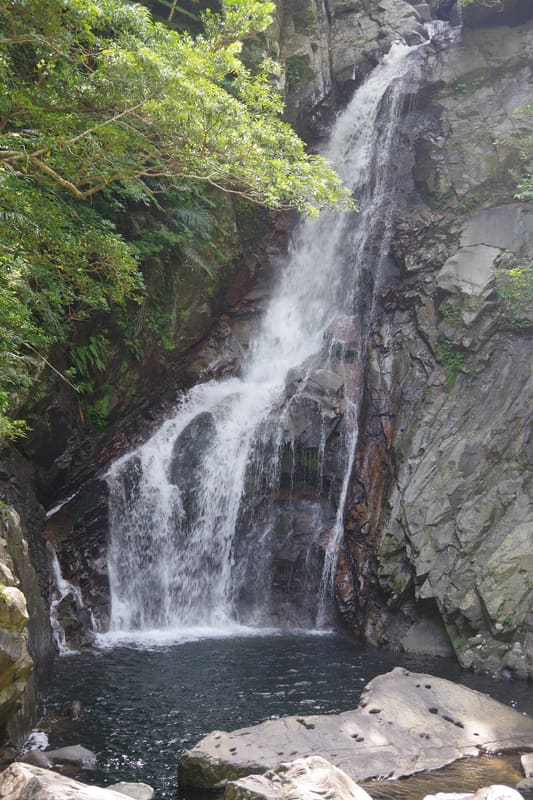 Hiji Falls17.8 kmphoto by Kugel~commonswiki · CC BY-SA 4.0