
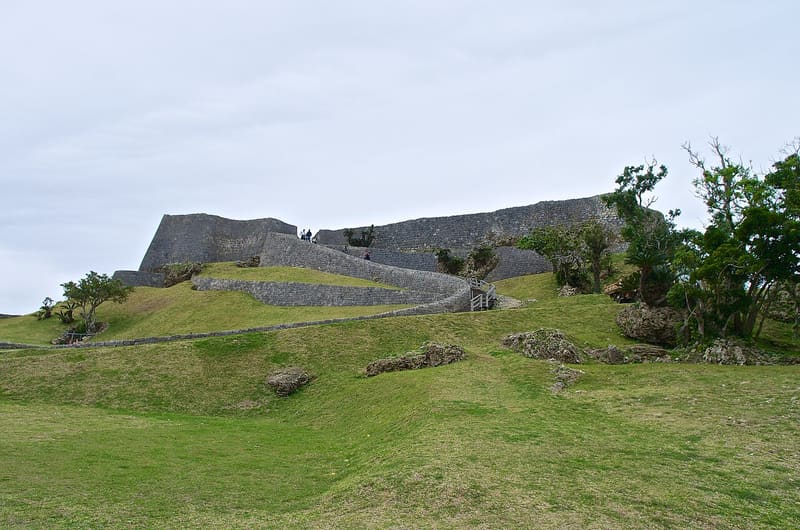
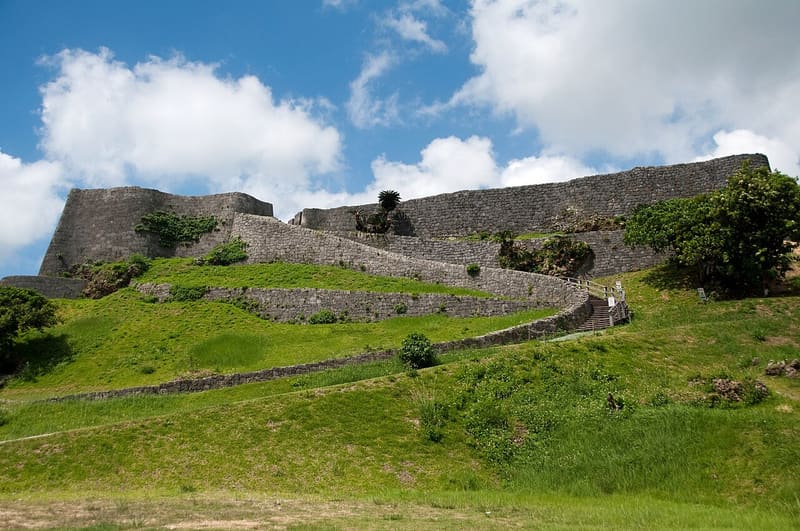
From among these stones came the first coins of the Roman Empire ever found in Japan.
The Roman coins are the reason this place stopped being one castle among many: they show that the trade reaching here came from much further away than was thought. The man who handled them was Amawari, the lord who made Katsuren's fortune through overseas trade and who in 1458 attacked Nakagusuku, lost to the king's forces and was destroyed together with his castle. The ruins stand on a narrow ridge and you climb them terrace by terrace: from the top you can see both coasts at once.
One of the gusuku, the stone castles of the Ryukyu kingdom (independent until 1879), built on a limestone hill overlooking the isthmus, in a position that served trade more than defence. The museum at the foot of the climb, Amawari Park, holds the finds from the excavations and tells the story from the point of view of the defeated lord, who in the ancient songs of Okinawa is a hero and in the court chronicles a traitor.
ℹ️ Admission 600 yen from high school upwards (480 for groups), 400 up to junior high (320 for groups); preschool children and students resident in Uruma enter free. Open 9:00–18:00, last entry 17:30, all year except closures for maintenance. The ticket includes the permanent exhibition. The climb is in terraces and is not short.
Holidays in Japan? Plan them with us.Over 2,000 real places, a day-by-day itinerary.FreeOpen the map →Sources: katsuren-jo.jp · city.uruma.lg.jp · okinawastory.jp · city.uruma.lg.jp
Nearby
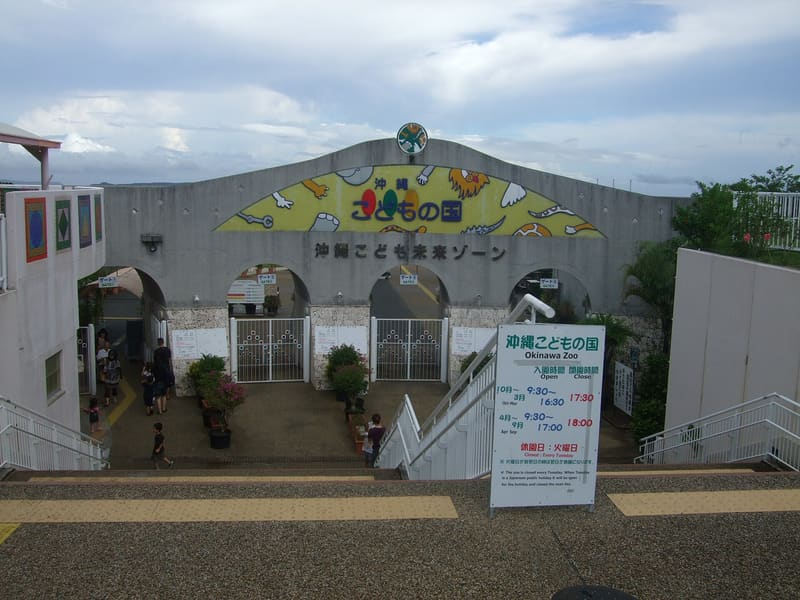 Okinawa Kodomo no Kuni7.7 kmphoto by 地図帳 が撮影 · CC BY-SA 3.0
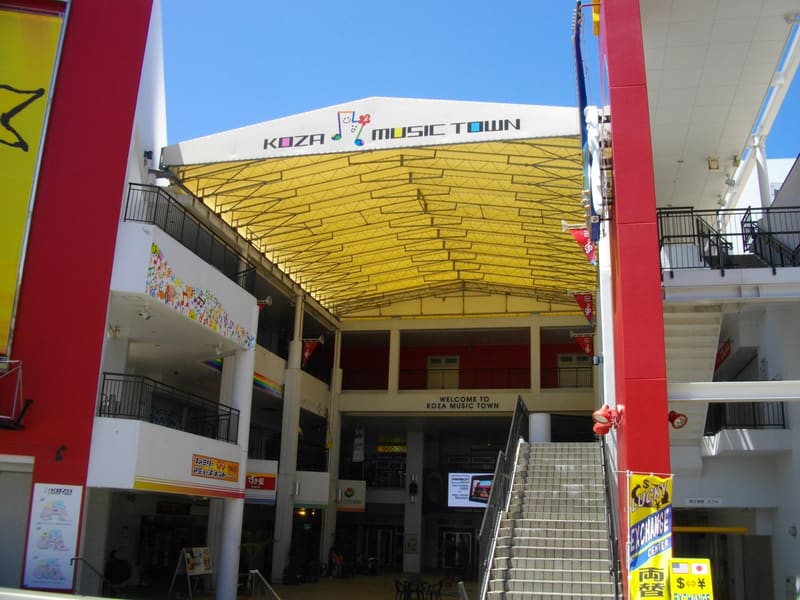 Koza Music Town and the Peaceful Love Rock Festival8.1 kmphoto by Abasaa · Public domain
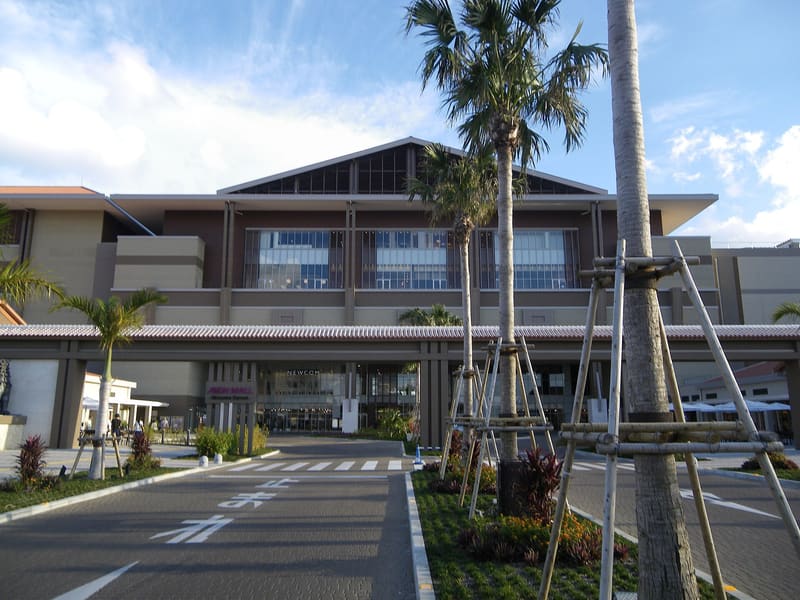 AEON Mall Okinawa Rycom8.7 kmphoto by Kugel~commonswiki · CC BY-SA 4.0
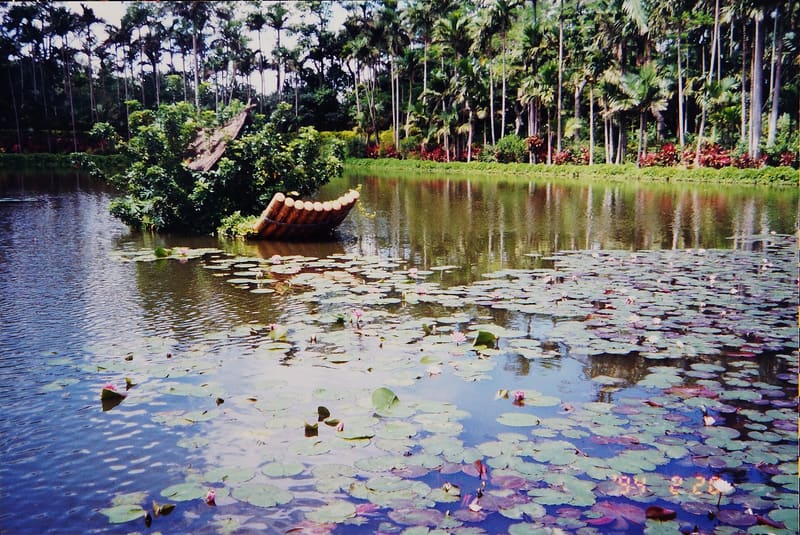 Southeast Botanical Gardens8.9 kmphoto by lienyuan lee · CC BY 3.0