The Anime Trip
🌐 EN ▾
ItalianoEnglish繁體中文(台灣)繁體中文(香港)日本語
PLAN YOUR TRIPMy tripSign in / Sign upSign in / Sign up
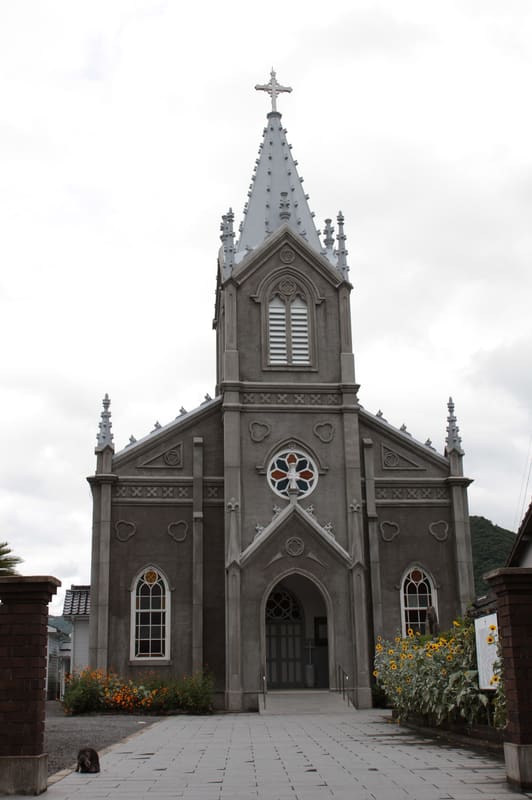
Sakitsu Church
photo by Norio NAKAYAMA · CC BY-SA 2.0
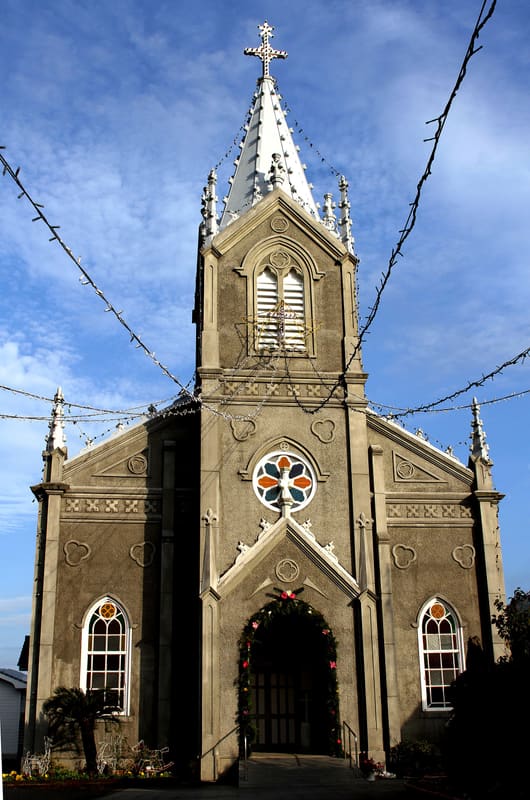
Sakitsu Church
photo by 米田賢一 · CC BY 3.0

The altar of the church rebuilt in 1934 stands exactly where, centuries earlier, the people of the village were forced to trample on sacred images to prove they were not Christian, and the floor, unique for a church, is covered with tatami.

The first Sakitsu church, made of wood, dates from 1888; the present one, in Gothic style, was rebuilt in 1934 on the land of the former residence of the village headman, to a design by the architect Tetsukawa Yosuke. In 2018 it became part of the UNESCO site of the hidden Christians of the Nagasaki and Amakusa region, together with the other elements of the Sakitsu settlement.

A Catholic church in the fishing village of Sakitsu (天草市河浦町崎津539), on the island of Amakusa. The first wooden church was built in 1888; the present building, in Gothic style with a wood and concrete structure, was rebuilt in 1934 on the site of the former residence of the village headman (庄屋役宅跡), to a design by the architect Tetsukawa Yosuke. It is unusual for its tatami-floored interior, and for the position of the altar: it stands on the spot where, during the period when Christianity was banned, the e-fumi were held, the loyalty tests that required people to trample on sacred images. In 2018 the church became part, as the Sakitsu component, of the UNESCO World Heritage Site ‘Hidden Christian Sites in the Nagasaki Region’.

ℹ️ Free admission, but visits require advance booking; it is closed during religious services, weddings and funerals, as well as on 31 December and 1 January. The published opening hours do not match (9:00–17:00 according to t-island.jp, 9:00–18:00 according to oratio.jp). Photography is not allowed inside; photos from outside require prior written permission, and drones only in authorised areas. No car park on site: there are free parking areas about 3 minutes' walk away.

Holidays in Japan? Plan them with us.Over 2,000 real places, a day-by-day itinerary.FreeOpen the map →

Sources: kirishitan.jp · city.amakusa.kumamoto.jp · en.wikipedia.org · wikidata.org · oratio.jp · t-island.jp

All series · Open the map

Sakitsu Church
Open on the mapwith over 1,800 wonders of Japan
Sakitsu Church
photo by Norio NAKAYAMA · CC BY-SA 2.0
Sakitsu Church
photo by 米田賢一 · CC BY 3.0

The altar of the church rebuilt in 1934 stands exactly where, centuries earlier, the people of the village were forced to trample on sacred images to prove they were not Christian, and the floor, unique for a church, is covered with tatami.

The first Sakitsu church, made of wood, dates from 1888; the present one, in Gothic style, was rebuilt in 1934 on the land of the former residence of the village headman, to a design by the architect Tetsukawa Yosuke. In 2018 it became part of the UNESCO site of the hidden Christians of the Nagasaki and Amakusa region, together with the other elements of the Sakitsu settlement.

A Catholic church in the fishing village of Sakitsu (天草市河浦町崎津539), on the island of Amakusa. The first wooden church was built in 1888; the present building, in Gothic style with a wood and concrete structure, was rebuilt in 1934 on the site of the former residence of the village headman (庄屋役宅跡), to a design by the architect Tetsukawa Yosuke. It is unusual for its tatami-floored interior, and for the position of the altar: it stands on the spot where, during the period when Christianity was banned, the e-fumi were held, the loyalty tests that required people to trample on sacred images. In 2018 the church became part, as the Sakitsu component, of the UNESCO World Heritage Site ‘Hidden Christian Sites in the Nagasaki Region’.

ℹ️ Free admission, but visits require advance booking; it is closed during religious services, weddings and funerals, as well as on 31 December and 1 January. The published opening hours do not match (9:00–17:00 according to t-island.jp, 9:00–18:00 according to oratio.jp). Photography is not allowed inside; photos from outside require prior written permission, and drones only in authorised areas. No car park on site: there are free parking areas about 3 minutes' walk away.

Holidays in Japan? Plan them with us.Over 2,000 real places, a day-by-day itinerary.FreeOpen the map →

Sources: kirishitan.jp · city.amakusa.kumamoto.jp · en.wikipedia.org · wikidata.org · oratio.jp · t-island.jp