
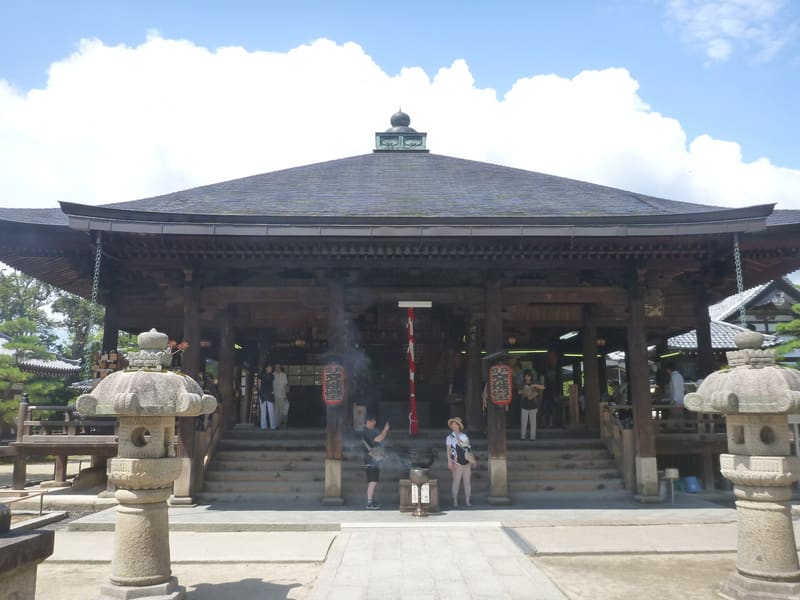
The largest gate in Tango: three passageways, two storeys, sixteen disciples upstairs.
You come out of the station, walk five minutes among the teahouses and find yourself beneath the gate: two storeys, three passageways side by side, the largest in the whole Tango region. On the upper floor are the historical Buddha and the sixteen rakan, the disciples who by tradition guard his teaching. Students who come to ask to pass their exams walk past the front of the gate.
One of the three temples in Japan dedicated to Monju, the bodhisattva of wisdom (a figure in Buddhism who stopped short of enlightenment in order to help others). It stands at the foot of the swing bridge, at the southern end of the sandbar. Its gate, called 黄金閣, is the largest in the Tango region: Zen style, three bays and two storeys, with the Shaka Buddha and the sixteen rakan on the upper floor, and it is a cultural property designated by the municipality. The origin the temple tells is the *Kusetoengi*: an evil dragon was ravaging this coast, and Monju was summoned from Mount Wutai, in China, to convert it.
ℹ️ Free entry and no closing time for the grounds; amulets are sold from 8:00 to 17:00. Paid car park. Five minutes’ walk from the station: it is the stop you make as you get off the train, without organising anything. ⚠️ Not to be confused with Chion-in in Kyoto or with Chion-ji in Hyakumanben, also in Kyoto: they are three different places with names that look alike.
🚉 Amanohashidate · 7 min walk
Holidays in Japan? Plan them with us.Over 2,000 real places, a day-by-day itinerary.FreeOpen the map →Sources: uminokyoto.jp
Nearby
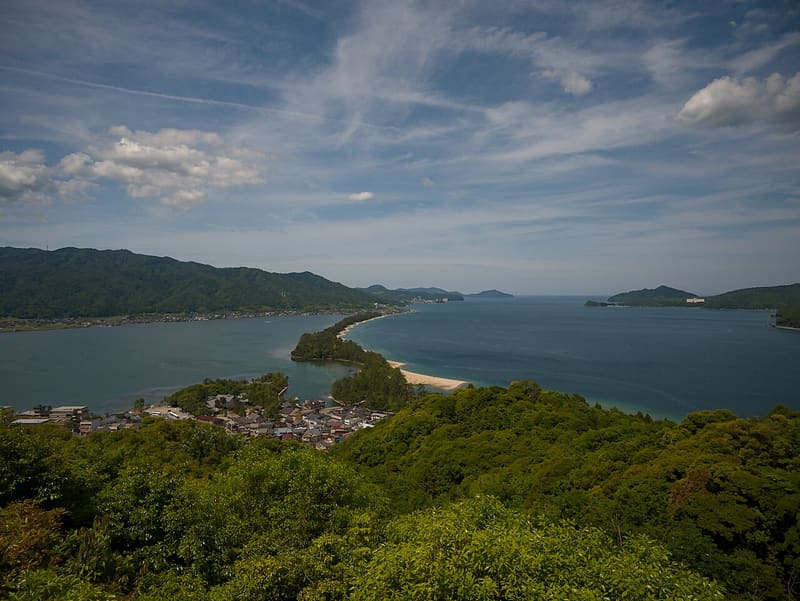 Amanohashidate700 mphoto by 808PhatBeats · CC0
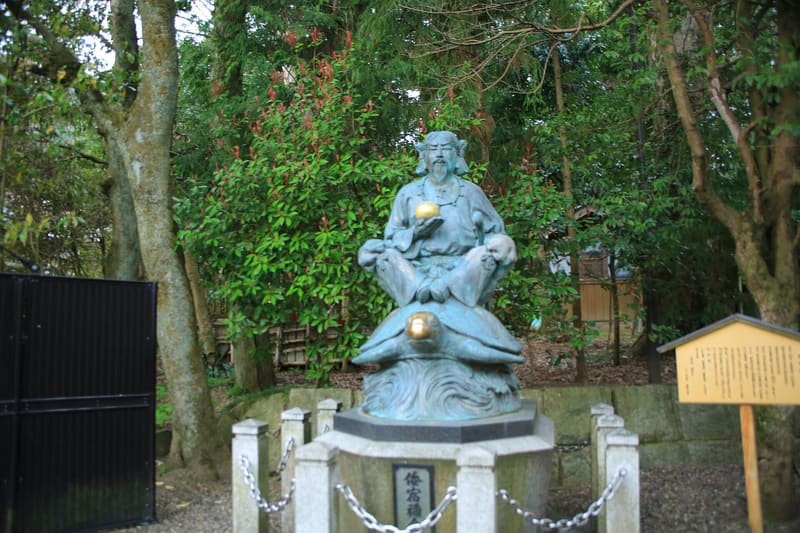 Motoise Kono-jinja2.9 kmphoto by Ray Swi-hymn from Sijhih-Taipei, Taiwan · CC BY-SA 2.0
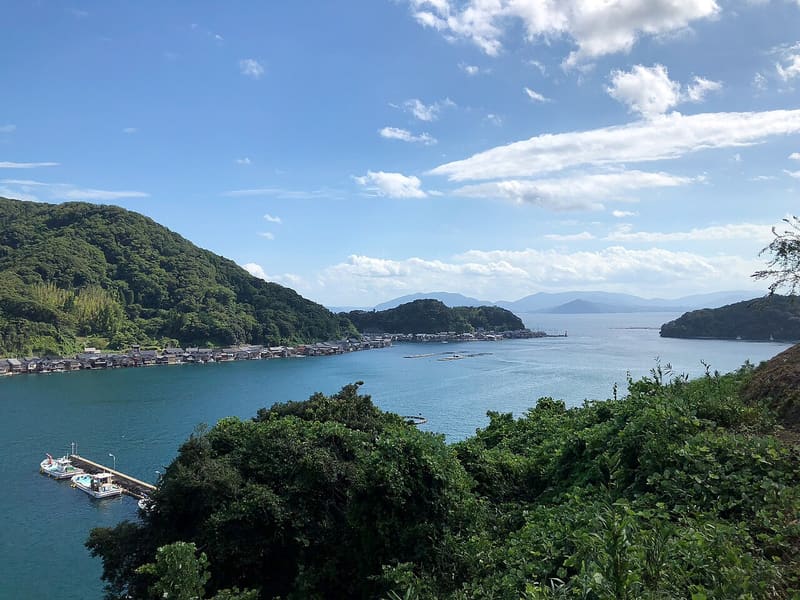 Ine no Funaya16.3 kmphoto by AsPJT · CC0
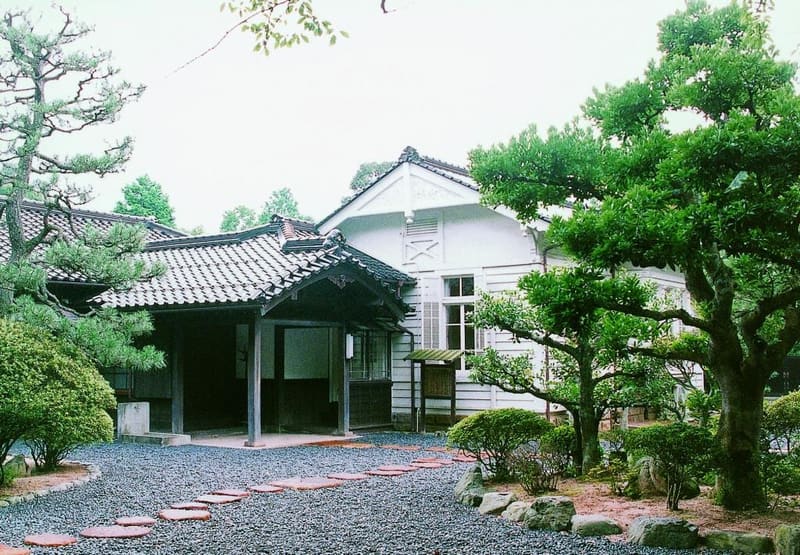 Togo-tei — former residence of the Maizuru naval commander18.9 km