
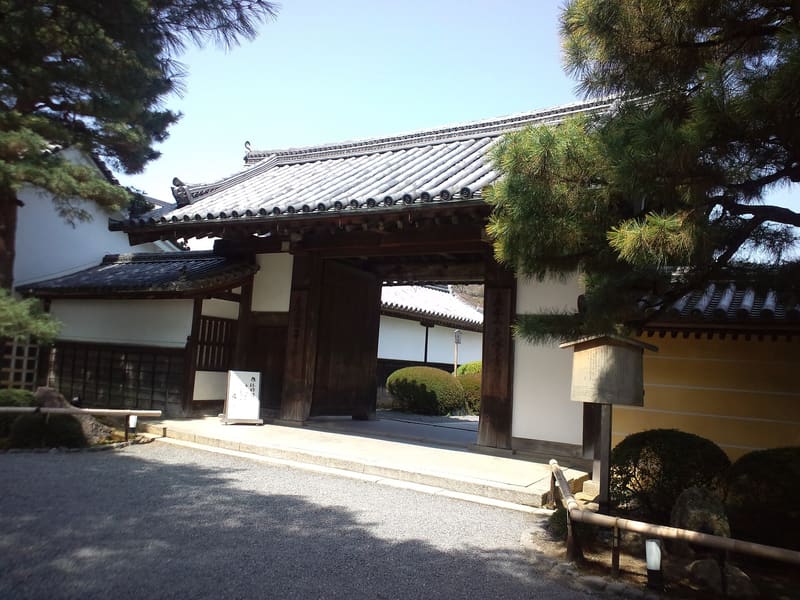
Not prayer halls but rooms of the court, and you walk without shoes along the wooden corridors.
You take off your shoes at the entrance and walk along the wooden corridors that link one room to the next: not prayer halls but living quarters in a row, with sliding walls painted on gold leaf. Outside, you can walk round Ōsawa Pond in half an hour. Flower arrangements are everywhere: it is the headquarters of a school of ikebana.
It began as a villa of Emperor Saga, in the early Heian period, and became a temple later: that is why inside it has the layout of a palace and not of a monastery. The Ōsawa, the pond dug for that villa in the ninth century, is one of the oldest water gardens in Japan. The temple is the headquarters of a school of ikebana, the Japanese art of arranging flowers.
ℹ️ The two areas are paid for separately. The halls: 9:00–17:00, reception until 16:30, ¥800 adults and ¥400 students; sutra copying is accepted until 15:30. Ōsawa Pond: same hours, ⚠️ and here the price is ambiguous on the same official page: it shows both ¥500 adults and ¥100 students, and an item of ¥200 as a maintenance contribution. Ask at the ticket office. ⚠️ The combined ticket with Giō-ji is given as ¥600 here and ¥1,000 on the Giō-ji page. Open all year except during internal ceremonies. From JR Saga-Arashiyama Station it is fifteen minutes’ walk; the car park has thirty spaces and costs ¥500 for two hours.
🚉 Saga-Arashiyama · 16 min walk
Holidays in Japan? Plan them with us.Over 2,000 real places, a day-by-day itinerary.FreeOpen the map →Sources: daikakuji.or.jp · daikakuji.or.jp
Nearby
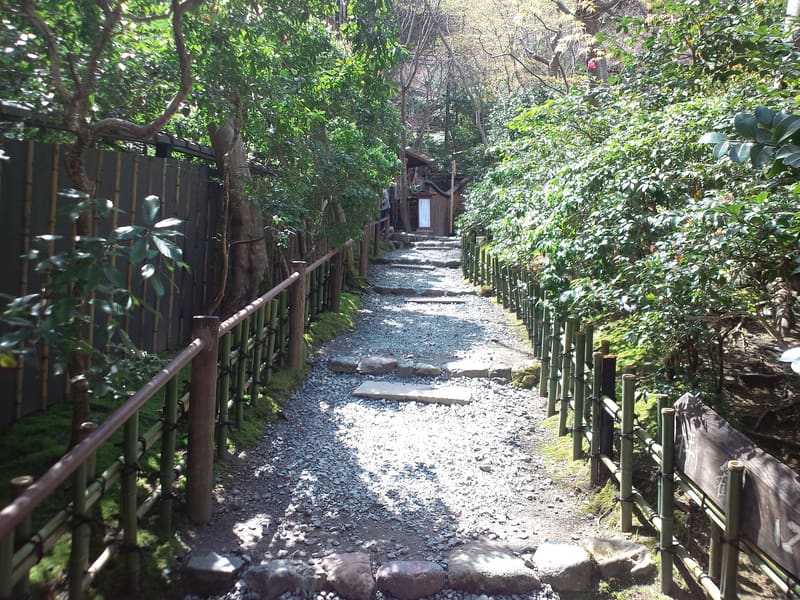 Giō-ji1.3 kmphoto by Yanajin33 · CC BY-SA 3.0
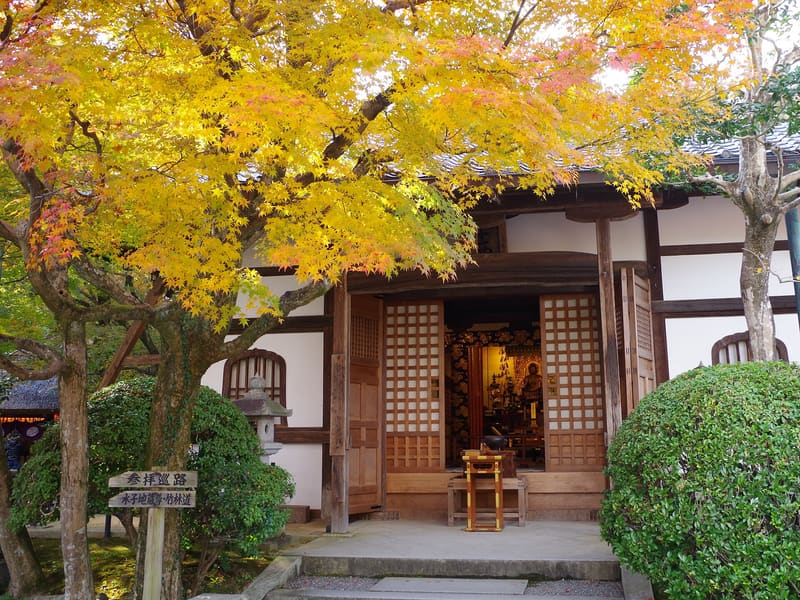 Adashino Nenbutsu-ji1.4 kmphoto by Nankou Oronain (as36… · CC BY-SA 3.0
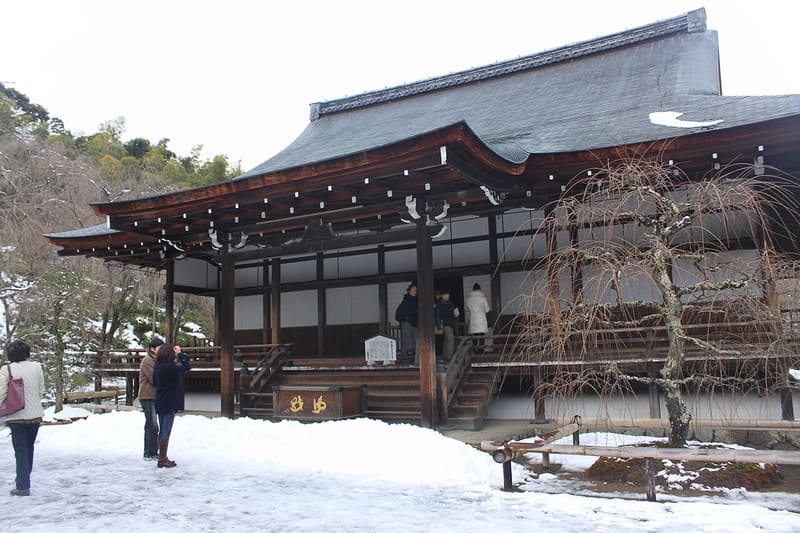 Tenryu-ji1.5 kmphoto by くろふね · CC BY 3.0
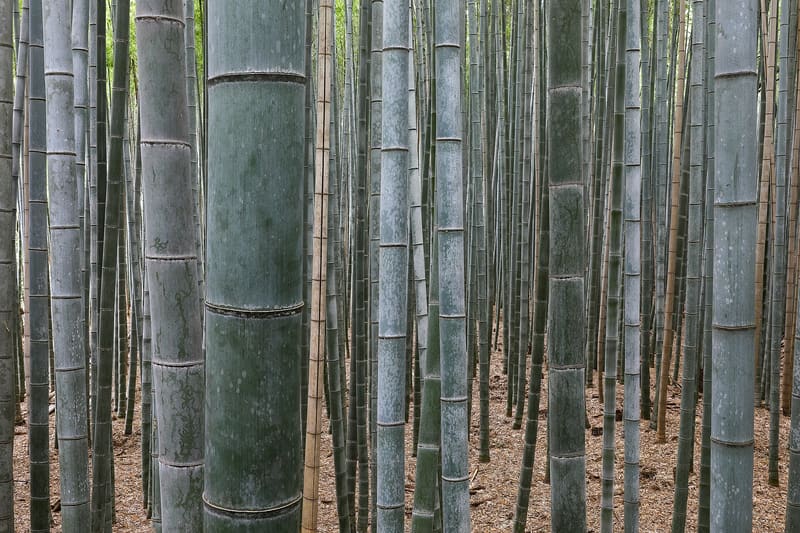 Arashiyama Bamboo Path1.5 kmphoto by Basile Morin · CC BY-SA 4.0