
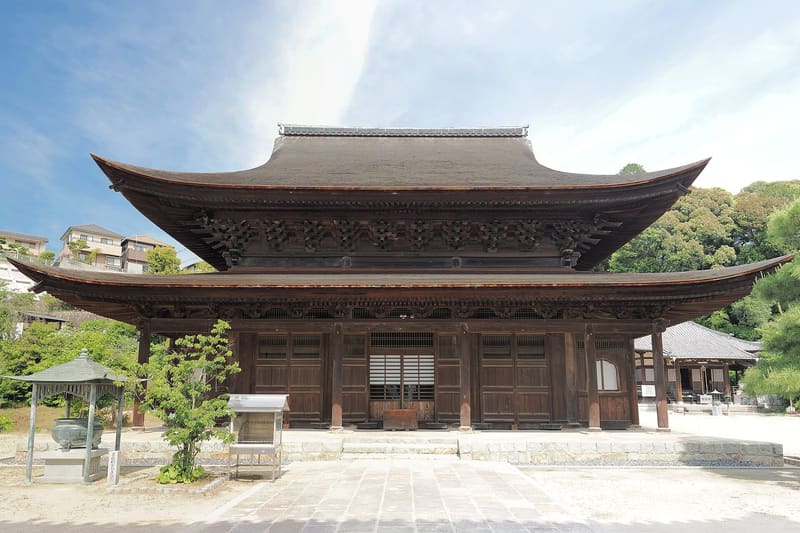
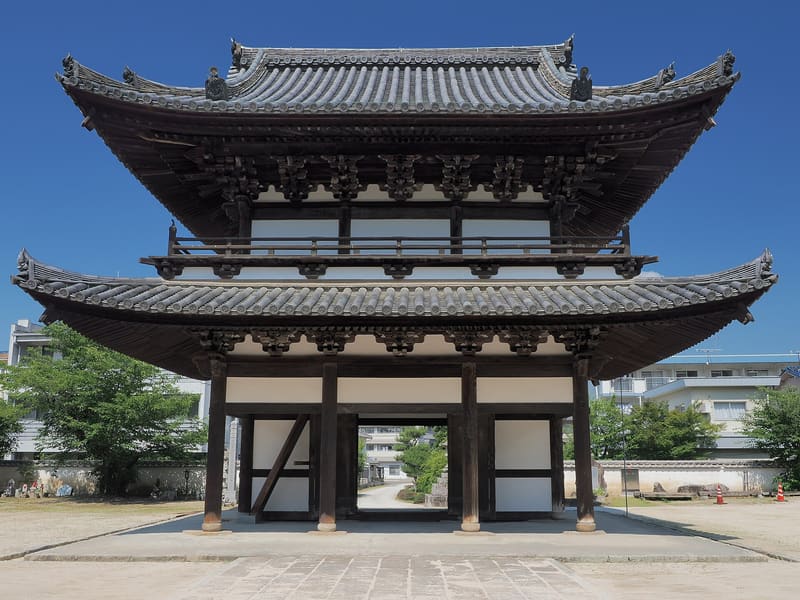
At 3.9 km from the hypocentre its roof was damaged, but it remains the only National Treasure in the city to have survived.
Get off at Fudoin-mae Station on the Astram Line and, a few steps away, you find the kondō (金堂): the largest hall in Tang-style architecture (karayō) in the whole of Japan, the only National Treasure in the city to have survived, open at all times and with no ticket.
A Shingon temple dedicated to Yakushi Nyorai, founded in the fourteenth century as one of the Ankokuji that Ashikaga Takauji established throughout Japan; it later fell into decline and was restored in the Sengoku period by Ankokuji Ekei. The kondō was built in 1540 in Yamaguchi by the Ōuchi clan for the Kōseki-ji temple, and was moved here in the Tenshō period (1573–1592) by the same Ankokuji Ekei, a monk-diplomat of the Mōri, who restored the decayed temple. On 6 August 1945, about 3.9 km from the hypocentre, a hill shielded it from the blast: the roof was damaged and a central pillar broke, but the building neither burned nor collapsed, and it remained the only National Treasure in the city to have survived (designation confirmed on 8 February 1958).
ℹ️ Free entry to the temple grounds, no fixed hours, no closing days (境内自由, 無休). A few steps from Fudoin-mae Station on the Astram Line.
🚉 Fudōin-mae · 5 min walk
Holidays in Japan? Plan them with us.Over 2,000 real places, a day-by-day itinerary.FreeOpen the map →Sources: ja.wikipedia.org · rurubu.jp
Nearby
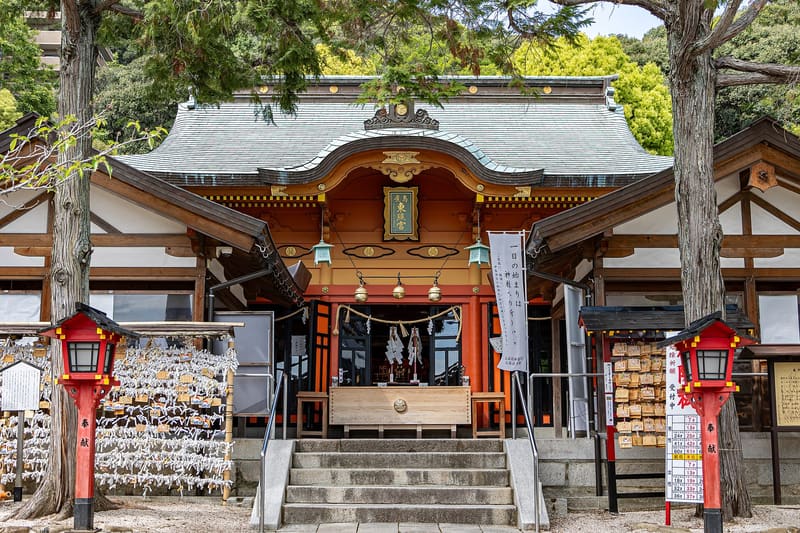 Hiroshima Tōshōgū, with Kinkō Inari2.7 kmphoto by Naokijp · CC BY-SA 4.0
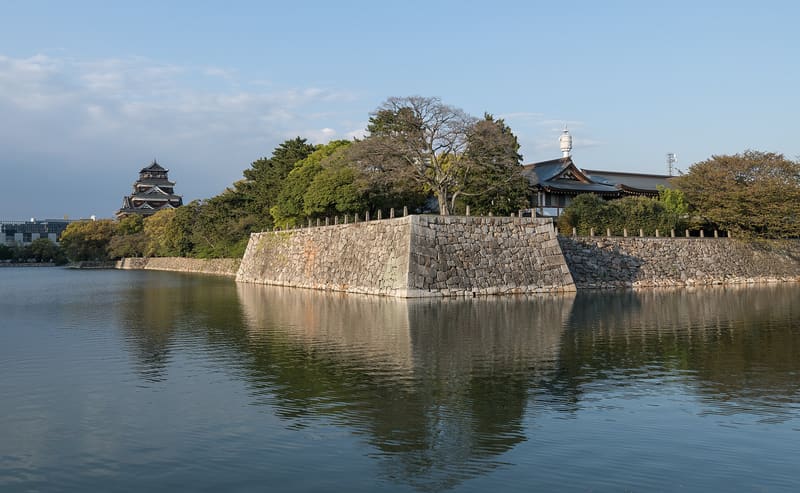 Hiroshima Castle3 kmphoto by DXR · CC BY-SA 4.0
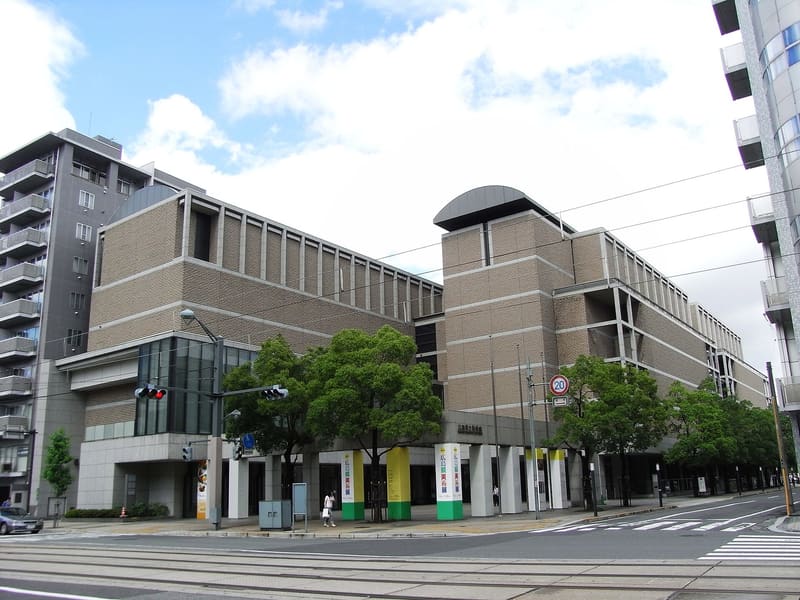 Hiroshima Prefectural Art Museum3.1 kmphoto by Taisyo at Japanese Wikipedia · CC BY 3.0
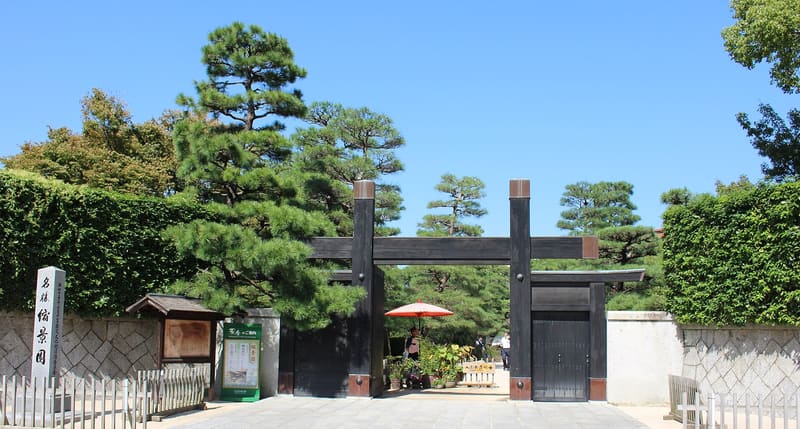 Shukkeien3.1 kmphoto by Yoshio Kohara · CC BY 3.0