
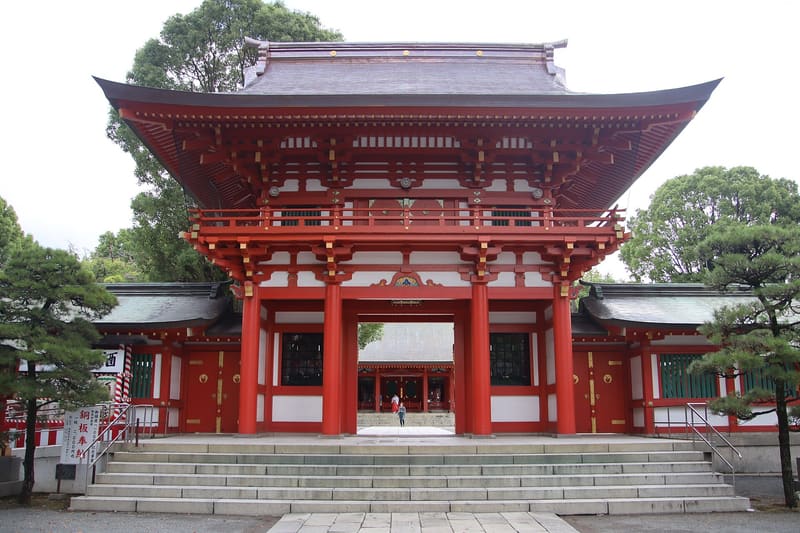
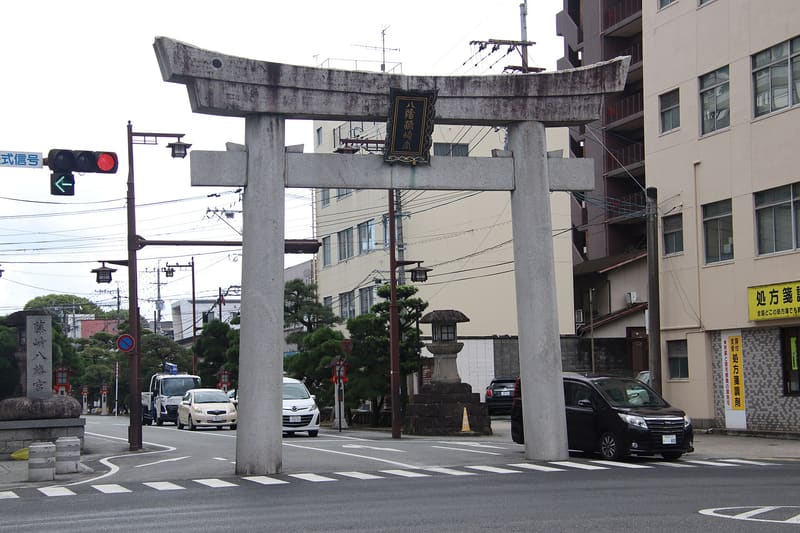
Every September more than sixty decorated horses parade; in 2026 the procession is cancelled.
Outside festival days it is a quiet shrine within the city, and if you go up on a Saturday afternoon you will find it almost empty. Then the third week of September comes and the same street fills up: more than sixty decorated horses, led by hand between two lines of people, and a procession that crosses Kumamoto from one side to the other.
Founded in 935, it is the guardian shrine of Kumamoto. It writes its own name with 八旛 instead of the usual 八幡, and local tradition explains the name Fujisaki with a wisteria (藤) riding whip planted by imperial envoys, which is said to have sprouted. The autumn festival, the 秋季例大祭, lasts five days and ends on the third Monday of September, which in Japan is 敬老の日, the national holiday for the elderly; the procession is on the fourth day. Its origin is traced back to Katō Kiyomasa, the lord who built Kumamoto Castle, who is said to have led a hundred armed men here (the 随兵, the escort) to give thanks for his return from a military campaign. Under the Hosokawa lords the decorated horses were added: at the time there were twelve, and today there are more than sixty.
ℹ️ Free entry. About a hundred parking spaces, not available on the first three days of the year or on the day of the procession. Nearest station 藤崎宮前 on the Kumamoto Electric Railway; from the tram, 水道町 tram stop and a quarter of an hour on foot. ⚠️ In 2026 the 神幸行列 procession was cancelled because of the earthquake of 28 July, together with the offering and the descent of the decorated horses; the rites inside the grounds are held anyway.
🚉 Fujisakigu-mae · 6 min walk
Holidays in Japan? Plan them with us.Over 2,000 real places, a day-by-day itinerary.FreeOpen the map →Sources: ja.wikipedia.org · hotokami.jp · www2.myjcom.jp
Nearby
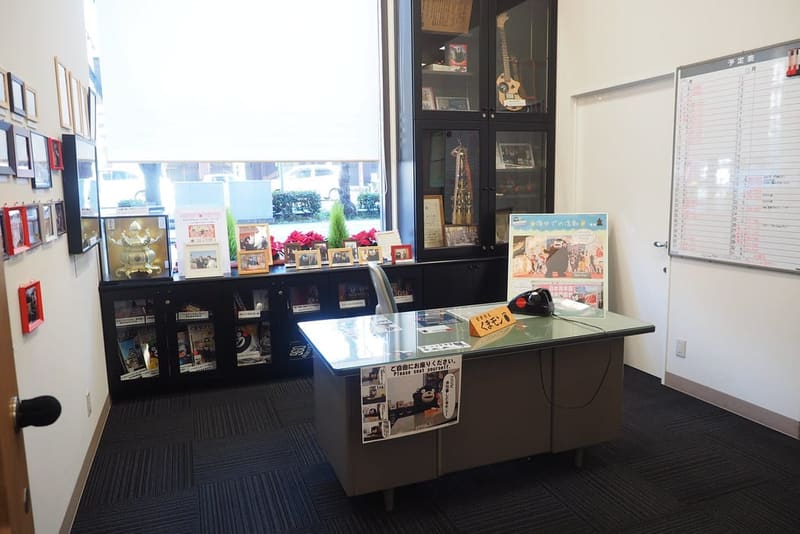 Kumamon Square900 m
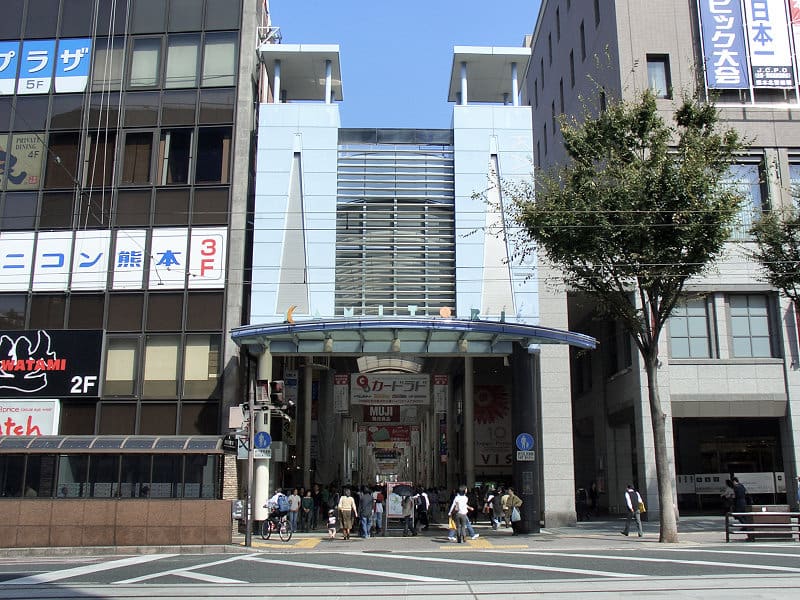 Kamitōri Arcade1000 mphoto by MK Products · CC BY-SA 3.0
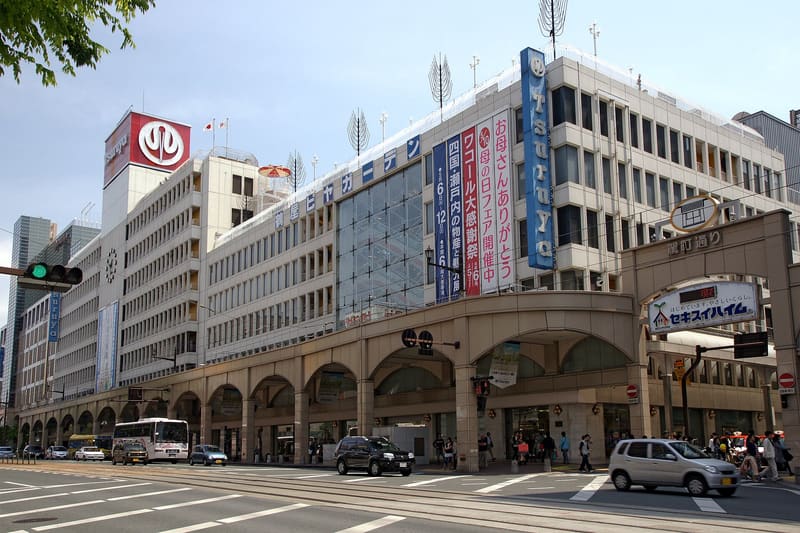 Tsuruya Department Store1000 mphoto by 663highland · CC BY 2.5
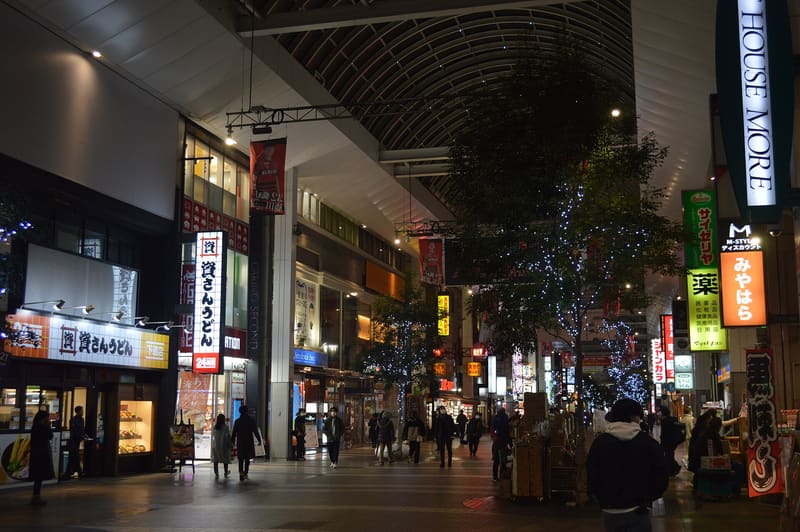 Shimotōri Arcade1000 mphoto by Asturio Cantabrio · CC BY-SA 4.0