
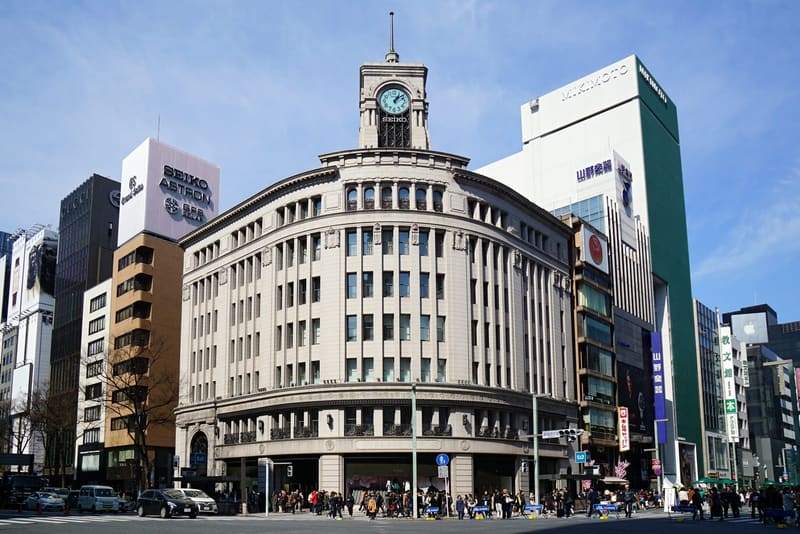
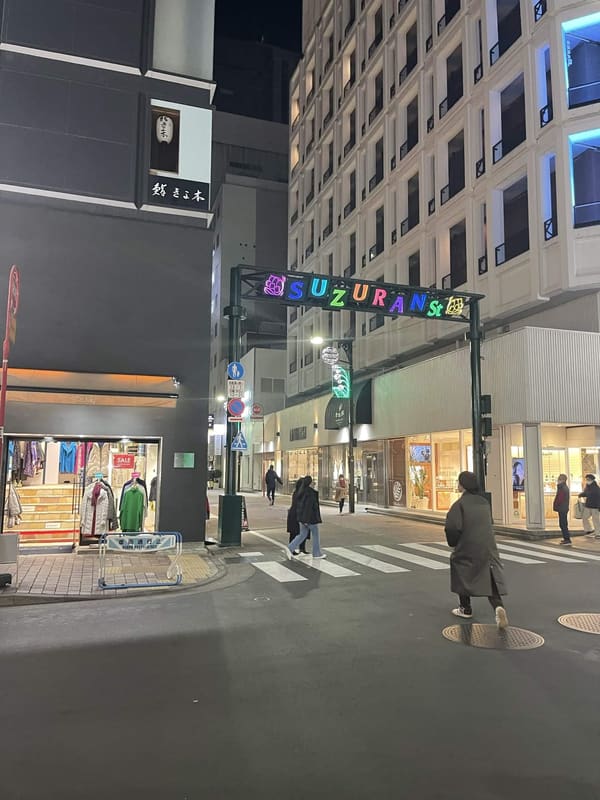
The name comes from a silver mint of 1612; the avenue closes to cars every weekend.
The name comes from the silver mint opened here in 1612, in the Edo period. After the fire of 1872 the Meiji government rebuilt the neighbourhood in brick with wide avenues, as a showcase of modernisation. Today Chūō-dōri is lined with the Mitsukoshi, Matsuya and Wako department stores alongside the windows of Chanel, Dior and Louis Vuitton, and every Saturday and Sunday it closes to cars for the pedestrian paradise (歩行者天国).
Ginza is in Chūō Ward, between Yaesu, Tsukiji, Yūrakuchō and Shinbashi. It takes its name from a silver mint opened in 1612; a fire in 1872 razed the area, and the Meiji government rebuilt it in fireproof brick on wider streets, in a Western style that the first foreign visitors found disorientating. Since the ’60s, under governor Ryokichi Minobe, the main avenue has closed to traffic at weekends. Today it is, together with Omotesandō, one of the two areas of Tokyo with the most luxury boutiques.
ℹ️ The main avenue, Chūō-dōri, closes to traffic every Saturday and Sunday (from 12:00 to 18:00 between April and September, from 12:00 to 17:00 the rest of the year) and becomes a pedestrian paradise. The hours are those of the individual shops, not of the street; the Kabukiza theatre has performances at fixed times of its own.
🚉 Higashi-Ginza · 4 min walk
Holidays in Japan? Plan them with us.Over 2,000 real places, a day-by-day itinerary.FreeOpen the map →Sources: gotokyo.org · en.wikipedia.org · magical-trip.com · traveltherapists.it
Nearby
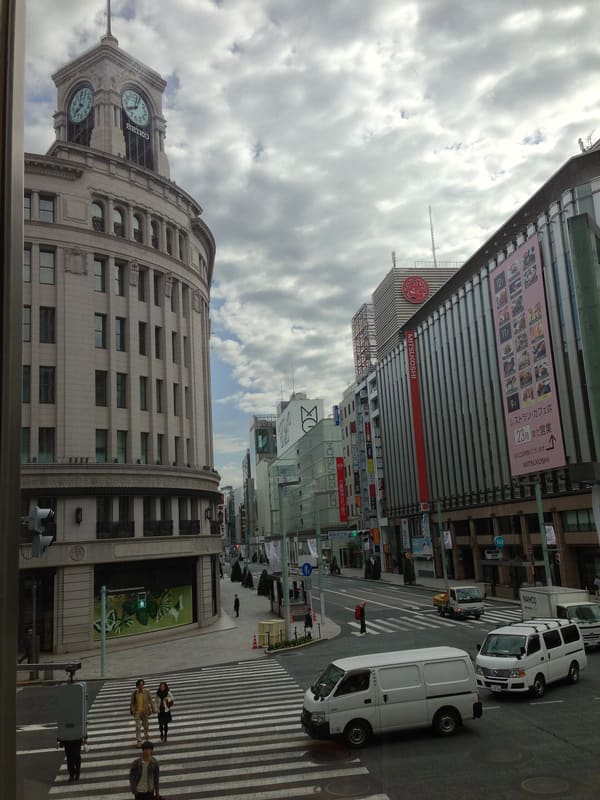 Ginza 4-chōme Crossing100 mphoto by kanesue · CC BY 3.0
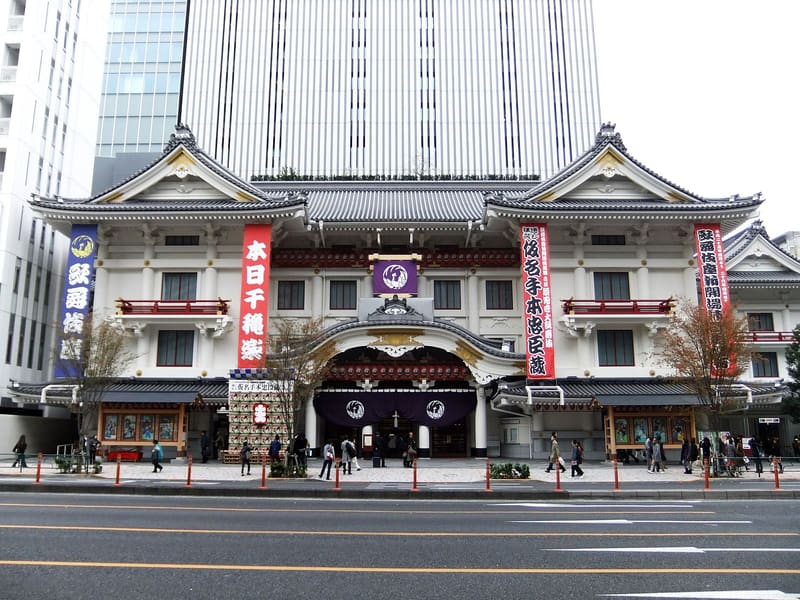 Kabuki-za Theatre200 mphoto by Tak1701d · Public domain
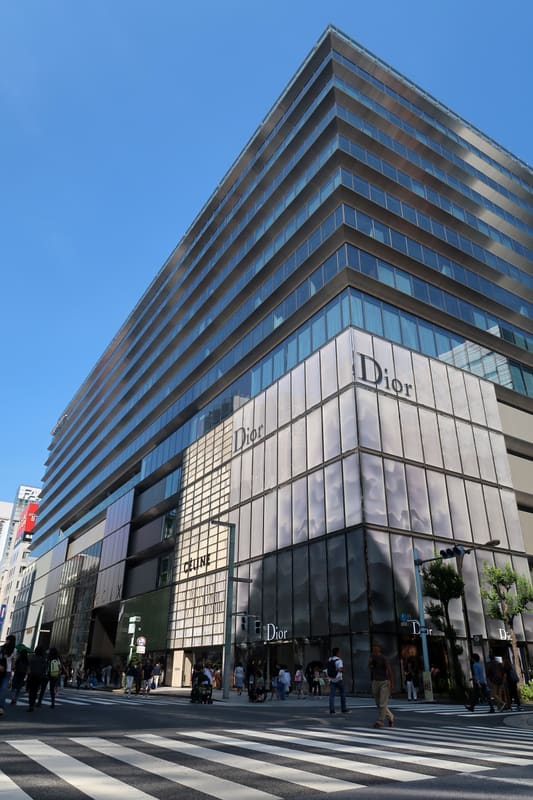 GINZA SIX300 mphoto by Wpcpey · CC BY-SA 4.0
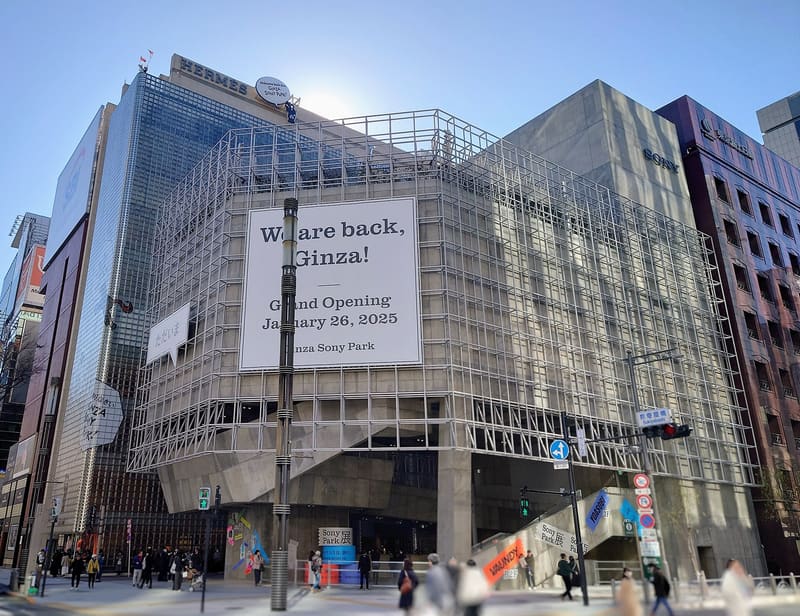 Ginza Sony Park300 mphoto by Gungun01 · CC0