
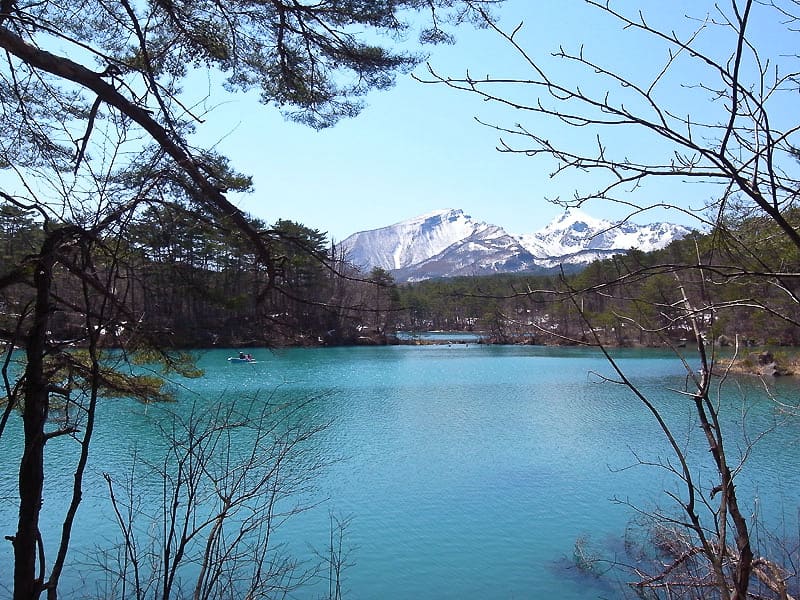
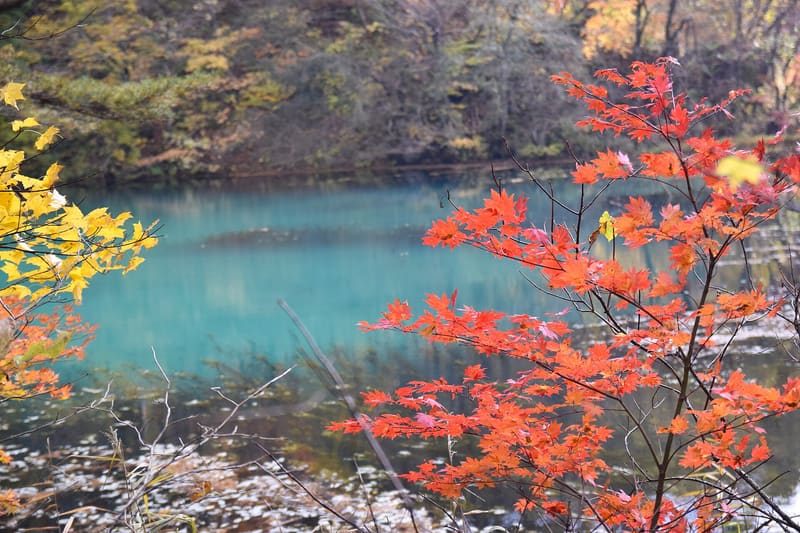
Thirty lakes born from the 1888 collapse: each colour comes from the minerals dissolved in the water.
The same collapse of Mount Bandai on 15 July 1888 that killed 477 people dammed the watercourses of the area and created more than thirty lakes and ponds. The minerals dissolved in the water (aluminium, iron, copper and manganese silicates) give each one a different shade, from turquoise to cobalt blue, which changes with the light and the season. A nature trail of about 4 km, roughly an hour and a quarter on foot with a height difference of just 40 metres, links the main ones, including Yanagi-numa and Ao-numa; the whole area is a special zone of Bandai-Asahi National Park, where collecting anything is forbidden.
A group of volcanic lakes on the northern slopes of Mount Bandai, in the municipality of Kitashiobara, in the area called Ura-Bandai.
ℹ️ The nature trail (五色沼自然探勝路) is free and has no fixed hours, but in winter snow and ice can make it slippery: no declared seasonal closure was found on an official source. Reference point: Ura-Bandai Visitor Centre.
Holidays in Japan? Plan them with us.Over 2,000 real places, a day-by-day itinerary.FreeOpen the map →Sources: urabandai-vc.jp · ja.wikipedia.org
Nearby
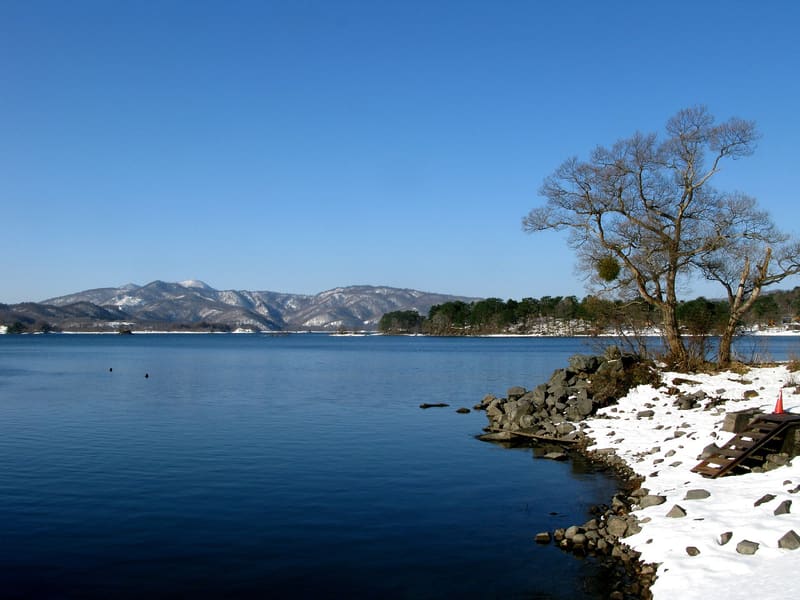 Lake Hibara4.7 kmphoto by Qwert1234 · CC BY-SA 3.0
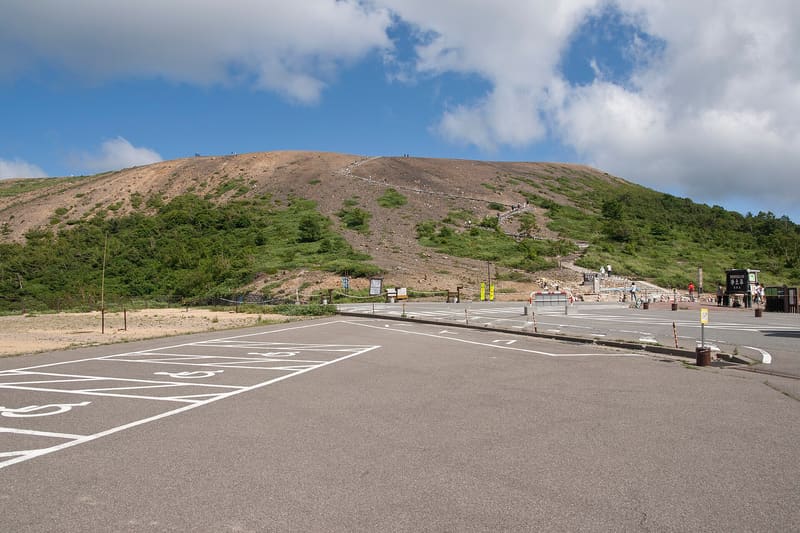 Azuma-Kofuji and Jōdo-daira15.4 kmphoto by Σ64 · CC BY 3.0
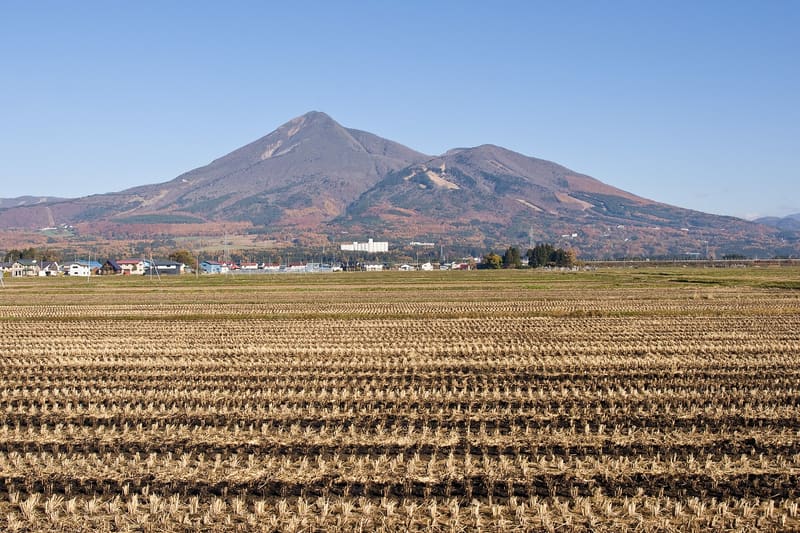 Mount Bandai19 kmphoto by Σ64 · CC BY 3.0
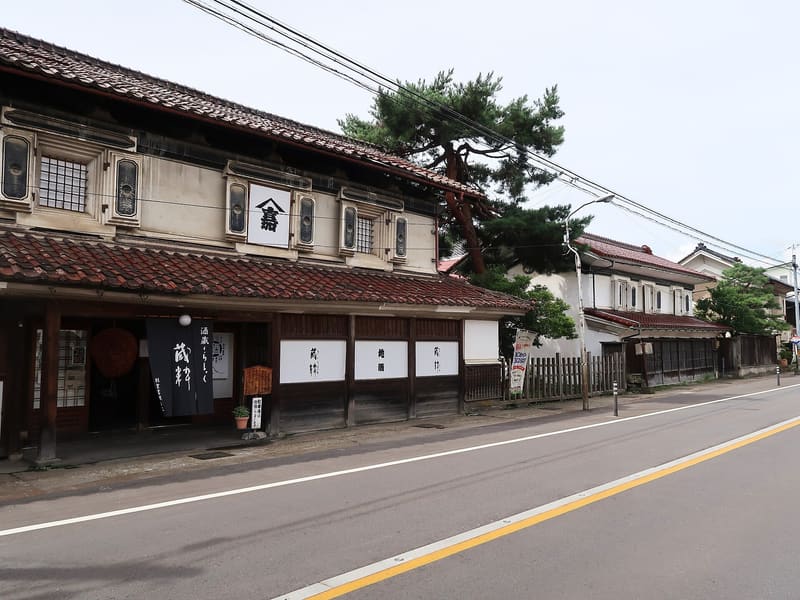 Odazuki Storehouse District19 kmphoto by Qwert1234 · CC BY-SA 4.0