
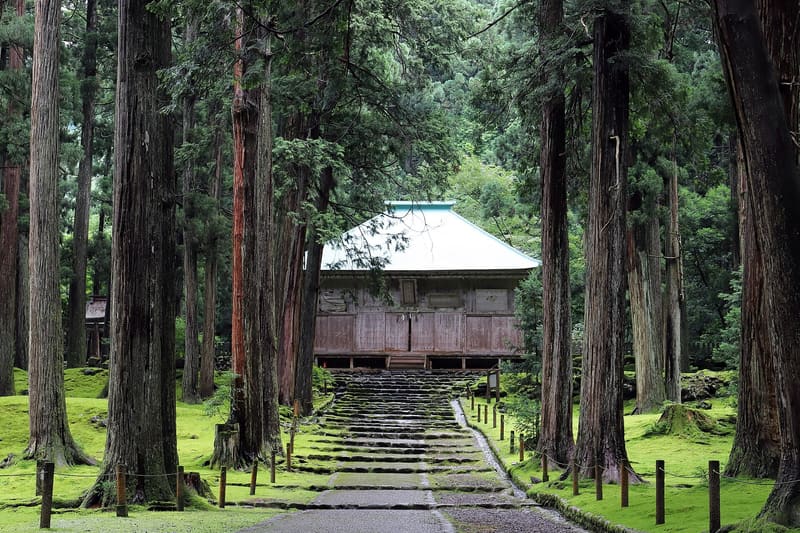
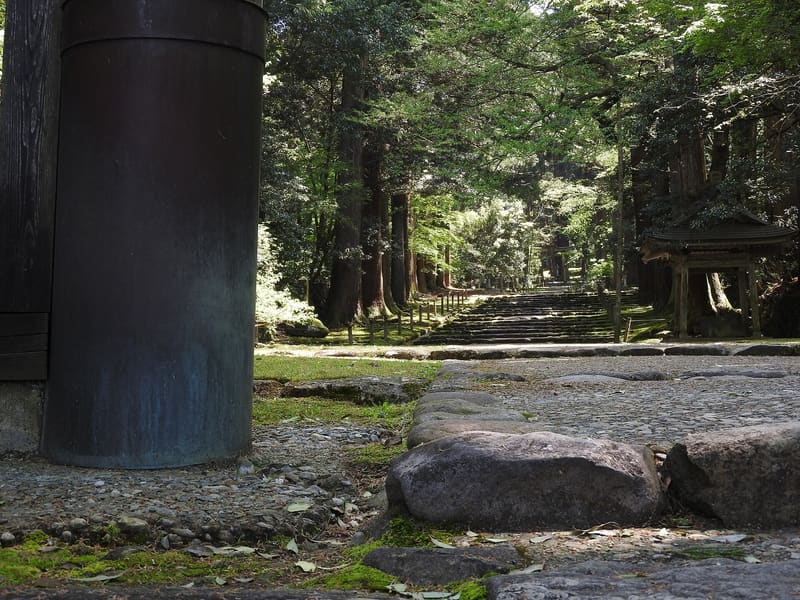
About 120 species of moss cover the path: snow and humidity make it possible.
Founded, according to tradition, in 717 by the monk Taichō for the worship of Mount Haku, it was a Buddhist temple (Reiōzan Heisenji) under Enryaku-ji until the forced separation of Shinto and Buddhism in the Meiji period. About 120 species of moss now cover the stone paving that climbs to the main hall, a green carpet made possible by the winter snowfalls and the humidity of the surrounding mountains, hence its nickname, the ‘moss temple’ of Fukui.
A Shinto shrine on the ruins of the medieval temple complex of Heisenji, in Katsuyama: a National Historic Site since 1935 (extended in 1997), with the garden of the former abbot's residence a Place of Scenic Beauty since 1930.
ℹ️ The grounds are open and accessible at all times; the small history museum is free, and the garden of the former abbot's residence costs 50 yen.
🚉 猪野 · 28 min walk
Holidays in Japan? Plan them with us.Over 2,000 real places, a day-by-day itinerary.FreeOpen the map →Sources: ja.wikipedia.org
Nearby
 Fukui Prefectural Dinosaur Museum5.3 kmphoto by DannyWithLove · CC BY-SA 4.0
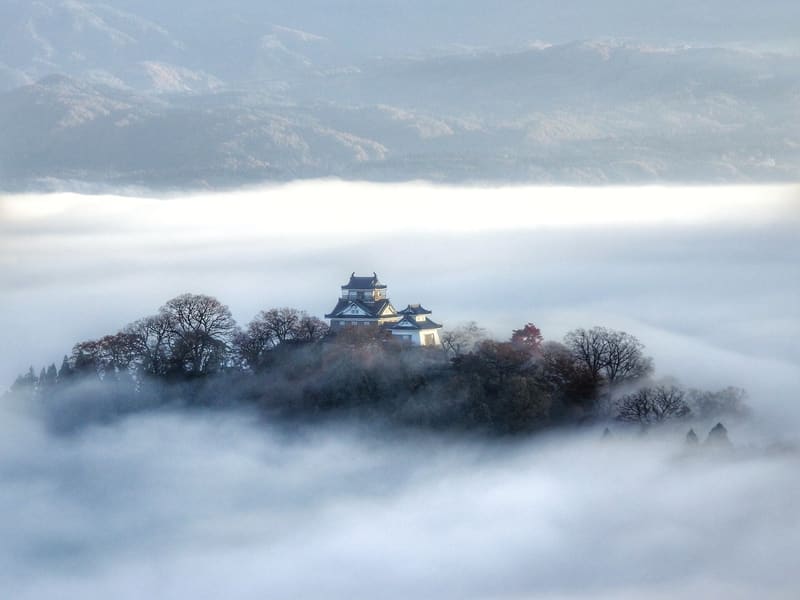 Echizen Ōno Castle (‘castle in the sky’)8.2 kmphoto by Keisuke MAEDA · CC BY-SA 4.0
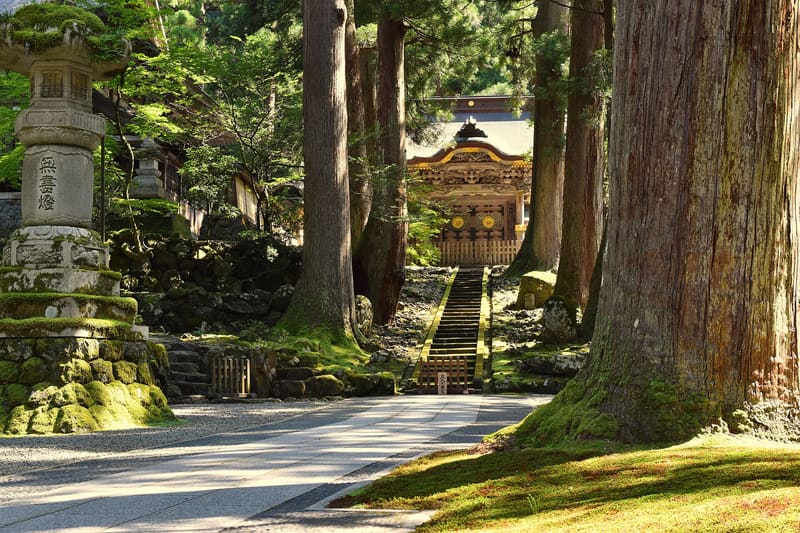 Eihei-ji17.1 kmphoto by 雷太 · CC BY 2.0