
In 1984, the first in Japan, it introduced a deposit-return scheme for aluminium cans.
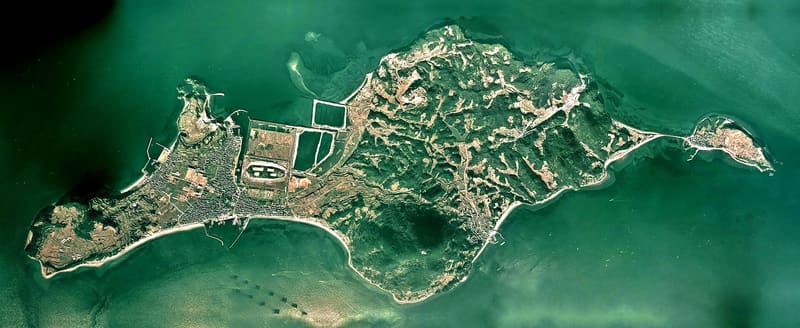
An island municipality of about 7×4 km and 6.99 km², with about 1,430 inhabitants, linked by ferry to the port of Imi on the mainland. Recognised as a Japanese Geopark (Oita Himeshima Geopark) on 24 September 2013. Historically a centre for the production and trade of obsidian in prehistoric times; today it lives on fishing and, since 1965, on farming kuruma prawns in former salt pans.
Himeshima is an island municipality off the Kunisaki Peninsula, reachable only by ferry from the port of Imi on the mainland. It measures about 7 km from east to west and 4 from north to south, with an area of 6.99 km² and about 1,430 inhabitants; a municipal bus makes six rounds of the island a day. The local economy is dominated by fishing; in prehistoric times the island was an important centre for the extraction and trade of obsidian, a material found at archaeological sites all over western Japan. Since 1965 kuruma prawns have been farmed in some former salt pans. On 24 September 2013 the island was designated a Japanese Geopark (Oita Himeshima Geopark). In 1984 the village was the first municipality in Japan to introduce a deposit-return system for aluminium cans across its whole territory, a pioneering environmental initiative for a small island community.
ℹ️ The island can be visited freely at any time; access depends on the ferry timetable from Imi (not checked in detail). Municipal bus: six services a day on the island.
🚉 Himeshima Port Ferry Terminal · in front of the station
Holidays in Japan? Plan them with us.Over 2,000 real places, a day-by-day itinerary.FreeOpen the map →Sources: ja.wikipedia.org · himeshima.jp