
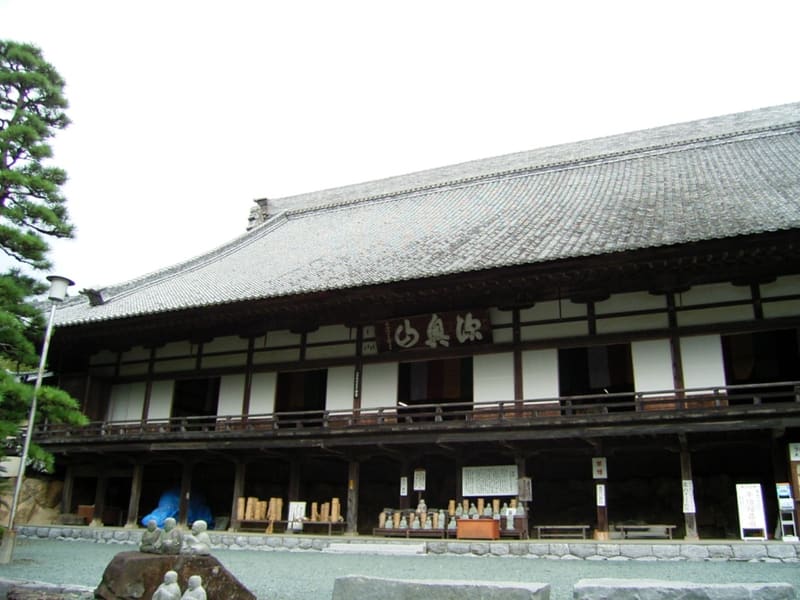
Founded in 1371: 500 statues of the Buddha's disciples, each with a different face.
As you walk up the entrance avenue you meet five hundred stone statues of the Buddha's disciples (羅漢, rakan), installed in 1770 and each carved with a different expression: some smile, some are angry, some look drunk. The main hall houses three wooden statues of Shaka Nyorai and the two bodhisattvas flanking him, carved in 1352 and now a national Important Cultural Property.
The Zen monk Mumon Gensen (無文元選, 1323–1390), back from China in 1350, founded the temple in 1371 at the invitation of the local lord Okuyama Rokurōjirō Tomofuji, who gave him 60 chō (about 60 hectares) of land and buildings. Mumon named it Hōkō-ji because the landscape reminded him of that of Fangguang Temple on Mount Tiantai in China, which he had visited as a young man; he died here in 1390, aged 68. The great fire of 1881 destroyed most of the complex, which was rebuilt in the following years; the founder's tomb, the hall of the seven bodhisattvas and the original statue of the founder survived the fire, together with the hall of the guardian Hansōbō, hence the spread throughout Japan of the cult of this protective figure linked to the temple. The five hundred rakan statues came from a vow by the monk Setsugan, inspired by an episode from Mumon's life in China, and were completed in 1770 with donations from many worshippers; today the temple adds new ones with new donations.
ℹ️ Adults 700 yen, elementary and junior high school pupils 300, groups of 30 people 630 and 270. The temple does not publish opening hours; guides give 9:00–16:30, every day. The route has changes in level: suitable shoes are needed. Combined ticket with Ryūgashi Cave. Entetsu bus 45 from platform 15 at Hamamatsu Station to the Okuyama terminus, about 60 minutes and 630 yen, then about 10 minutes on foot. The temple restaurant serves a 3,500-yen vegetarian meal (精進料理, shōjin ryōri), with imitation eel in place of real eel.
🚉 奥山 · 9 min walk
Holidays in Japan? Plan them with us.Over 2,000 real places, a day-by-day itinerary.FreeOpen the map →Sources: houkouji.or.jp · houkouji.or.jp
Nearby
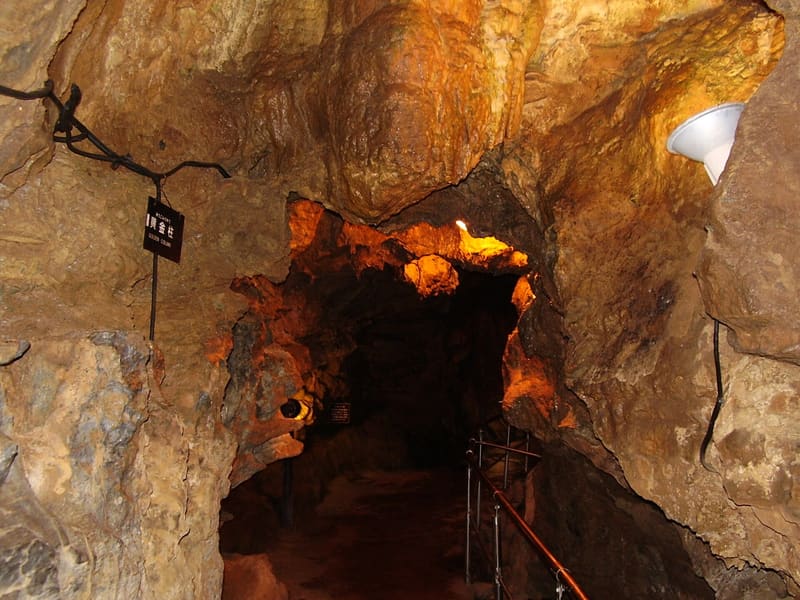 Ryūgashi Cave3.1 kmphoto by MH001 · CC BY-SA 3.0
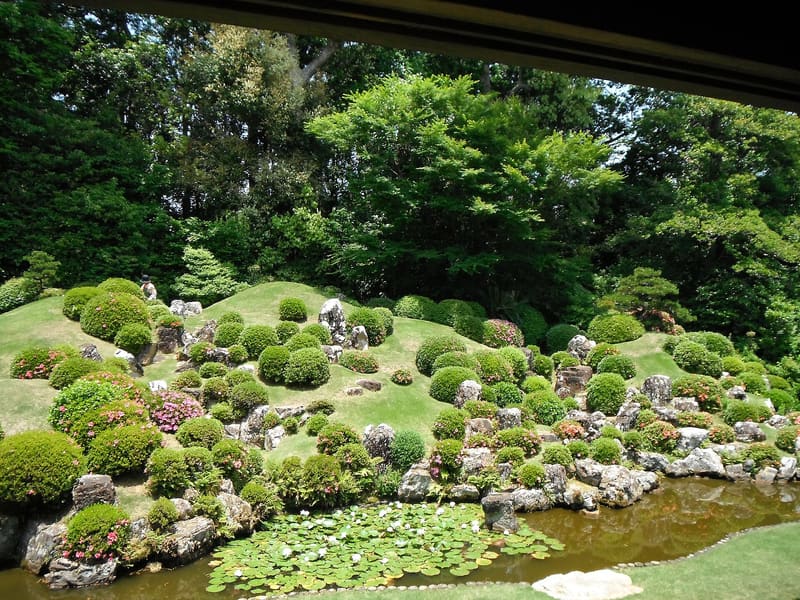 Ryōtan-ji5.3 kmphoto by Yanajin33 · CC BY-SA 3.0
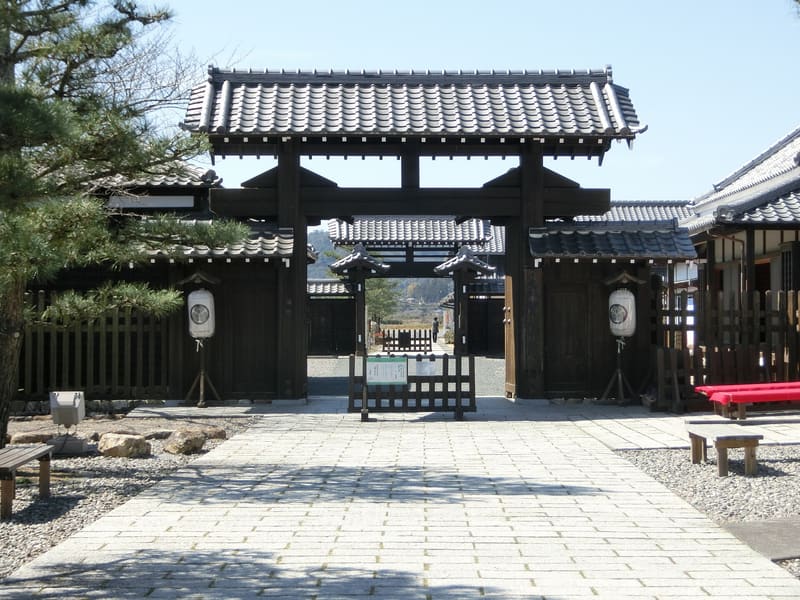 Kiga Checkpoint5.6 kmphoto by Abasaa · Pubblico dominio (dedica dell'autore)
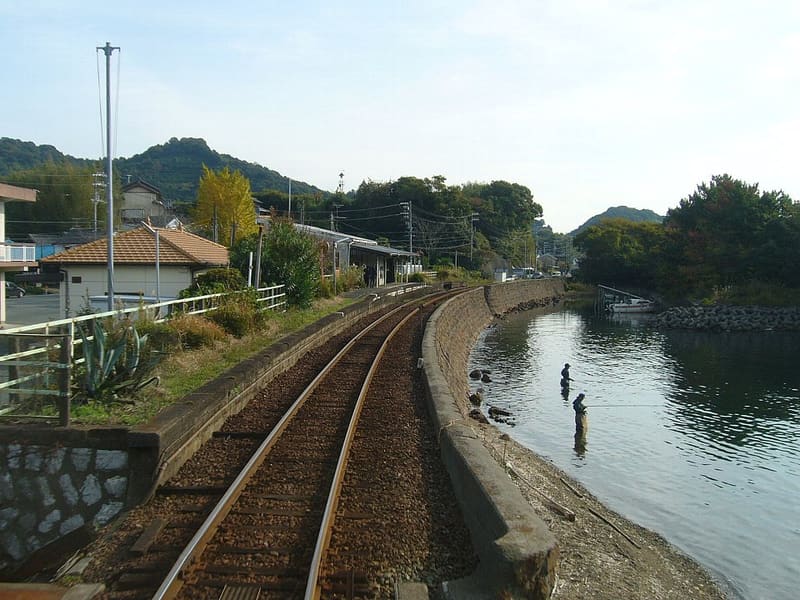 Hamanako-Sakume Station6.7 kmphoto by Bakkai at Japanese Wikipedia · CC BY-SA 3.0