
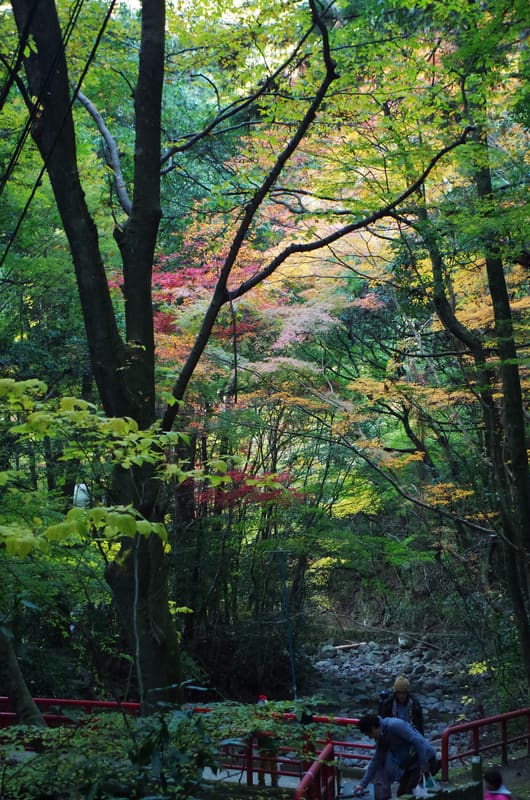
The inns are at the mouth of a valley where some people stand under the waterfall.
A few inns at the end of a road, and from there the valley begins: forty minutes further up on foot is the ascetics’ waterfall, where people come from all over Japan all year round to stand under the water. The temple at the top dates from 661, and the valley has forty-eight waterfalls large and small, seven of which have a name. If you are not staying overnight, you can still take a bath.
The spa village is in the municipality of Izumisano, at the entrance to Mount Inunaki, a sacred place of shugendō. The name comes from a legend of the Tentoku era, between 957 and 961: a hunter's dog barked to warn him of a large snake and saved his life (inu-naki means ‘the dog barks’).
ℹ️ ⚠️ On the water, the two official sources do NOT agree: the municipality of Izumisano states simple sulphur water, good for neuralgia, joint pain, sensitivity to cold, chronic digestive complaints and skin complaints; the tourism office of the same municipality states sodium bicarbonate water with similar effects plus muscle pain and bruises. The village has six facilities, but the Inunaki Onsen Center closed in July 2024 and the Grand Hotel Kisenkaku is not operating. Nankai Wing bus: about thirty minutes from Izumisano Station on the Nankai, about twenty from JR Hineno Station.
🚉 Inunakisan · 2 min walk
Holidays in Japan? Plan them with us.Over 2,000 real places, a day-by-day itinerary.FreeOpen the map →Sources: city.izumisano.lg.jp · kankou-izumisano.jp · inunakisan.jp
Nearby
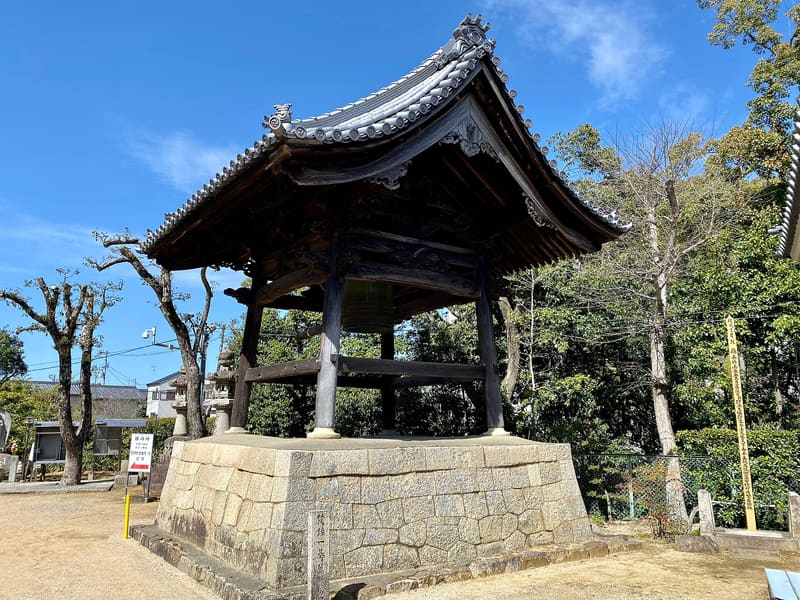 Mizuma-dera6.5 kmphoto by ほっきー · CC BY-SA 4.0
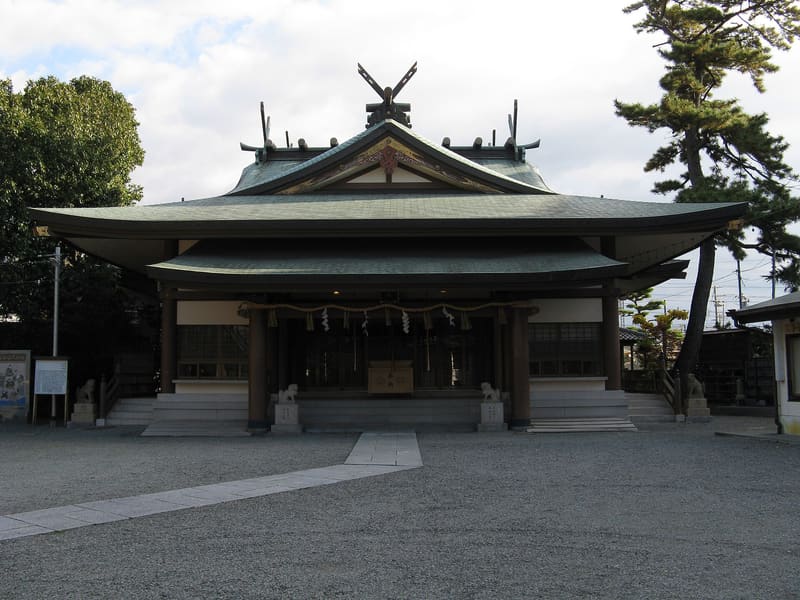 Kishiki Shrine13.1 kmphoto by KENPEI · CC BY-SA 3.0
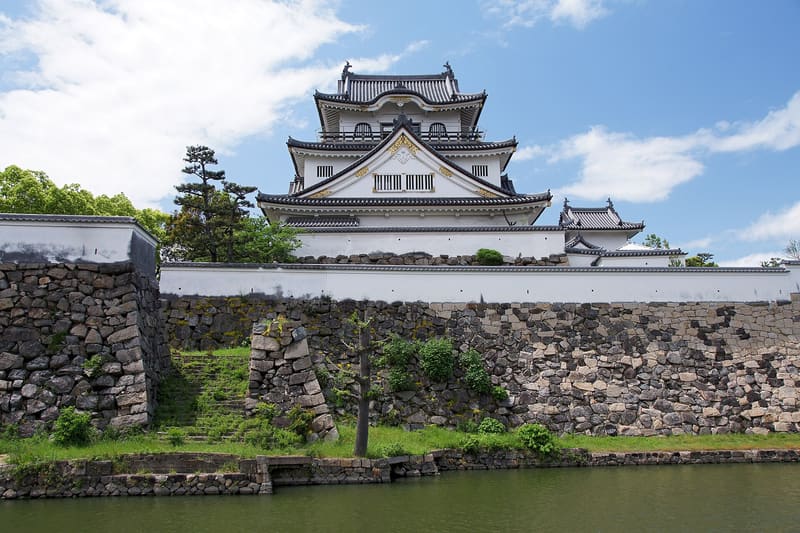 Kishiwada Castle13.2 kmphoto by 663highland · CC BY 2.5
 Kishi Station, the cat train15.7 kmphoto by Niiryoku2910 · CC BY-SA 4.0