
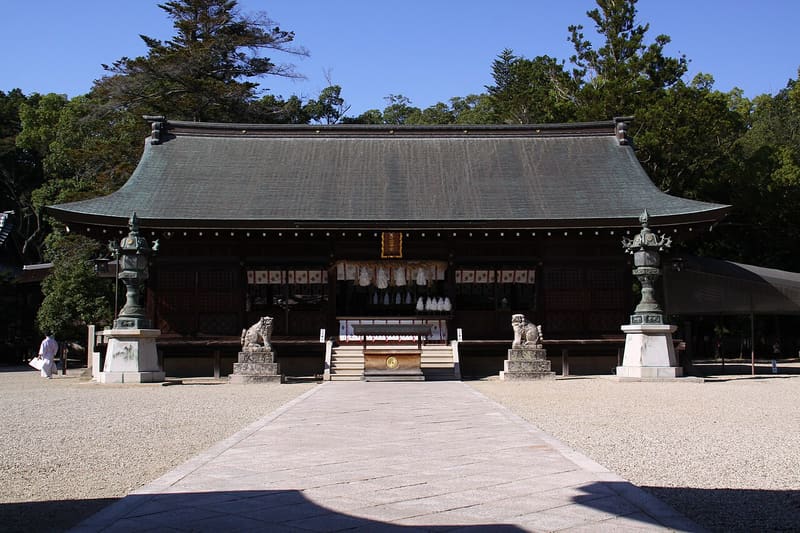
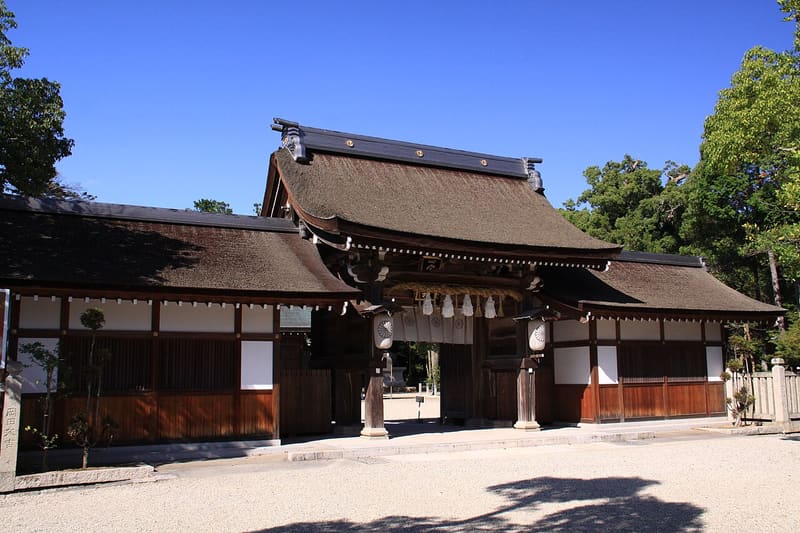
A monument in the garden lines the shrine up with Ise to the east, on the same line as the sun.
It is the first shrine mentioned in the Kojiki and the Nihon Shoki, the oldest written chronicles of Japan (eighth century), and tradition names it as the place where Izanagi (the god who, according to myth, gave birth to the islands of Japan together with Izanami) withdrew at the end of his life. In the garden, a circular monument called the ‘sun signpost’ (陽の道しるべ) shows how the shrine is aligned exactly with the Grand Shrine of Ise to the east and with Kaijin Shrine in Tsushima to the west, and how at dawn on the summer solstice the sun rises in the direction of Suwa Shrine. Two twin camphor trees (夫婦大楠), about 900 years old and grown together from a single root, are venerated in the grounds for marriage and fertility.
A Shinto shrine on Awaji, the first shrine (一宮) of the old province; according to legend it stands on the spot where Izanagi withdrew after completing, with Izanami, the creation of the Japanese islands.
ℹ️ The grounds are always open and entry is free; the office for amulets and inscriptions is open 8:30–17:00.
🚉 伊弉諾神宮前 · 2 min walk
Holidays in Japan? Plan them with us.Over 2,000 real places, a day-by-day itinerary.FreeOpen the map →Sources: kuniuminoshima.jp · kuniuminoshima.jp · awajishima-kanko.jp
Nearby
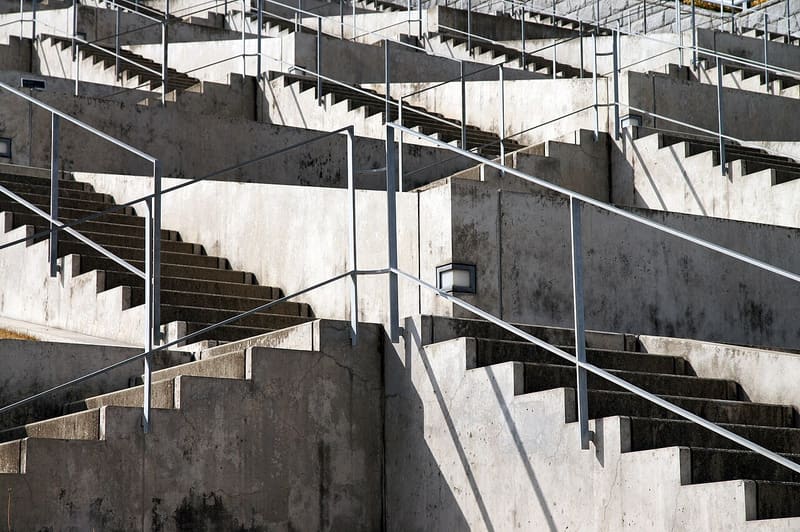 Awaji Yumebutai (Hyakudan-en)18.1 kmphoto by 663highland · CC BY 2.5