
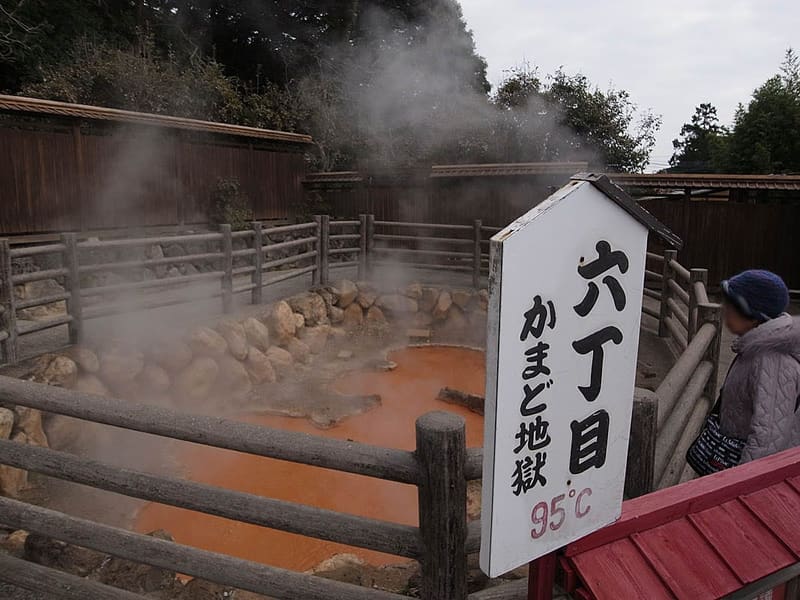
Opened in 1907, it has six sections of different colours: from mud at 95°C to cobalt blue.
One of the 8 jigoku of the Beppu circuit, opened in 1907 and moved to its current site around 1947. The name (‘oven hell’) comes from the traditional use of the steam to cook the offerings during the festival of the local shrine, Kamado Hachimangū. Six numbered sections show different colours and temperatures, from tea-brown thermal mud at 90°C to cobalt blue at 85°C.
One of the stops on Beppu's ‘hell tour’, with boiling pools of different colours and jets of steam. About 2 km from Hachiman Kamado Shrine: you visit both in the same outing. Address 別府市御幸621.
ℹ️ A permanent attraction, 8:00–17:00, admission 400 yen and 200 for children. The themed decorations are not guaranteed to be permanent; the site is.
🚉 鉄輪 · 4 min walk
Holidays in Japan? Plan them with us.Over 2,000 real places, a day-by-day itinerary.FreeOpen the map →Demon Slayer: Kimetsu no Yaiba
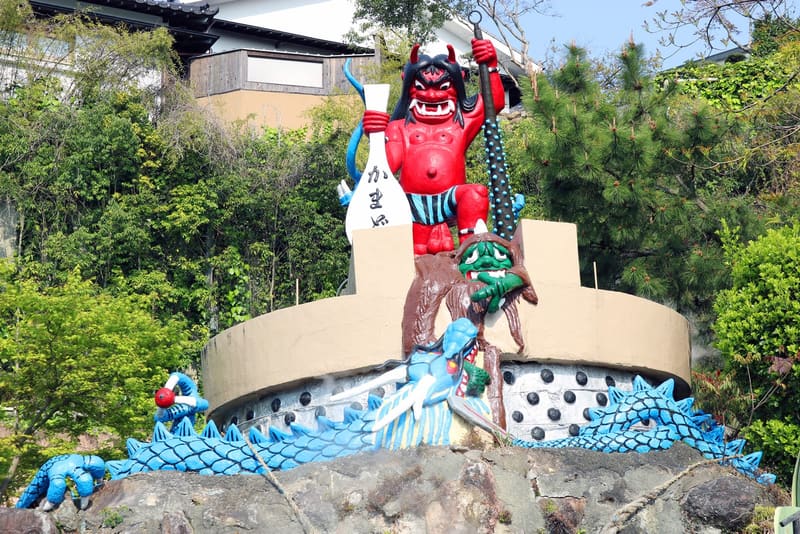
The name comes from the nearby shrine 八幡竈門神社, where food cooked in the steam of these springs was once offered: it is that link, more than any visual resemblance, that turned it into a stop on the pilgrimage. On the site there is a statue of a water dragon that recalls Tanjirō's techniques, and one of a red demon, presented as the shrine's demon who repented here and now acts as guardian of the hell.
Sources: travel.co.jp · nara.blue · ferry-sunflower.co.jp · oita-local.net · beppu-jigoku.com
Nearby
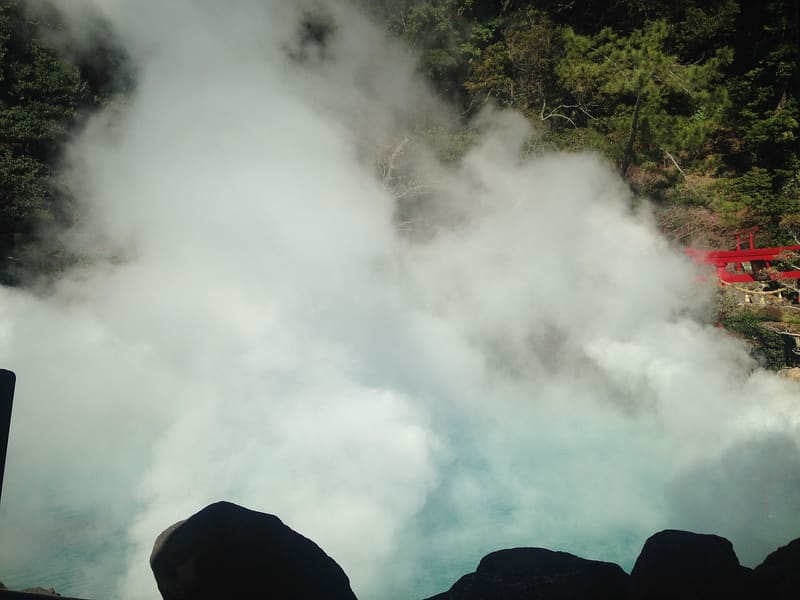 Umi Jigoku — the Sea Hell300 mphoto by そらみみ (Soramimi) · CC BY-SA 4.0
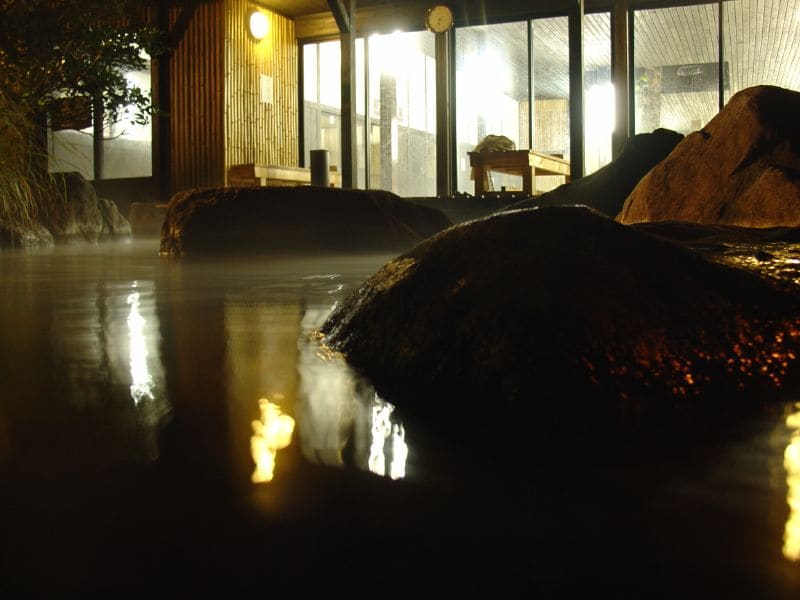 Hyotan Onsen400 mphoto by Everjean · CC BY 2.0
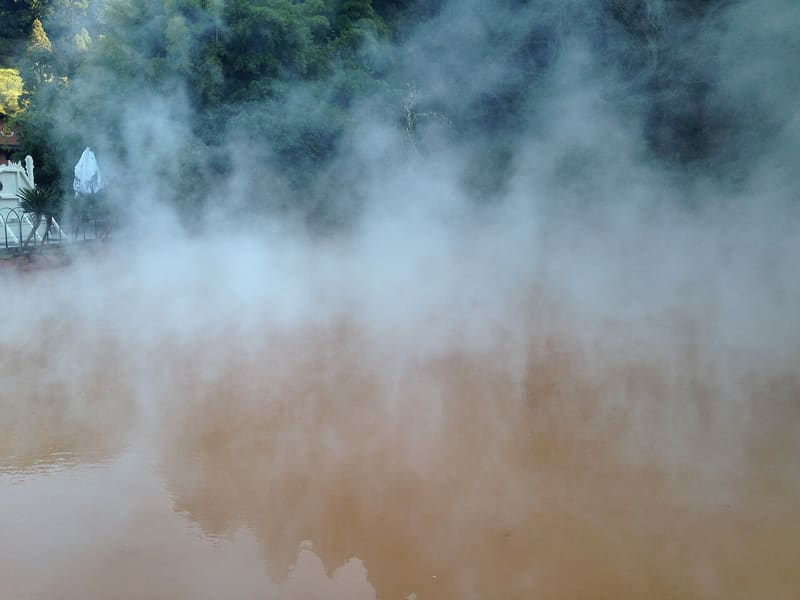 Chinoike Jigoku — the Blood Pond Hell1.2 kmphoto by そらみみ (Soramimi) · CC BY-SA 4.0
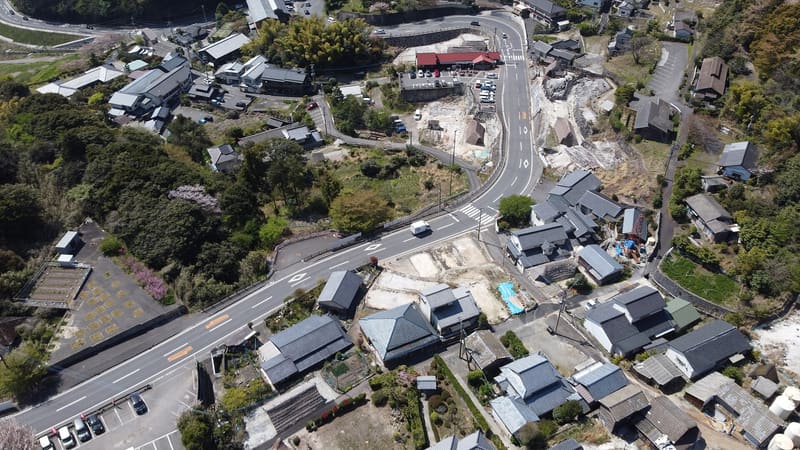 Myōban Onsen1.8 kmphoto by 松岡明芳 · CC BY-SA 4.0