
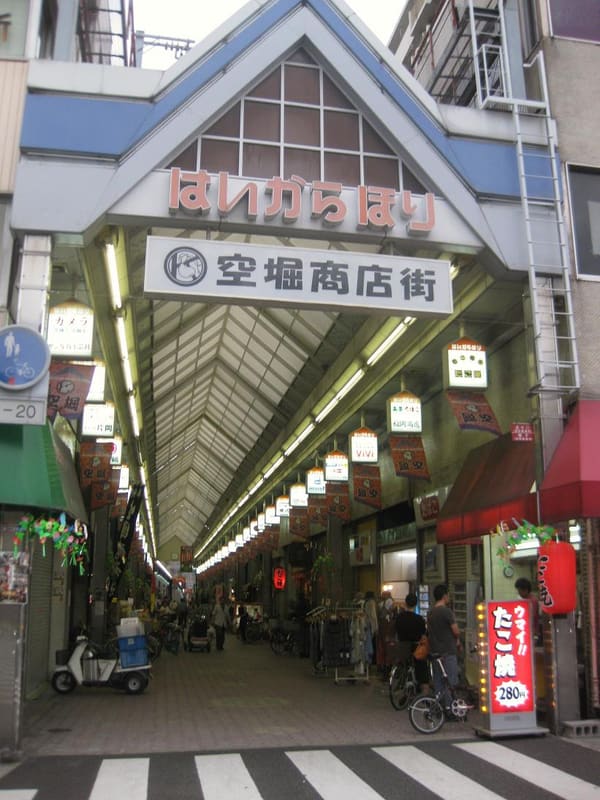
Eight hundred metres along the castle's dry moat, with the nagaya still standing.
The street runs on a slight slope for eight hundred metres from Matsuyamachi to Uemachi, and alleys of wooden terraced houses from the early twentieth century open off it to the right and left: few bombs fell here and the nagaya survived. Some have been gutted and rebuilt inside (the Ren complex is the best known) and now house cafés and shops.
The street follows the line of the southern outer moat of Osaka Castle, which was dry (karahori means empty moat) and was filled in after the winter campaign. The neighbourhood flourished between the Meiji era and the war, and recovered quickly because the bombing had barely touched it.
ℹ️ Public street, always open; the opening hours are those of the individual shops, and many close early and on Mondays. One minute from Tanimachi-rokuchōme, two from Matsuyamachi. The side alleys are courtyards of lived-in houses.
🚉 Tanimachi 6-chome · 8 min walk
Holidays in Japan? Plan them with us.Over 2,000 real places, a day-by-day itinerary.FreeOpen the map →Sources: osaka-info.jp · travel.jr-central.co.jp
Nearby
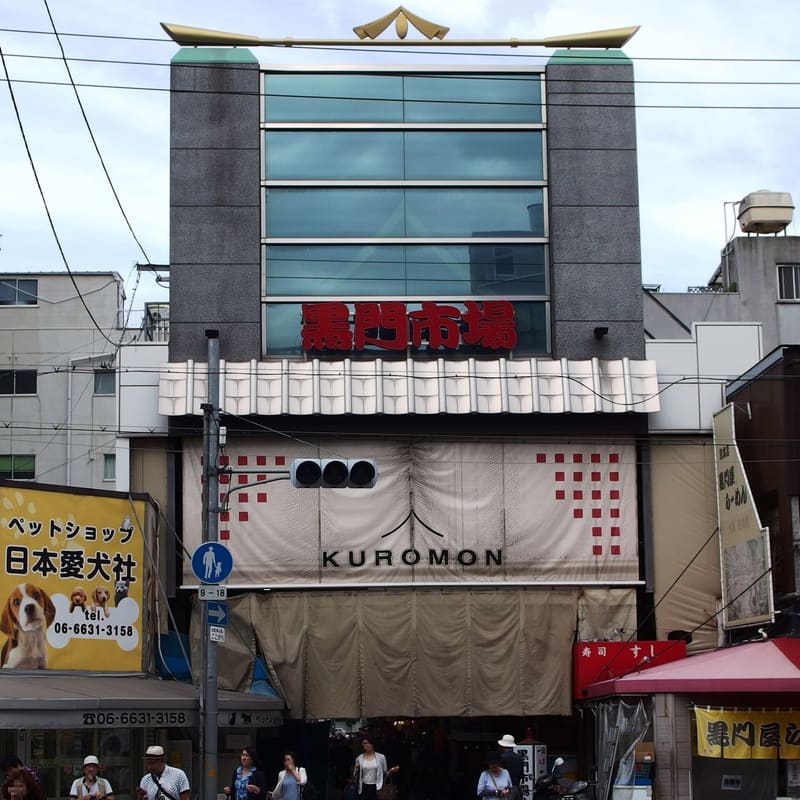 Kuromon Market900 mphoto by Mc681 · CC BY-SA 4.0
 Shinsaibashi-suji1 kmphoto by DVMG · CC BY 3.0
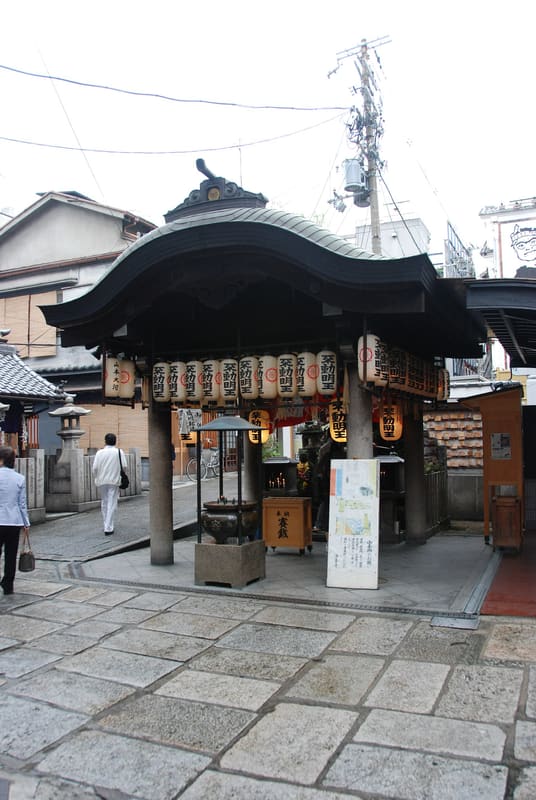 Hozenji Yokocho1.1 kmphoto by Maarten Heerlien · CC BY 2.0
 Dōtonbori1.2 kmphoto by そらみみ (Soramimi) · CC BY-SA 4.0