
Every year since 1990, Japanese people have voted it the neighbourhood they would most like to live in.
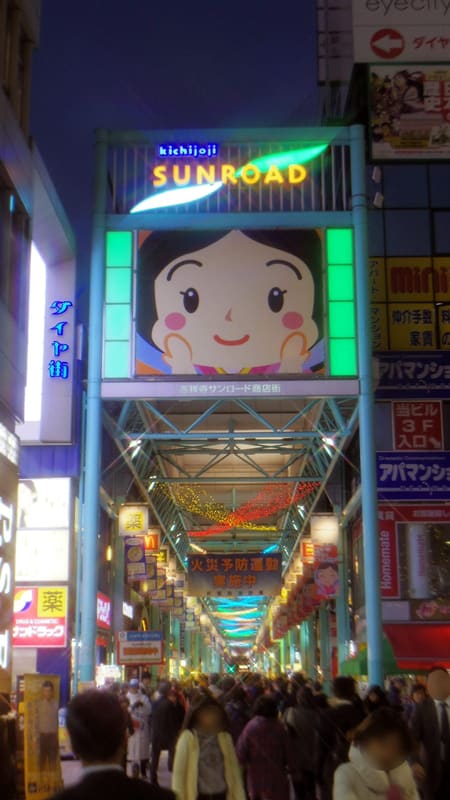
Once you leave the station, the covered Sun Road street is full of bakeries and shops until evening; next to it, the alleys of Harmonica Yokocho light up at sunset with standing yakitori stalls. Five minutes on foot take you to Lake Inokashira, where you can hire swan-shaped pedal boats.
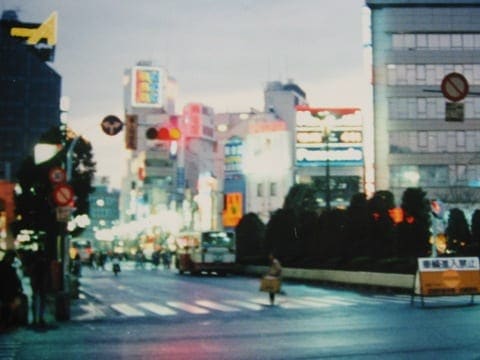
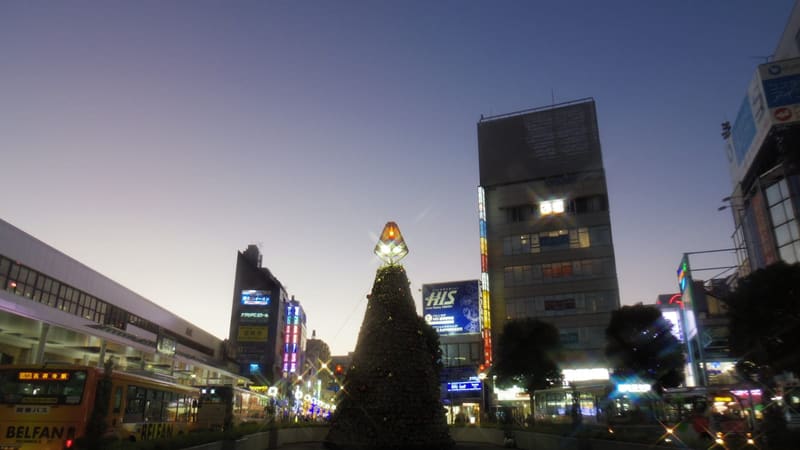
The name comes from the Kichijō-ji temple in Edo, destroyed by the Great Fire of Meireki in 1657: the people left homeless were given land and loans here to rebuild, although the temple itself stayed in Edo. Water from the Tamagawa Canal made the Musashino plateau farmable, and the village of Kichijōji was born. Around the station, opened in the twentieth century on three lines, the neighbourhood has grown into the commercial centre of Musashino.
ℹ️ The station is on the JR Chūō, JR Sōbu and Keiō Inokashira lines: it is 14 minutes from Shinjuku and 28 from Tokyo Station. Sun Road and Daiyagai are covered pedestrian streets, open until evening; Harmonica Yokocho, the maze of little stalls behind the station, comes alive mainly from sunset onwards.
🚉 Kichijoji · 4 min walk
Holidays in Japan? Plan them with us.Over 2,000 real places, a day-by-day itinerary.FreeOpen the map →Sources: en.wikipedia.org · gotokyo.org · livejapan.com
Nearby
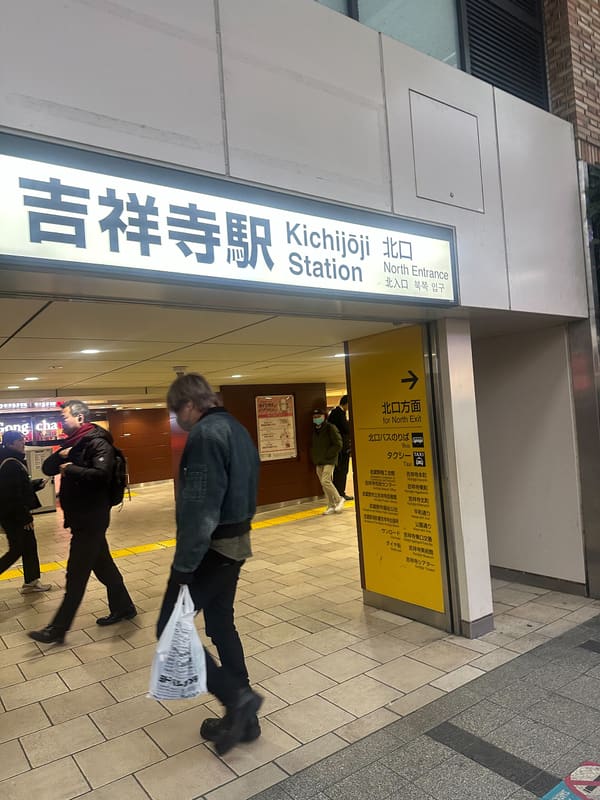 Kichijoji Station — north exit100 mphoto by Nesnad · CC BY 4.0
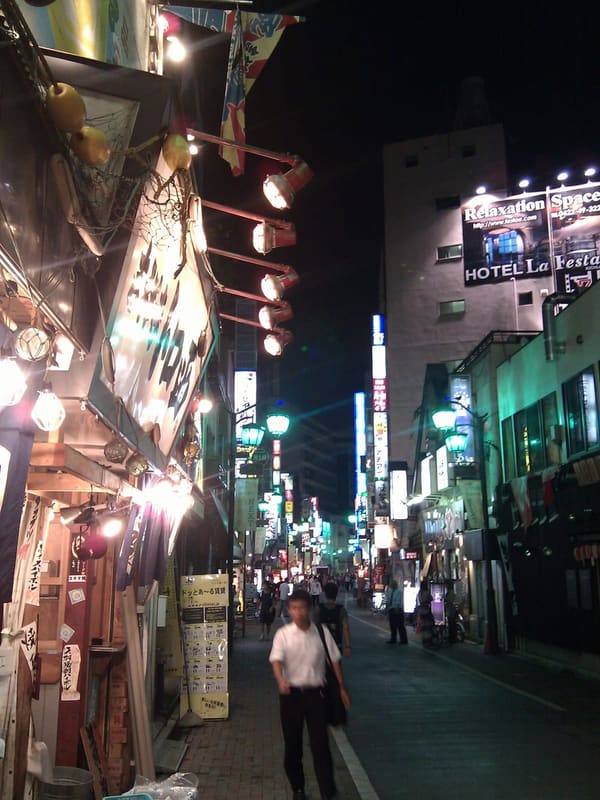 Kichijoji Park Road200 mphoto by nobuto_m · CC BY-SA 3.0
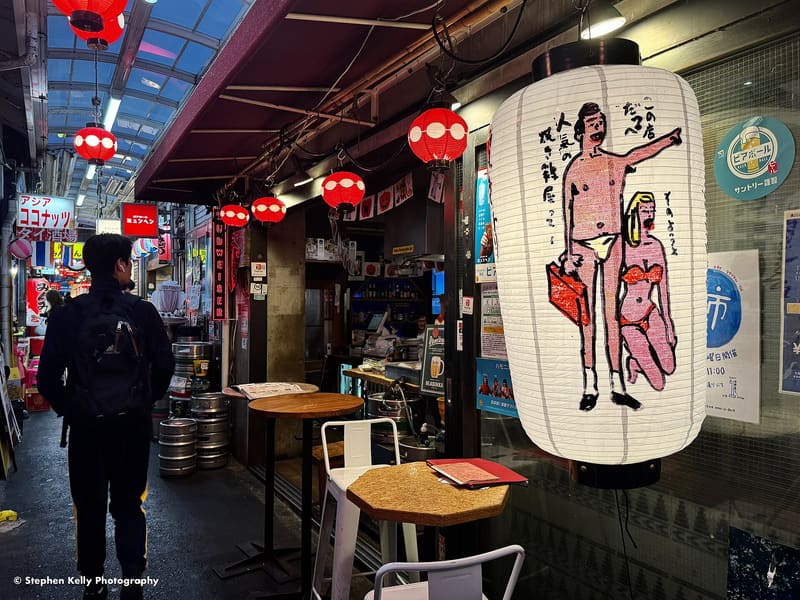 Harmonica Yokochō200 mphoto by Stephen Kelly · CC BY 2.0
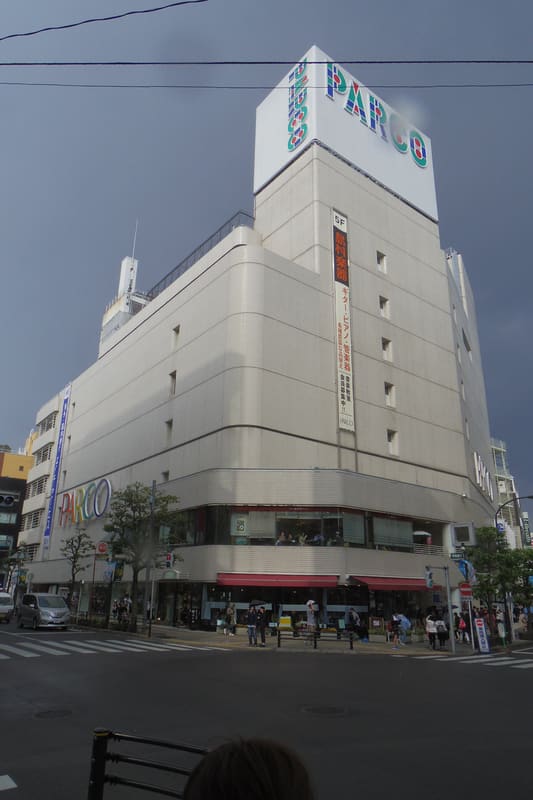 Kichijōji PARCO300 mphoto by ITA-ATU · CC BY-SA 4.0