
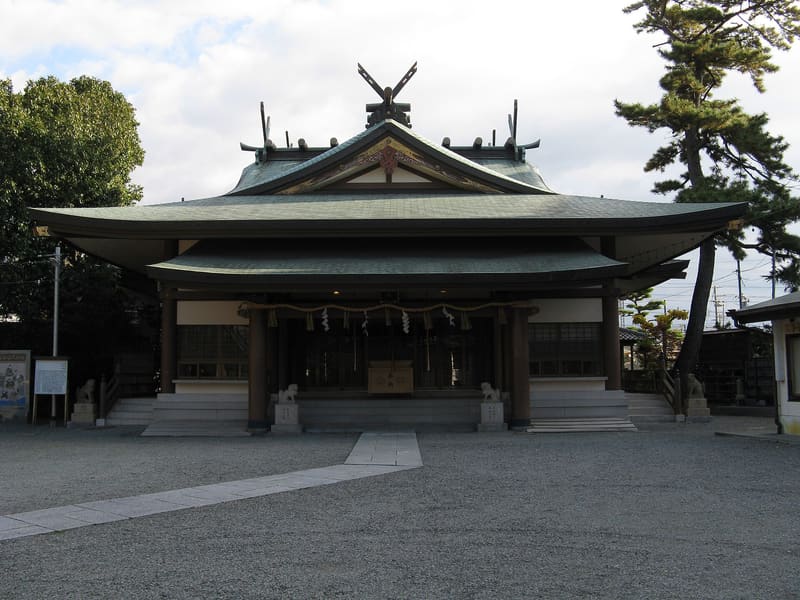
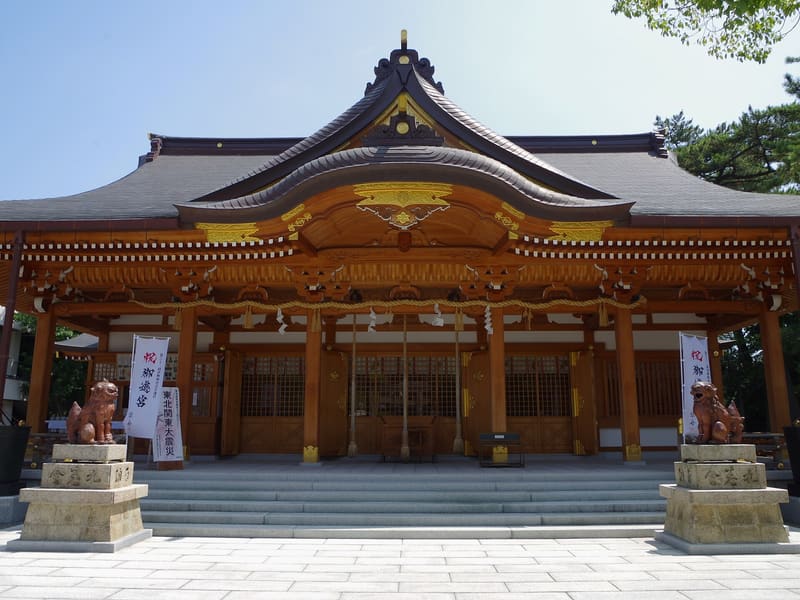
On the big day of the danjiri the floats come in here, from nine until half past twelve.
The shrine stands east of the Kishiwada keep and is where the cart festival ends: on the morning of the main day the danjiri climb the street and pass through the gate one after another until 12:30. On other days it is a courtyard where you go to ask to be bound to someone, because the castle was called Chikiri and chikiri also means bond.
It began as a farmers’ shrine for a good harvest; about six hundred and fifty years ago Susanoo was invited here from Yasaka in Kyoto, and for centuries it was known as the temple of Gozu-Tennō. When Koide Hidemasa rebuilt the castle, in the Keichō era, Hachiman was joined to it as well; the present name dates from the Restoration. The festival began in 1745 with the votive lanterns authorised by the domain and took the form of floats in 1746: that makes almost three hundred years.
ℹ️ Ten minutes on foot from Kishiwada Station on the Nankai Honsen, seven from Takojizō. ⚠️ On the day of the miyairi the climb to the shrine is closed and fenced off: you watch from where the stewards direct you, and the floats weigh tonnes.
🚉 Takojizō · 6 min walk
Holidays in Japan? Plan them with us.Over 2,000 real places, a day-by-day itinerary.FreeOpen the map →Sources: kishikijinja.jp · city.kishiwada.lg.jp · osaka-info.jp
Nearby
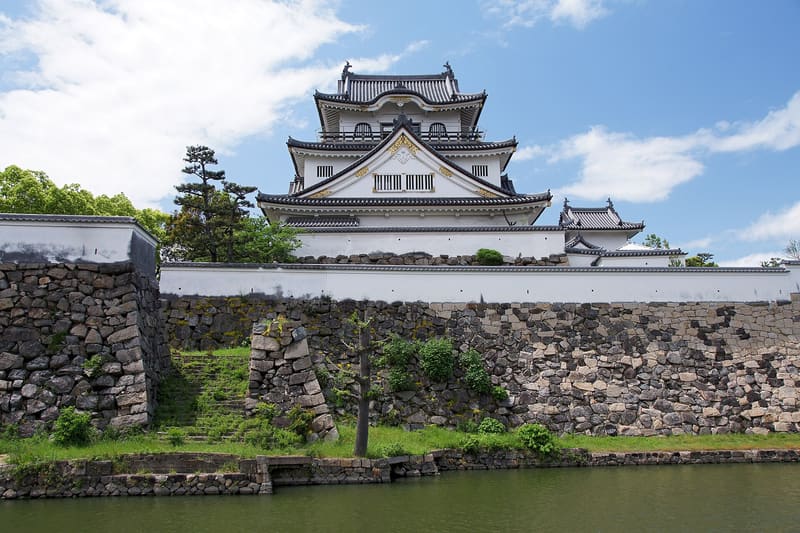 Kishiwada Castle200 mphoto by 663highland · CC BY 2.5
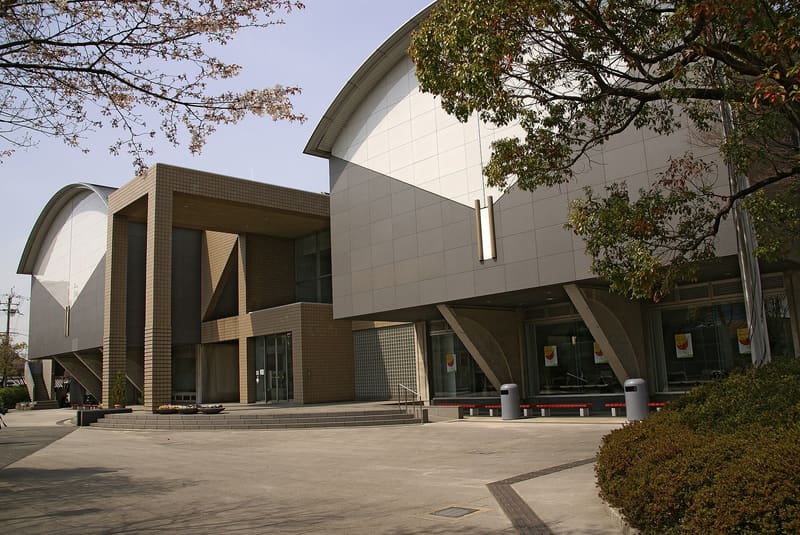 Museum of Yayoi Culture6.7 kmphoto by 663highland · CC BY 2.5
 Mizuma-dera6.8 kmphoto by ほっきー · CC BY-SA 4.0
 Inunakiyama Onsen13.1 kmphoto by Nankou Oronain (as36… · CC BY-SA 3.0