
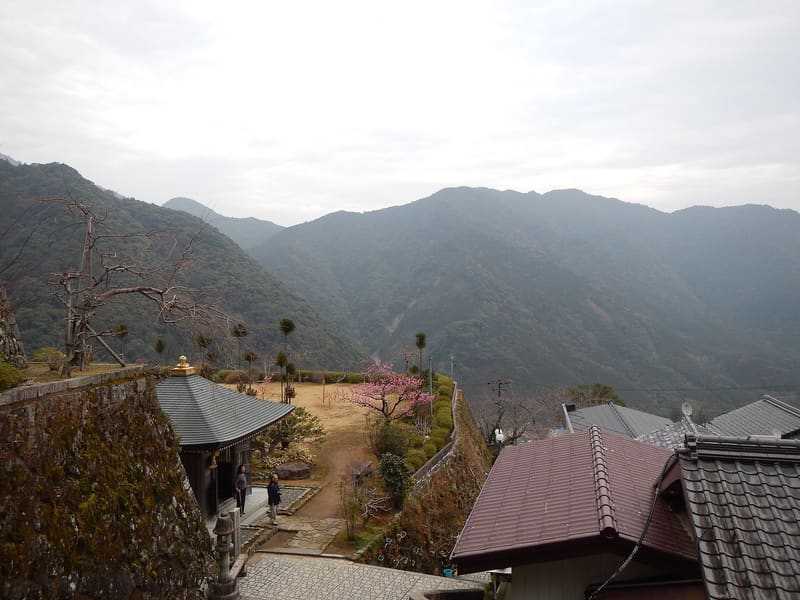
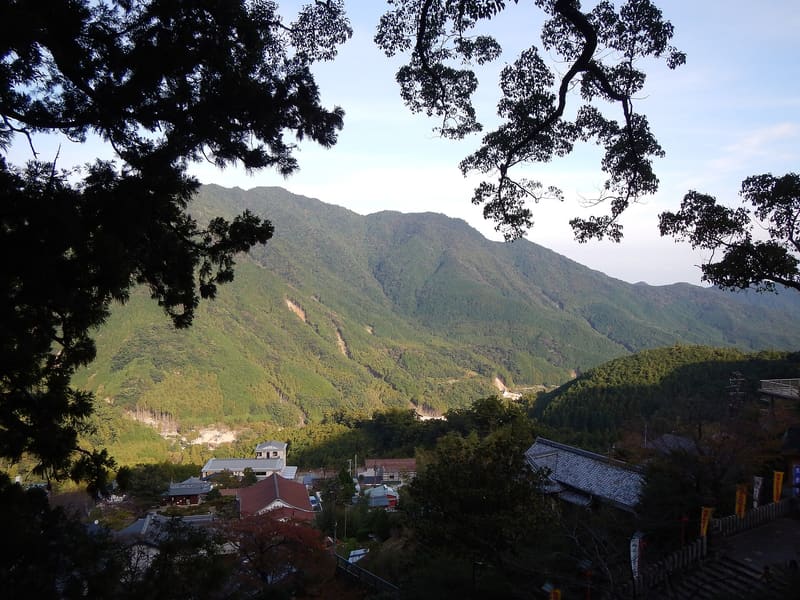
The pagoda and Nachi Falls together: one of the most photographed views in Japan.
According to tradition, the shrine grew out of the direct worship of Nachi Falls: its move to the present site is said to date from 317. Next to it stands Seiganto-ji, a Buddhist temple made independent in 1874 during the forced separation of Shinto and Buddhism (神仏分離): today it is the first stop on the pilgrimage of the 33 Kannon temples of western Japan. Its three-storey pagoda, framed by Nachi Falls in the background, is one of the most reproduced images of religious Japan. Eight of the shrine's buildings have been Important Cultural Properties since 1995.
One of the three grand shrines of the Kumano Sanzan, a UNESCO World Heritage Site since 2004 as part of the ‘Sacred Sites and Pilgrimage Routes in the Kii Mountain Range’. The site is also a National Historic Site, and the primeval forest around it is a National Natural Monument.
ℹ️ Free entry to the shrine; Seiganto-ji and its pagoda have a separate ticket (opening hours and price to be checked on the official site). Bus from Kii-Katsuura or from Nachi Station (17–25 minutes), or on foot up the Daimonzaka trail.
🚉 Nachisan · 5 min walk
Holidays in Japan? Plan them with us.Over 2,000 real places, a day-by-day itinerary.FreeOpen the map →Sources: ja.wikipedia.org · ja.wikipedia.org
Nearby
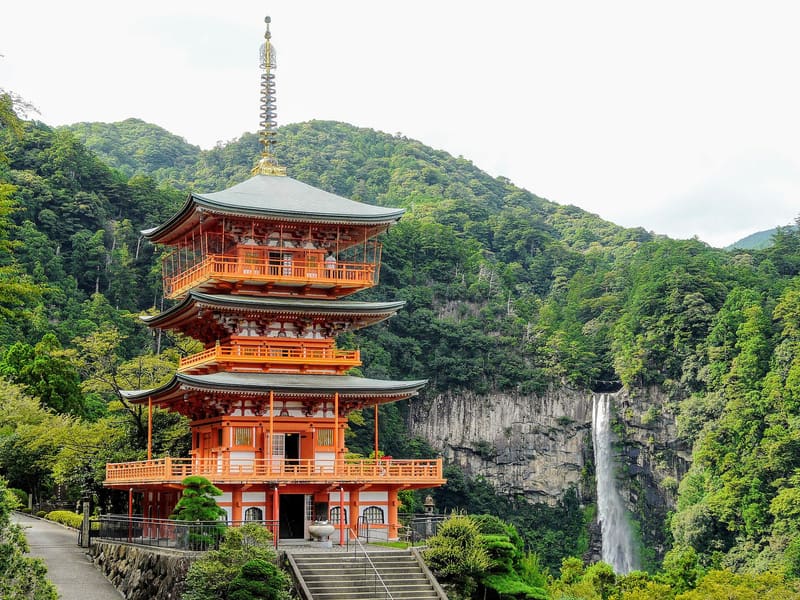 Seiganto-ji, first temple of the Saigoku pilgrimage100 mphoto by Naokijp · CC BY-SA 4.0
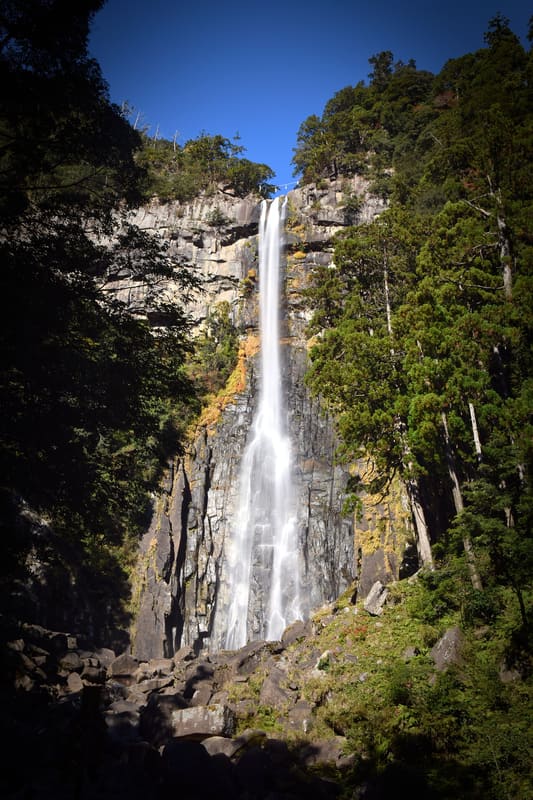 Nachi Falls800 mphoto by Raita Futo from Tokyo, Japan · CC BY 2.0
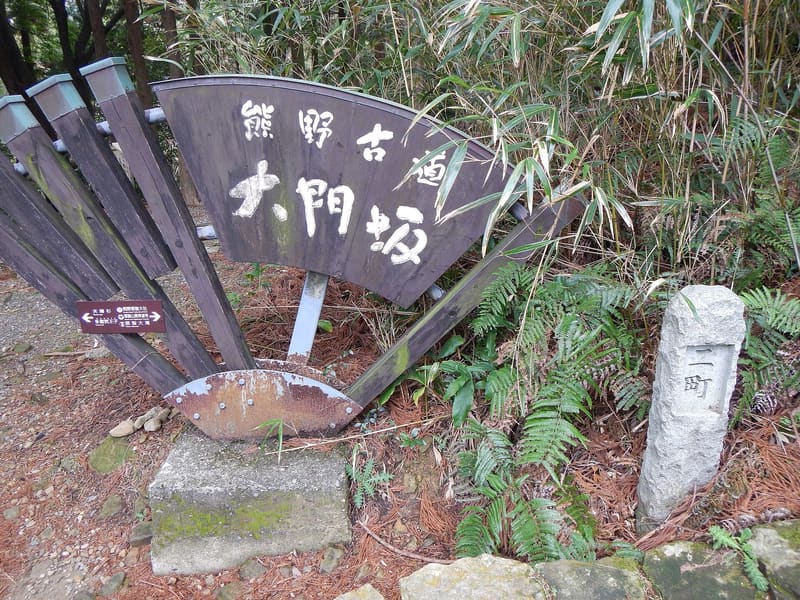 Daimonzaka, Kumano Kodō1 kmphoto by Nekosuki · CC BY-SA 4.0
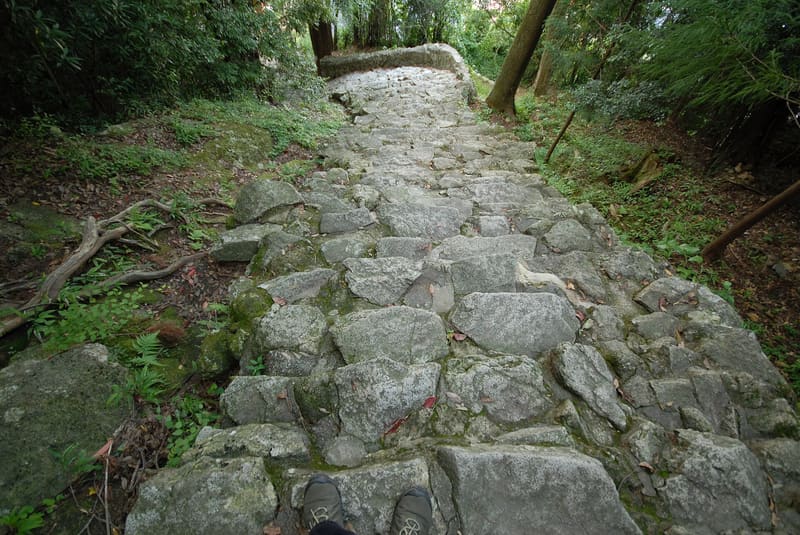 Kamikura Jinja, the shrine of the sacred Gotobiki-iwa rock10.4 kmphoto by helohelon · CC BY-SA 3.0