
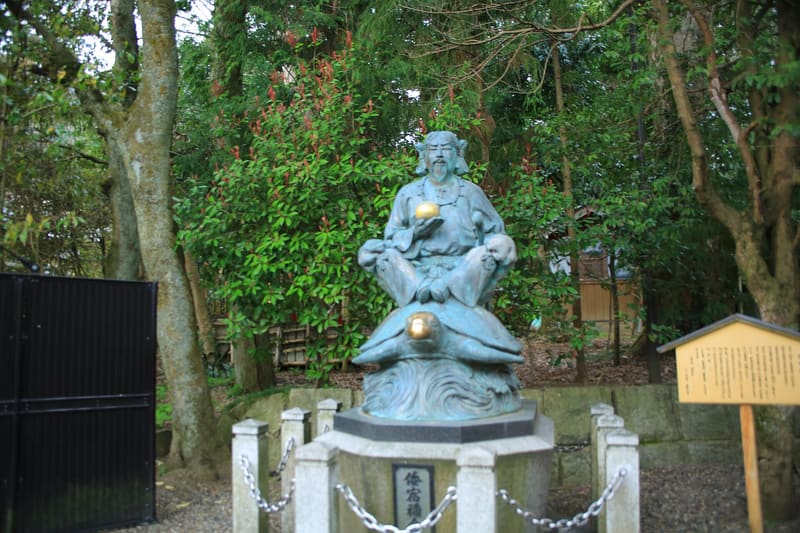
On the roof, the spheres of the five colours, allowed only here and at Ise.
You look up at the front of the main building and count the 五色の座玉: spheres painted in five colours set on the ridge beams, an ornament that only this shrine and the one at Ise are permitted to carry. In the garden a buried upturned jar makes the water dripping into it resonate, and the fortune slips, instead of being rectangular, are cut in the shape of a little umbrella.
A shrine that calls itself the ‘original Ise’: tradition has the deities Amaterasu and Toyouke stopping here before they were taken to the great shrine of Ise, and this is where the prefix *moto-* in the name comes from, meaning ‘of origin’. The official sources for the area list it as a 名神大社, an ancient rank in the state registers, and as the only shrine of 大社 rank along the San'in road.
ℹ️ Open from 7:30 to 17:00 from February to November, and until 16:30 in December and January; at weekends the hours may be longer. Paid car park. You get there in twenty-five minutes by bus from Amanohashidate Station, 神社前 bus stop, or by crossing the bay by boat (twelve minutes plus five on foot), which is the best way and the least regular. ⚠️ A second ‘original Ise’ exists at Ōe, in the municipality of Fukuchiyama, and the two claims do not agree: it is right to say so to anyone who finds both on the map.
🚉 Fuchū · 3 min walk
Holidays in Japan? Plan them with us.Over 2,000 real places, a day-by-day itinerary.FreeOpen the map →Sources: uminokyoto.jp
Nearby
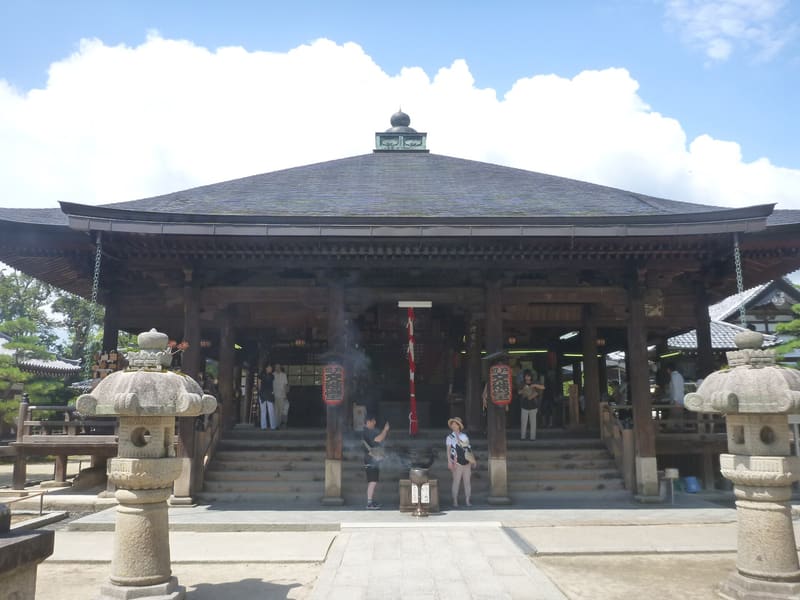 Chion-ji2.9 kmphoto by Kamigata0 · CC0
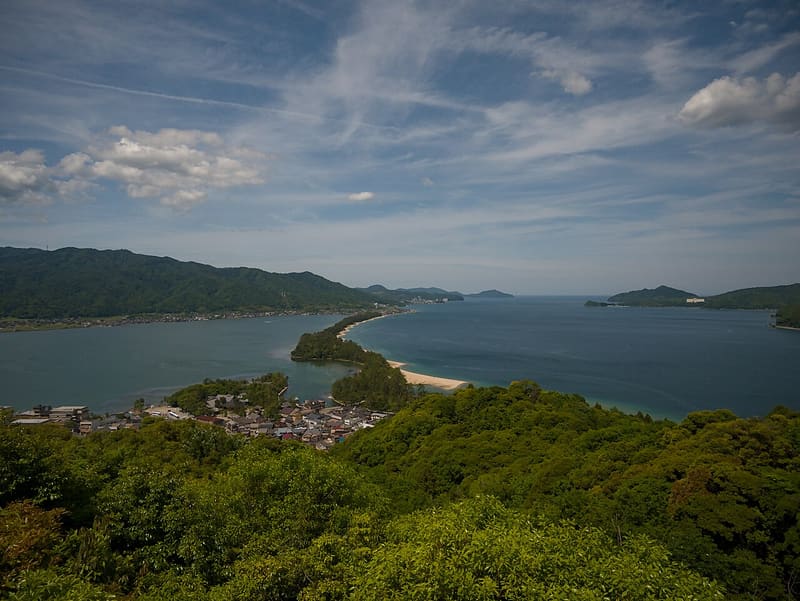 Amanohashidate3.6 kmphoto by 808PhatBeats · CC0
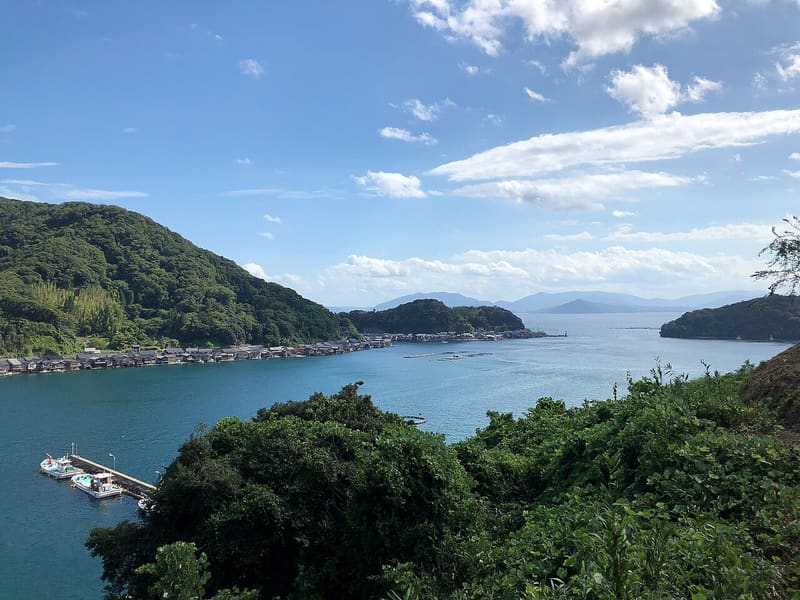 Ine no Funaya13.5 kmphoto by AsPJT · CC0
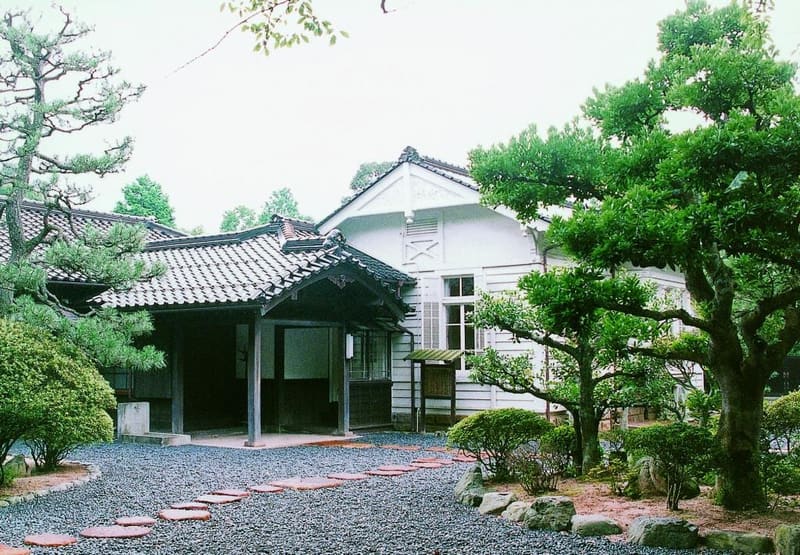 Togo-tei — former residence of the Maizuru naval commander19.4 km