
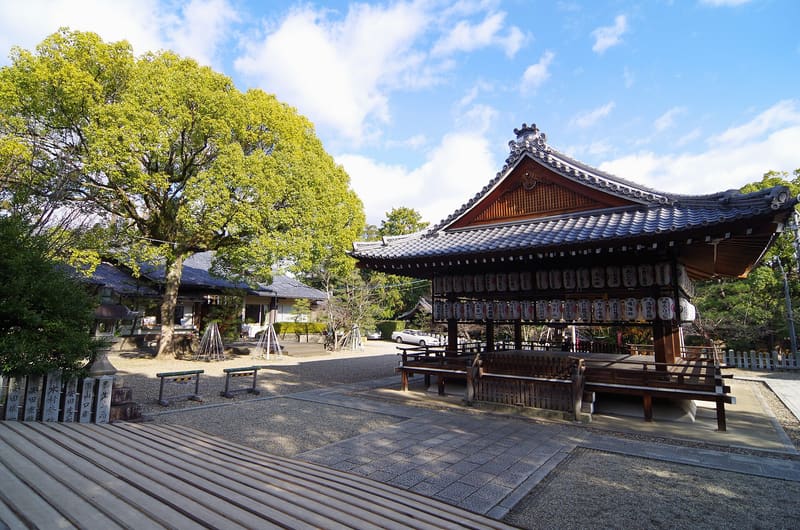
The main building dates from 1422 and is a national Important Cultural Property.
From the bottom a paved avenue climbs between large trees, and in November it closes overhead into a tunnel of maples; at the top stands the honden, the building that houses the god, built in 1422 and designated a national Important Cultural Property. Many other buildings in the grounds are in turn entered in the national register.
A shrine with a stated founding date of 718, on a wooded rise above the Mukō plain; in town it is called Myōjin-san. The main building, from 1422, is in the sangensha-nagare-zukuri style (three bays, with the front slope of the roof extended to cover the entrance) and is a national Important Cultural Property. The festivals of the year are the cherry blossom festival in April, the mid-year purification in July and the ritual fire in October.
ℹ️ ⚠️ The municipality publishes neither opening hours nor price, nor even how to get there: the fifteen minutes on foot from Hankyū Nishi-Mukō Station come from search summaries, and much of the route is uphill, with a paved avenue that climbs to the grounds. For reliable information, phone 075-931-1182.
🚉 Nishi-muko · 8 min walk
Holidays in Japan? Plan them with us.Over 2,000 real places, a day-by-day itinerary.FreeOpen the map →Sources: city.muko.kyoto.jp
Nearby
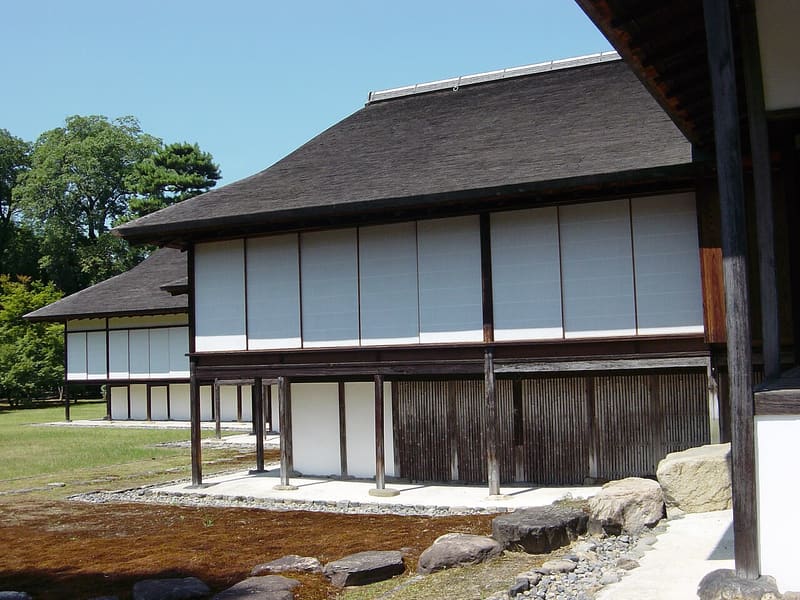 Katsura Rikyu4.5 kmphoto by alonfloc · CC BY 3.0
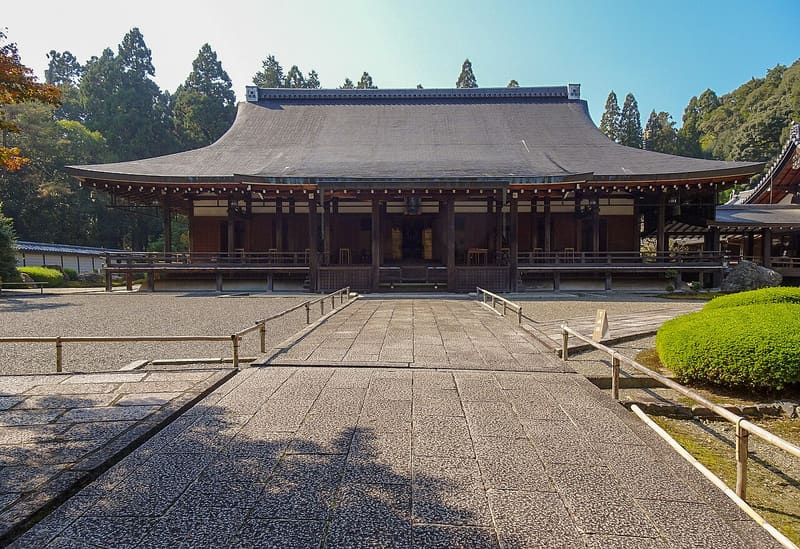 Saiho-ji (Kokedera)5.6 kmphoto by Michael Coghlan from Adelaide, Australia · CC BY-SA 2.0
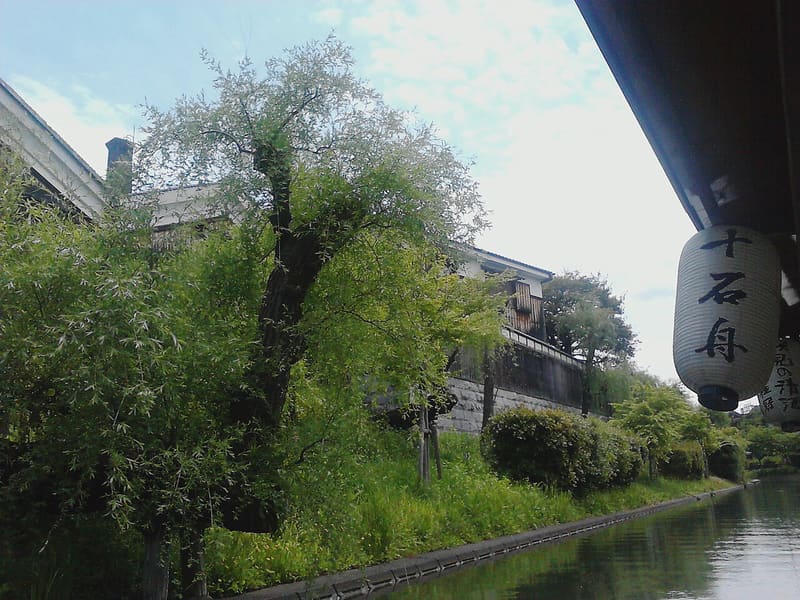 Gekkeikan Okura Museum (Fushimi)5.9 kmphoto by kajikawa · CC BY 3.0
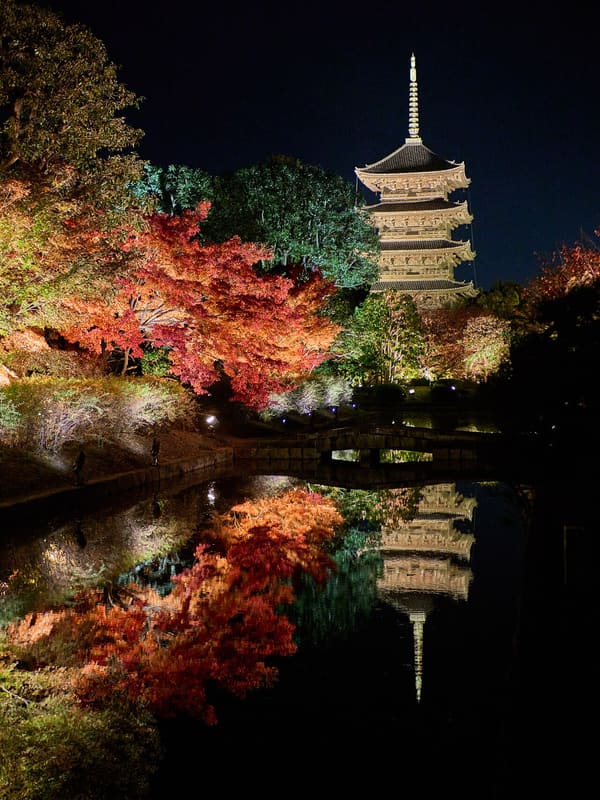 Toji5.9 kmphoto by lumoplank · CC0