
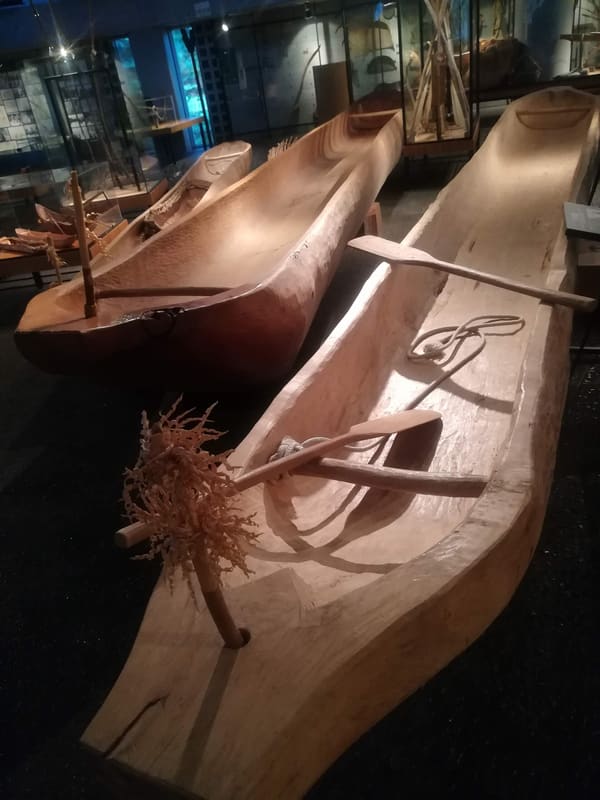
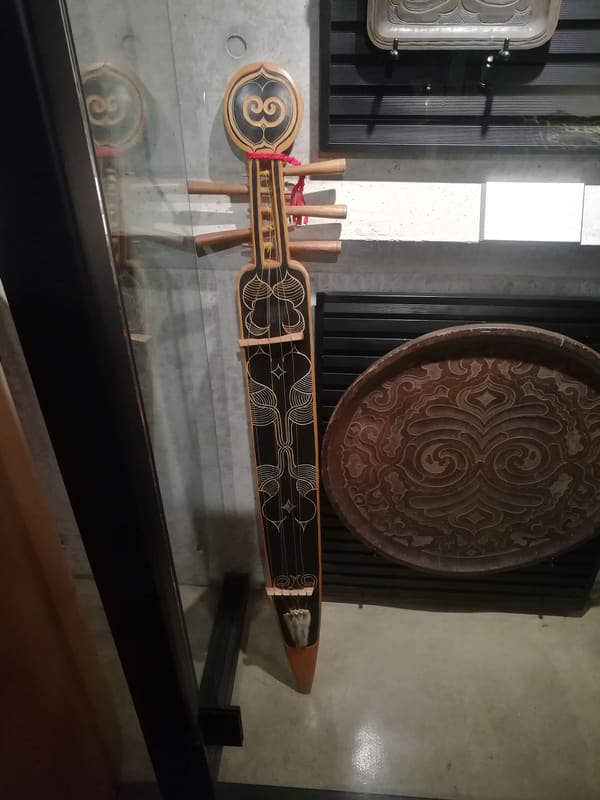
About 4,000 Ainu objects: the collection is an Important Tangible Folk Cultural Property.
The museum is divided into four sections that tell the story of Ainu life through sight and sound: clothing, hunting and fishing tools, ritual objects, and videos where you can hear the yukar, the sung oral epic. Outside, the reconstructed village shows a chise (traditional house) and storehouses on stilts.
Opened in 1992 in Biratori, in Saru District, the museum holds much of the material from the earlier Kayano Shigeru Nibutani Ainu Museum (1972): Kayano Shigeru, an ethnologist and Japan's first Ainu member of parliament, donated his collection to the town. The collection of about 4,000 objects from everyday Ainu life, the ‘Collection of Ainu everyday utensils from Nibutani and the surrounding area’, bears the designation of Important Tangible Folk Cultural Property (重要有形民俗文化財). Nibutani is today one of the places where the Ainu language and crafts remain alive, not just on display.
ℹ️ Open 9:00–16:30. Tickets: adults 400 yen, students (elementary/junior high) 150 yen, discounts for groups of 20+. Closed from 16 December to 15 January, and on Mondays from 16 November to 15 December and from 16 January to 15 April. Tel. 01457-2-2892.
🚉 資料館前 · 7 min walk
Holidays in Japan? Plan them with us.Over 2,000 real places, a day-by-day itinerary.FreeOpen the map →Sources: nibutani-ainu-museum.com · town.biratori.hokkaido.jp · ja.wikipedia.org