
In 1800 Inoue Den, aged 13, devised the pattern that became an Intangible Cultural Property in '57.
At the museum you find on display the personal belongings of Inoue Den, the thirteen-year-old girl who, in 1800, noticed how the uneven fading of the indigo on a worn kimono created a mottled pattern: from that observation came a weaving method, kasuri (絣), the resist-dyeing technique that creates blurred designs on the thread before it is woven. Applied to Kurume cotton, in 1957 it became the first cotton fabric in Japan to be designated an Important Intangible Cultural Property. Admission is free.
地場産くるめ (Jibasan Kurume) is a centre that brings together shops and producers of Kurume's traditional crafts; inside it is the 久留米絣史料館, the museum dedicated to Kurume Kasuri. The 1957 designation applies to the weaving technique, not to the museum building.
ℹ️ Open 10:00–17:00, closed on the second and fourth Tuesdays of the month and from 29 December to 3 January. Car park with 250 spaces near the Kurume expressway interchange.
🚉 Mii · 21 min walk
Holidays in Japan? Plan them with us.Over 2,000 real places, a day-by-day itinerary.FreeOpen the map →Sources: crossroadfukuoka.jp
Nearby
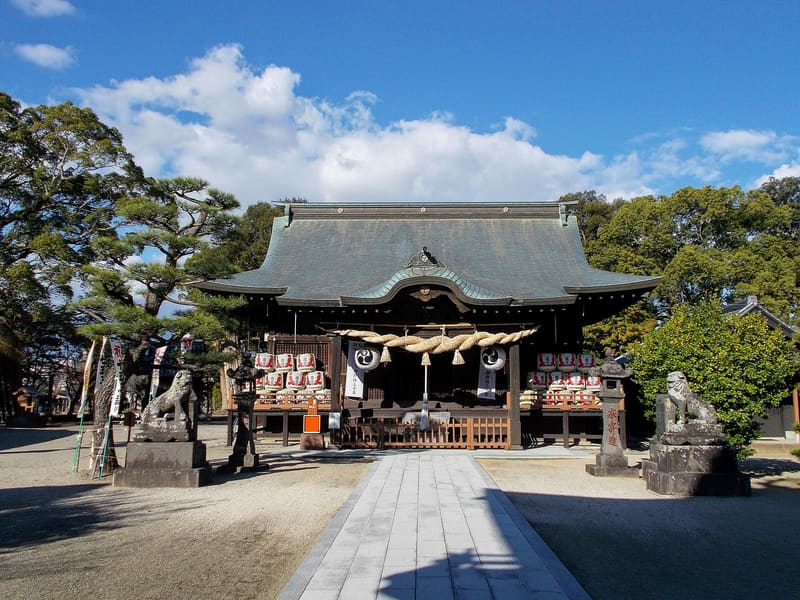 Oniyo of Daizenji Tamataregū8.9 kmphoto by STA3816 · CC BY-SA 4.0
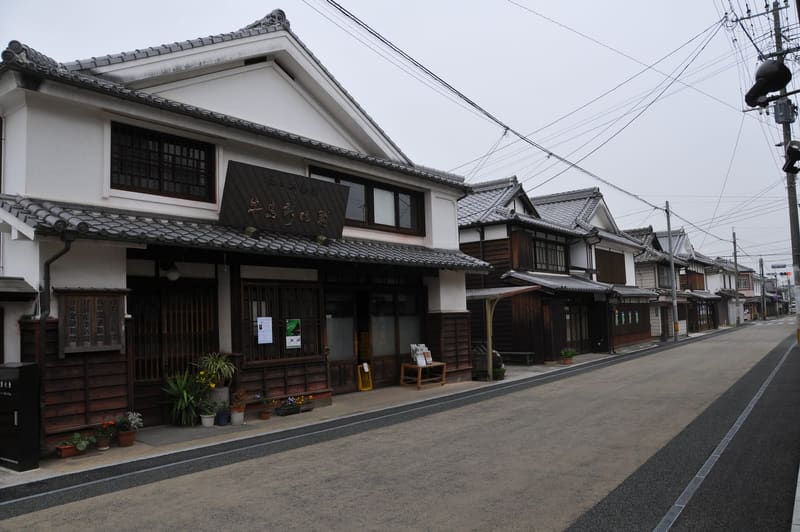 Yame Fukushima (white-walled district)12.2 km
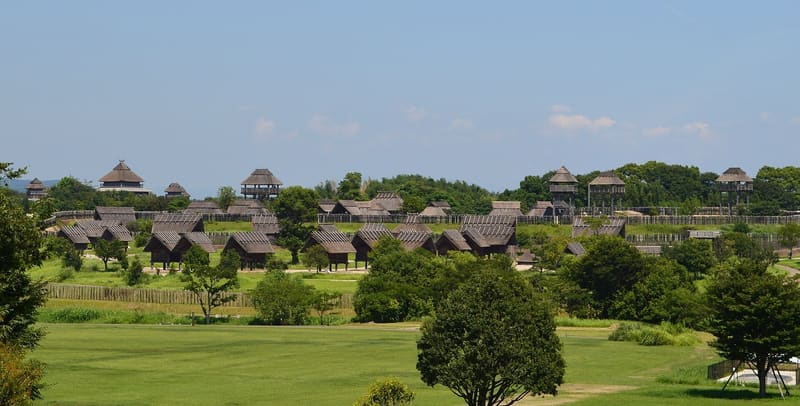 Yoshinogari Historical Park15.2 kmphoto by Saigen Jiro · CC0
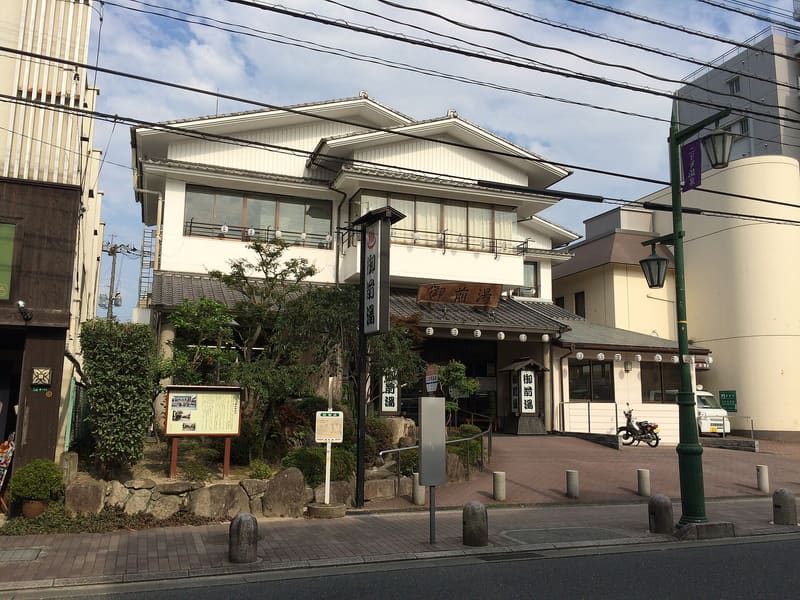 Futsukaichi Onsen19.5 kmphoto by 筑紫太郎 This photo was taken with iPhone 5S · CC BY-SA 4.0