
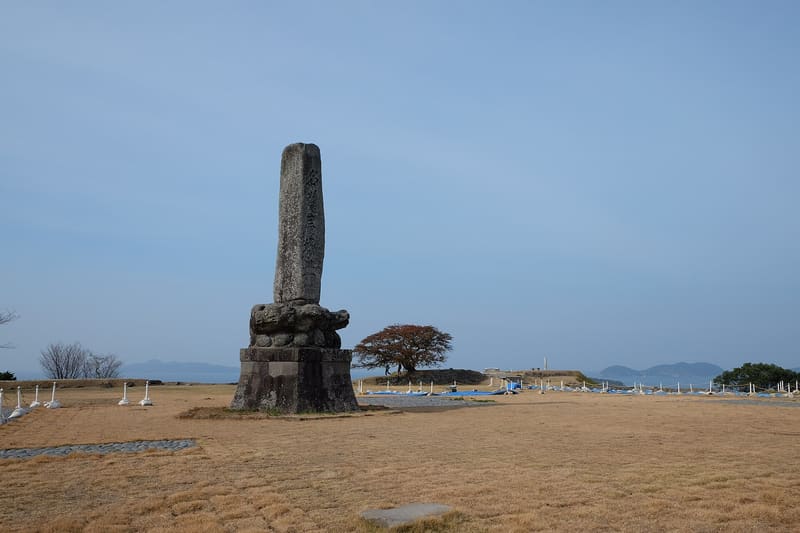
In five months, in 1592, it became the second city of Japan after Osaka, for seven years.
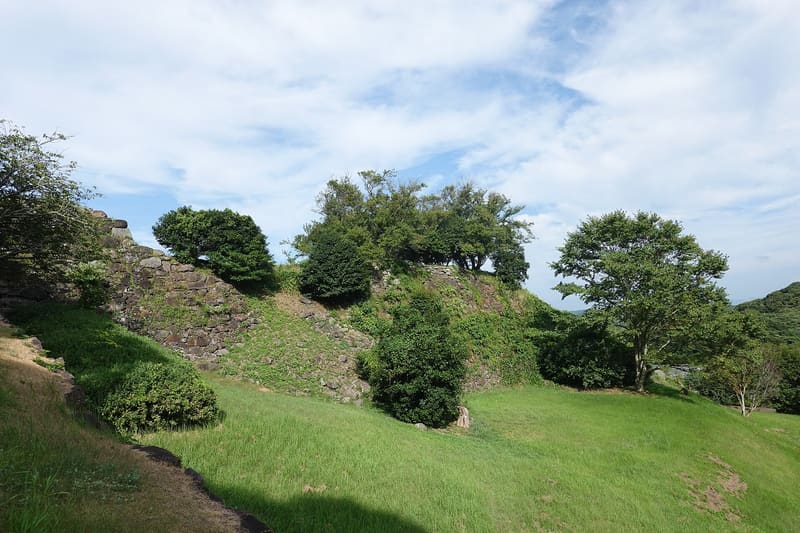
Of the walls, the dry-stone ramparts survive, restored since 1976 and now walkable close up: the path climbs from the museum to the Ninomaru and the Honmaru in 30–40 minutes, past the different masonry techniques used by the daimyō called on to build the castle. All around, over 130 camps of feudal lords still dot the countryside within a radius of three kilometres.
Built on the orders of Toyotomi Hideyoshi in 1592 as a base for the campaigns in Korea (the Bunroku-Keichō wars), it was by area the second largest castle in Japan after Osaka (about 17 hectares) and housed over 200,000 people, counting warriors and merchants; it remained in use until Hideyoshi's death in 1598. The ruins and 23 adjacent camps (21 in Karatsu, 2 in Genkai) have been a Special Historic Site (特別史跡) since 22 August 1955, raised from the plain Historic Site designation of 1926.
ℹ️ The ruins can be visited freely in the open air (a maintenance contribution of 100 yen is requested from university students and adults). The adjacent museum (佐賀県立名護屋城博物館) has free entry (special exhibitions are charged) and is open 9:00–17:00, closed on Mondays (the following weekday if it is a public holiday) and from 29 December to 3 January. Free car park for 58 cars and 6 buses.
🚉 馬渡島航路のりば · 20 min walk
Holidays in Japan? Plan them with us.Over 2,000 real places, a day-by-day itinerary.FreeOpen the map →Sources: saga-museum.jp · saga-museum.jp
Nearby
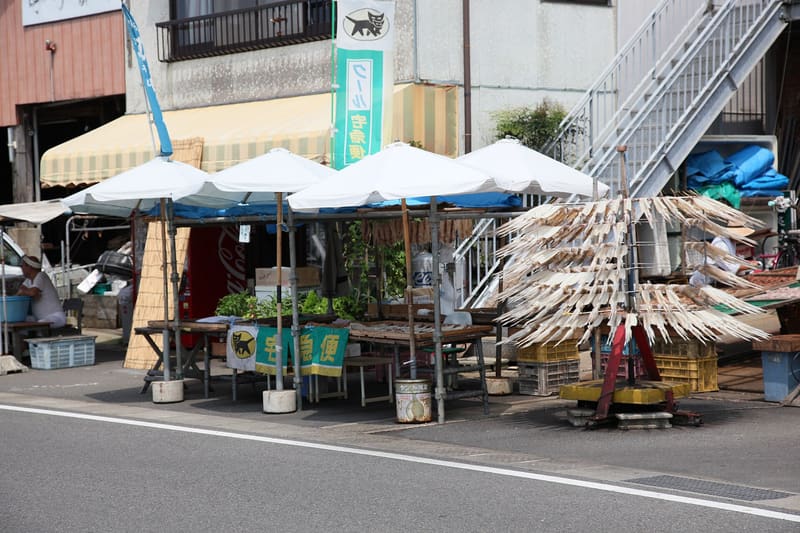 Yobuko Morning Market3 kmphoto by flickr ID; gtknj ( URL ) · CC BY 2.0
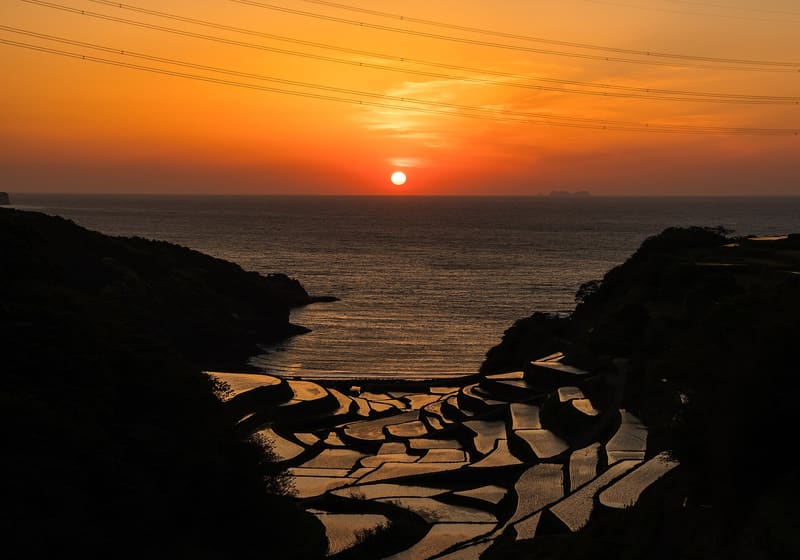 Hamanoura Rice Terraces5 kmphoto by TsuruSho7 · CC BY 4.0
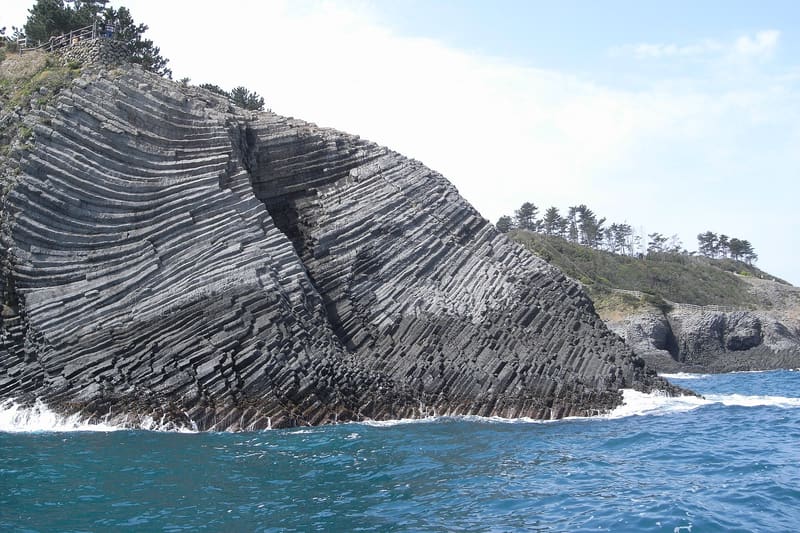 Nanatsugama — the seven sea caves5.6 kmphoto by Yukiko Yamamoto from flickr · CC BY 2.0
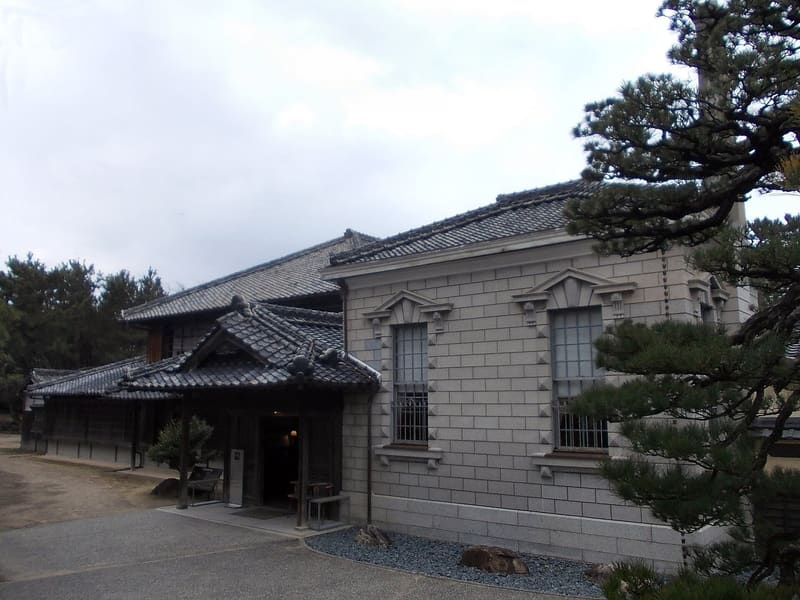 Former Takatori Residence12.9 kmphoto by STA3816 · CC BY-SA 4.0