
On 14 January thousands of men walk to the fire with a sheet of paper in their mouths, so as not to talk
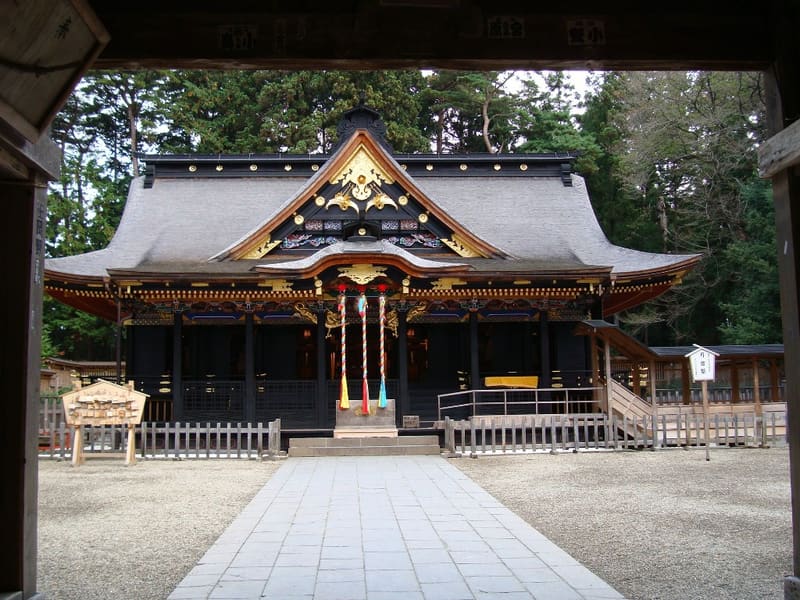
On the evening of 14 January, at about four, a priest uses a fire lit by friction to set light to the pile of New Year decorations collected around the city, and the bonfire burns until dawn. Thousands arrive in procession, bare-chested under a band of white cloth, a bell in the right hand and a lantern in the left, and a sheet of paper gripped between the teeth, because there is no chatting on the way. The rest of the year the place is a quiet courtyard with a building lacquered in black and gold at the far end.
The main body of the shrine (inner hall, prayer hall and the stone room that joins them) was built in 1607 at the wish of Date Masamune, the lord who had just founded Sendai, and in November 1952 it was designated a National Treasure. It is the oldest surviving example of the style known as gongen-zukuri, in which the two halls are linked by a room with a lower floor; the inner hall measures five bays by three, and is lacquered, painted, carved and fitted with metalwork in the taste of the Momoyama period. The bonfire of 14 January is called Matsutaki-sai, but in Sendai everyone calls it Dontosai: it has been documented since 1849 and today it is held in 157 places in the city, but this is the only one with a proven continuity from the Edo period.
ℹ️ The grounds are open and free; the amulet counter is open 9:00–17:00 and prayer requests are accepted from 9:00 to 16:00, without booking. Eighty parking spaces. From JR Sendai Station you take a city bus (twenty minutes) to the Ōsaki-Hachimangū-mae bus stop and then walk five minutes; alternatively it is a quarter of an hour on foot from Kunimi or Tōhoku-Fukushi-Daimae stations, on the Senzan Line. On 14 January the area is closed to traffic and crowded: go by public transport.
🚉 Ryuhoji Iriguchi · 7 min walk
Holidays in Japan? Plan them with us.Over 2,000 real places, a day-by-day itinerary.FreeOpen the map →Sources: oosaki-hachiman.or.jp · oosaki-hachiman.or.jp · oosaki-hachiman.or.jp · pref.miyagi.jp · bunkazai.city.sendai.jp · rurubu.jp · experienceeastjapan.jp
Nearby
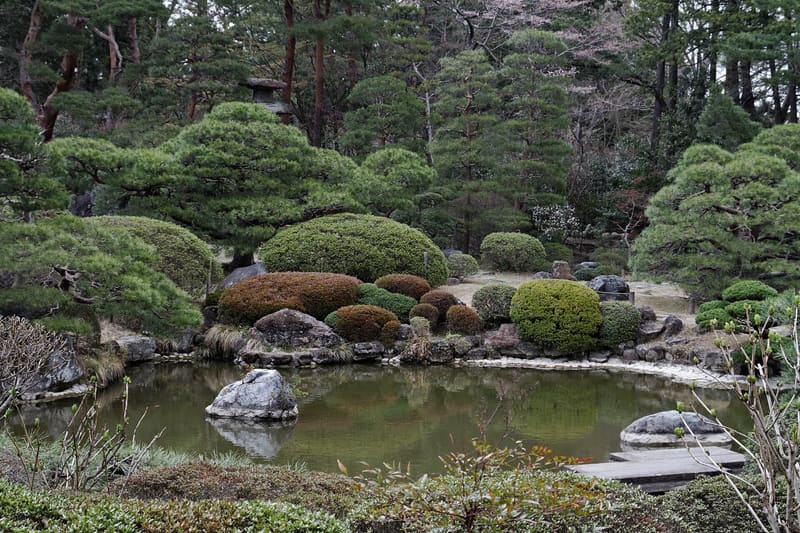 Rinno-ji Temple1.8 kmphoto by KimonBerlin · CC BY-SA 2.0
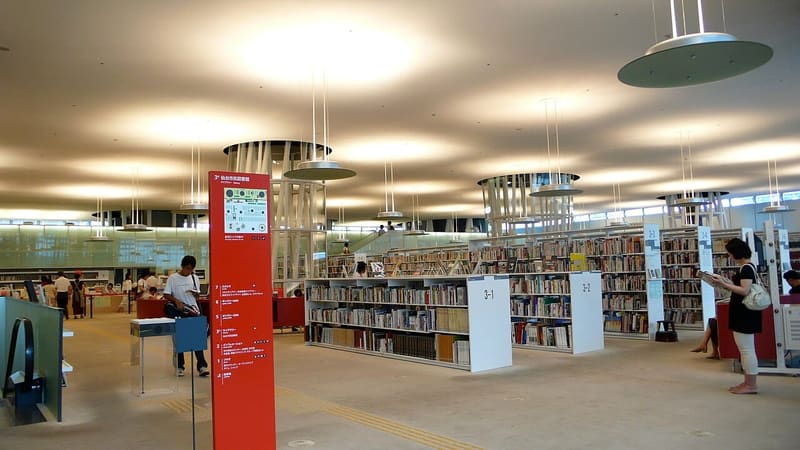 Sendai Mediatheque1.9 kmphoto by yisris / Yuichi · CC BY-SA 2.0
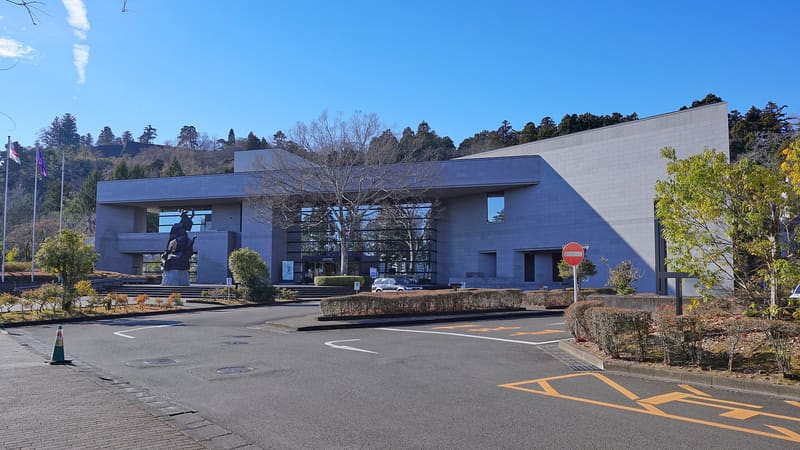 Sendai City Museum2 kmphoto by 掬茶 · CC BY-SA 4.0
 Jozenji Avenue2.1 kmphoto by Miyagi_Prefecture_office_18F_Sview2.jpg : Wkatsuhiro derivative work: Osxlib0422 ( talk ) · Public domain