
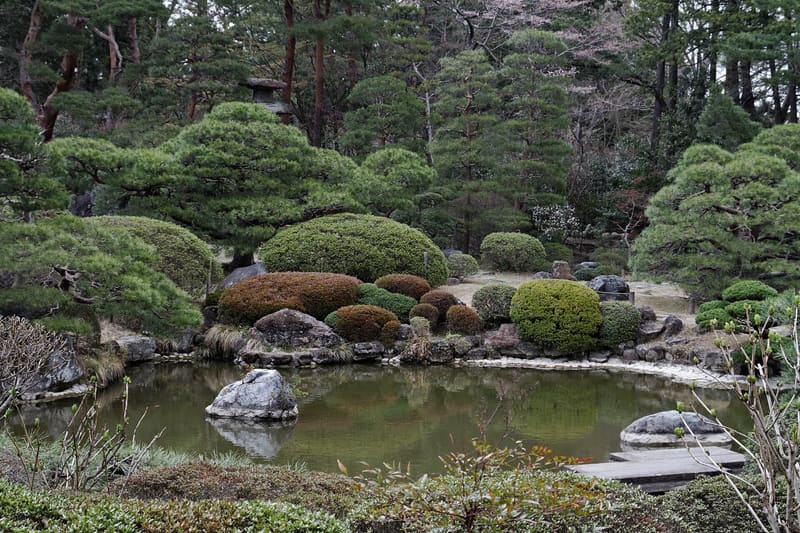
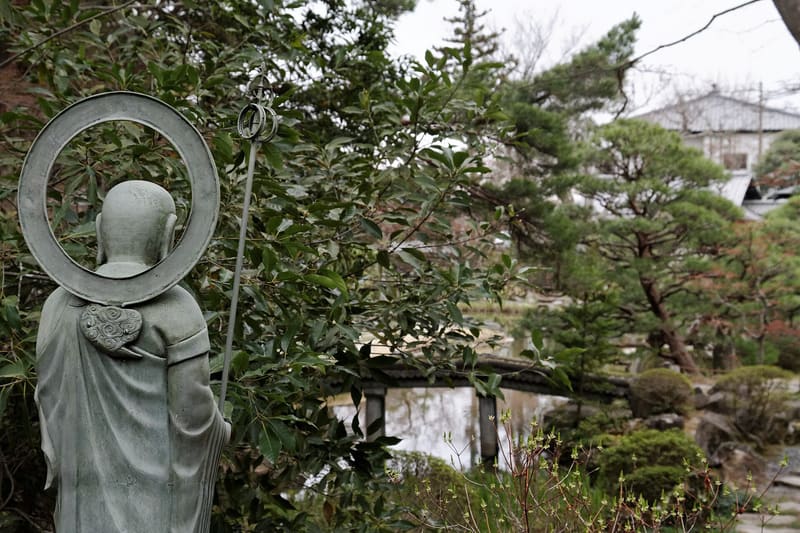
The fire of 1876 destroyed the temple: only the gate from 1691 survived.
Founded in 1441 by the Date clan as a memorial temple, Rinno-ji followed the family through six moves between Fukushima, Yamagata and Iwate before settling here in 1602. The pond stroll garden, with three Zen dry landscape gardens, was made in the Taisho era (1912–1926): it is one of the few Japanese gardens in central Sendai, and it is cited as one of the best in the whole of Tohoku.
The Sōtō Zen temple was founded in 1441, commissioned by the Date family, as a place of worship for a consort of the house; it followed the clan's moves across three centuries (from Yanagawa to Nishiyama, Yonezawa, Aizu, Yonezawa again, Iwadeyama) until it settled in the Kitayama neighbourhood of Sendai in 1602. In 1876 (Meiji 9) a great fire devastated the whole Kitayama neighbourhood and burned down the entire complex: only the entrance gate, built in 1691, survived. The temple was later rebuilt, and its famous garden dates from the Taisho era.
ℹ️ Open all year, from 8:00 to 17:00 (last entry at 16:30). Admission 300 yen per adult, free below elementary school age. Inside there is a seated statue of Shakyamuni, a Tangible Cultural Property of the city of Sendai, which can only be seen on the 1st and the 15th of each month.
🚉 Kita-Sendai · 17 min walk
Holidays in Japan? Plan them with us.Over 2,000 real places, a day-by-day itinerary.FreeOpen the map →Sources: rinno-ji.or.jp · rinno-ji.or.jp · gogo-miyagi.com · oniwa.garden
Nearby
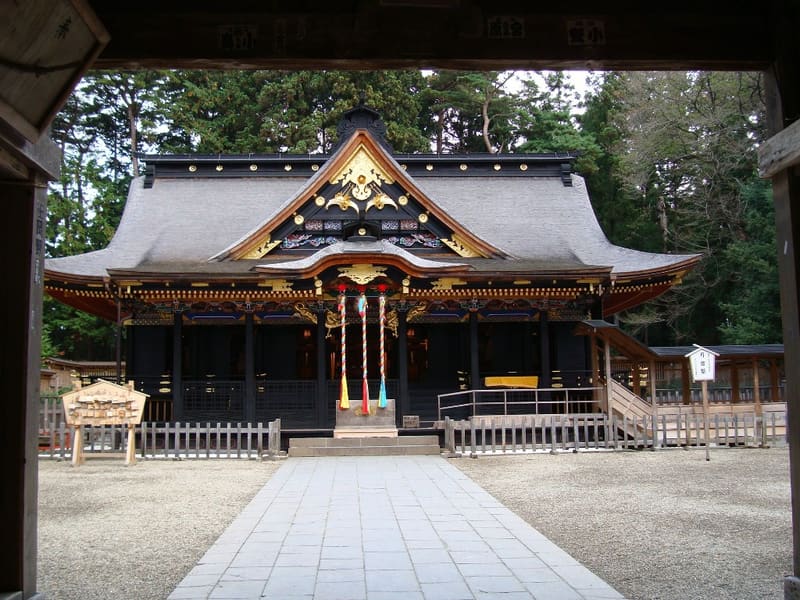 Ōsaki Hachimangū1.8 kmphoto by Caveman2 · Public domain
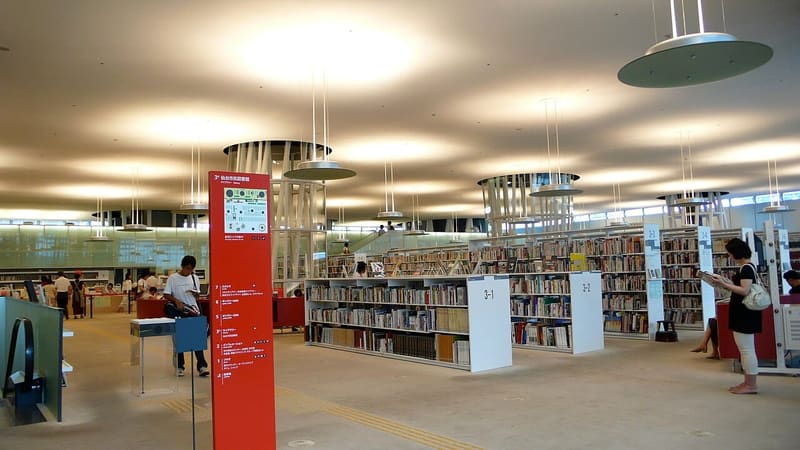 Sendai Mediatheque2.1 kmphoto by yisris / Yuichi · CC BY-SA 2.0
 Jozenji Avenue2.1 kmphoto by Miyagi_Prefecture_office_18F_Sview2.jpg : Wkatsuhiro derivative work: Osxlib0422 ( talk ) · Public domain
 Kotodai Park2.1 kmphoto by KENPEI · CC BY-SA 3.0