
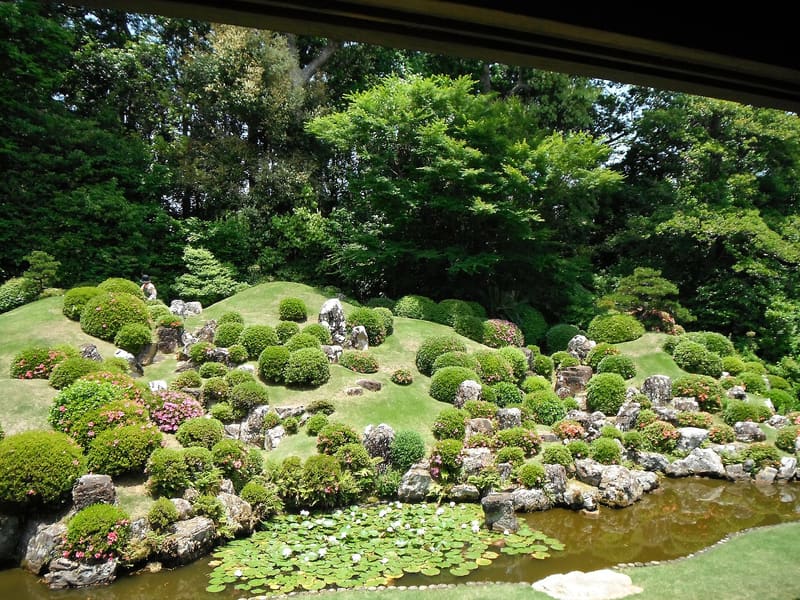
Garden by Kobori Enshū, a national 名勝 since 1936: the family temple of the Ii clan since 733.
If you go in through the karamon gate, you find a pond shaped like the Japanese character for ‘heart’, designed by Kobori Enshū at the beginning of the Edo period: a guardian stone in the centre, two stones at the sides, a stone turned towards the basin opposite. In the entrance corridor your footsteps make the floor creak, as several reviews point out; in the rooms, the sliding doors are painted with a dragon and a tiger.
According to the tradition reported by the official website, the temple was founded in 733 by the monk Gyōki. It became a Zen temple at the end of the Muromachi period, when the twentieth head of the family, Ii Naohira, invited the master Mokusō Zuien to be its first Zen abbot: from here the Rinzai Myōshin-ji school spread throughout the Enshū region. The present name comes from the Buddhist posthumous name of the twenty-second head of the family, Ii Naomori, who died at the Battle of Okehazama in 1560. It has been the family temple of the Ii lords for forty generations, from the legendary founder Ii Tomoyasu – who, according to tradition, was born beside a well a short distance away, which can still be visited and is known as the ‘well of Tomoyasu's birth’ (共保出生の井戸): this is the place of origin of the Ii clan (井伊家発祥の地) – to the twenty-fourth, Ii Naomasa, who served Tokugawa Ieyasu at Hamamatsu Castle and became head of the Four Heavenly Kings of the Tokugawa, and the thirty-sixth, Ii Naosuke, the great shogunal counsellor who opened Japan to foreign trade in the mid-nineteenth century. The temple is also linked to Ii Naotora, a woman who headed the clan in the sixteenth century and the protagonist of NHK's 2017 taiga drama. The garden, designed by Kobori Enshū as the north garden of the main hall, has been a national 名勝 (official designation of a fine landscape) since 1936.
ℹ️ Open 9:00–16:00 (the gate closes at 16:30); high school age and up 700 yen, elementary and junior high 300, groups of 30 people 630 and 270, with a disability card 350 and 150. Closed on 15 August and from 22 to 27 December, with possible extra closures for ceremonies. The temple states a visit of about 60 minutes. It is not wheelchair accessible, to protect the property. Entetsu bus 43 or 45 to the Iinoya bus stop, 40–50 minutes from Hamamatsu Station, about 40 services on weekdays and 34 at weekends. Free car parks in the area. The Iinoya-gū shrine (井伊谷宮), 71 metres away, is dedicated to Prince Muneyoshi, whose tomb lies behind the building.
🚉 Jinguji · 9 min walk
Holidays in Japan? Plan them with us.Over 2,000 real places, a day-by-day itinerary.FreeOpen the map →Sources: ryotanji.com · ryotanji.com · ryotanji.com
Nearby
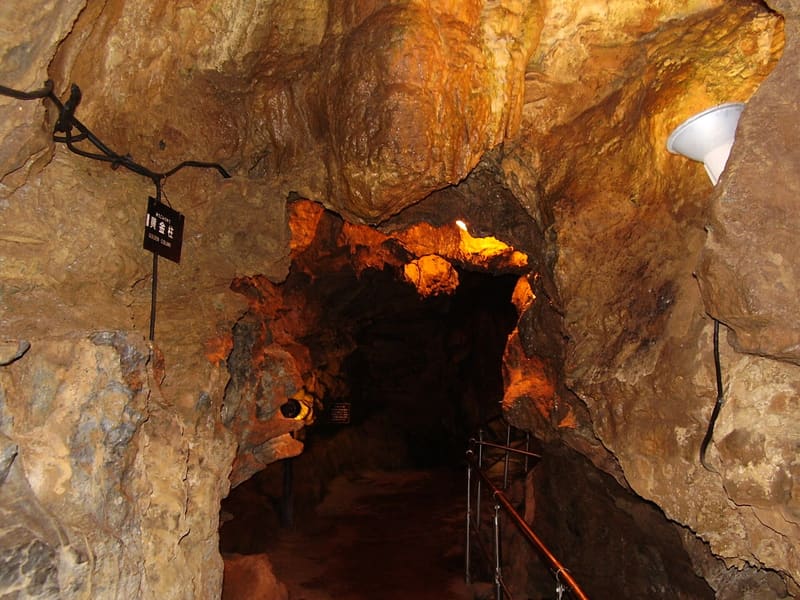 Ryūgashi Cave2.5 kmphoto by MH001 · CC BY-SA 3.0
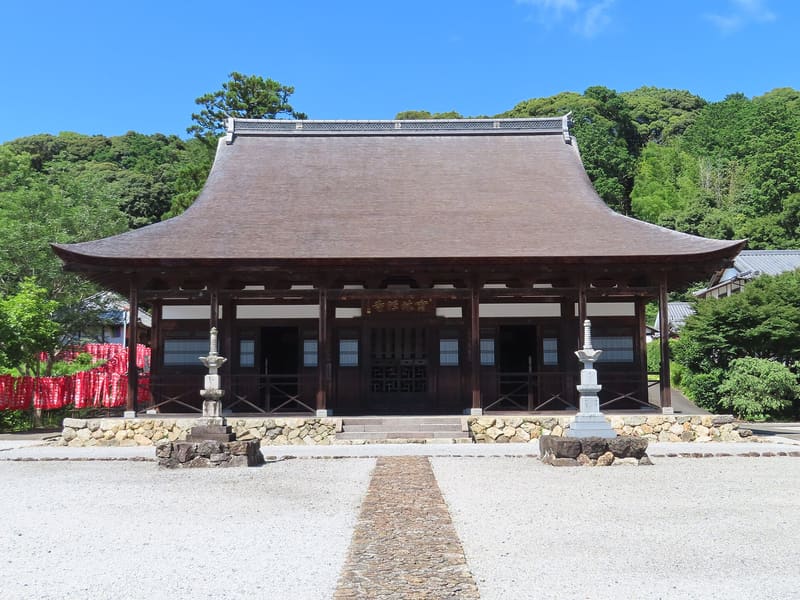 Hatsuyama Hōrin-ji2.5 kmphoto by 運動会プロテインパワー · CC BY-SA 4.0
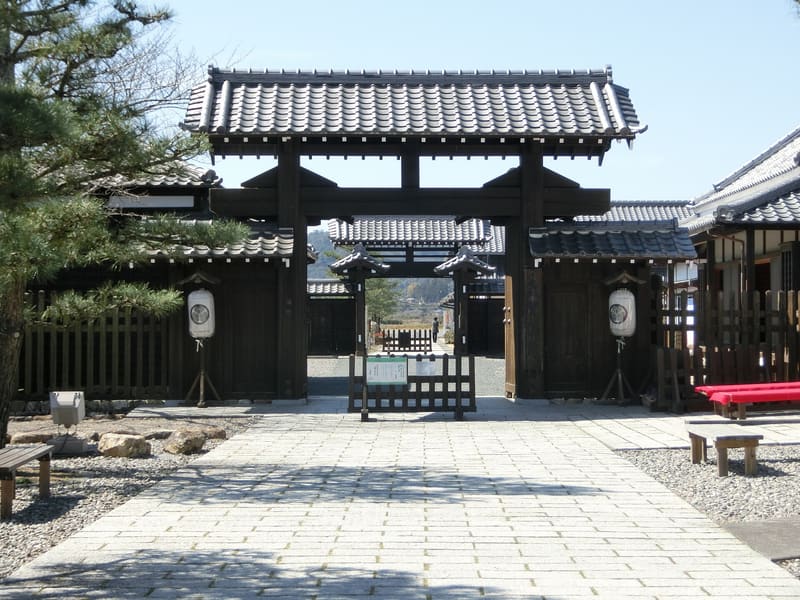 Kiga Checkpoint3.1 kmphoto by Abasaa · Pubblico dominio (dedica dell'autore)
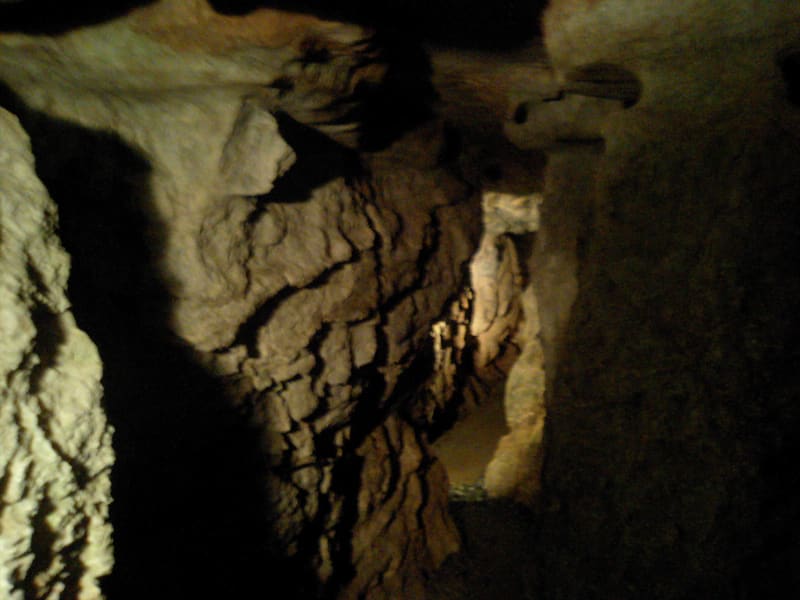 Washizawa Wind Cave4.6 kmphoto by MH001 · Pubblico dominio