
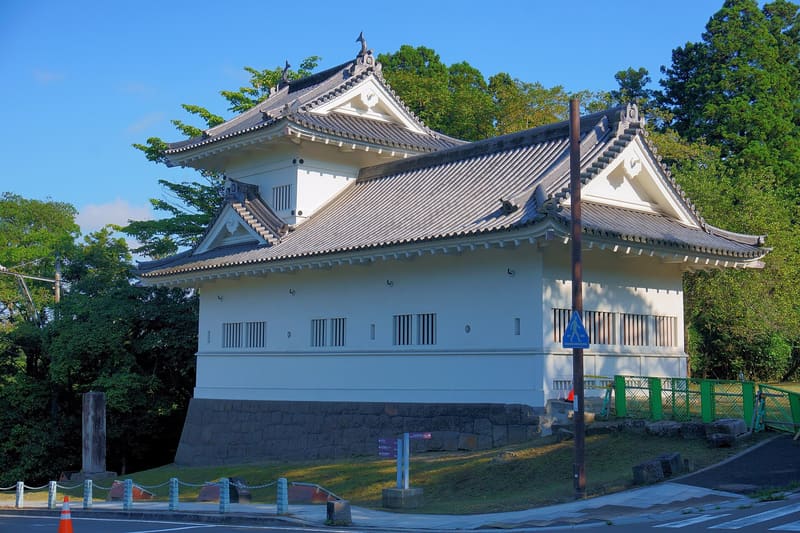
There was never a keep: the rampart and the statue stay lit until 23:00.
You climb a hill a hundred and thirty metres above the river and at the top there is no castle: there is the stone wall, the equestrian statue of Date Masamune (the lord who had it built) and the city spread out below. From sunset until eleven at night the rampart and the statue stay lit, and people come up here specially for that.
Date Masamune marked out the perimeter in December 1600, started work on site the following month and finished in 1602, on a spur closed off on one side by the Hirose River and on the other by a valley: two sides out of four are defended by the terrain. The castle never had a main tower, and it is said that this was a choice made out of caution towards Tokugawa Ieyasu, the military leader who had just taken the country. Nothing is left of the buildings. The site has been a National Historic Site since August 2003, a recognition that came after the work on the rampart of the upper enclosure, begun in 1997, and the excavation of the audience hall.
ℹ️ The castle area is open and free. You pay only for the site's museum: 770 yen for adults, 550 for junior high and high school, 330 for elementary school; it opens at 9:00 and closes at 17:00 from April to October, with last entry at 16:40, and at 16:00 from November to March, with last entry at 15:40. The rampart and the statue are lit from sunset to 23:00. The Loople tourist bus leaves from stand 16 of the west terminal at Sendai Station and stops in front.
🚉 International Center · 17 min walk
Holidays in Japan? Plan them with us.Over 2,000 real places, a day-by-day itinerary.FreeOpen the map →Sources: city.sendai.jp · sentabi.jp
Nearby
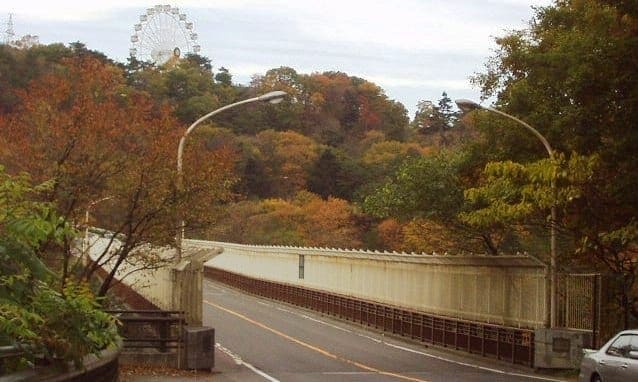 Yagiyama Bridge400 mphoto by YagiyamaBashi.JPG : Kinori derivative work: 0607crp ( talk ) · Public domain
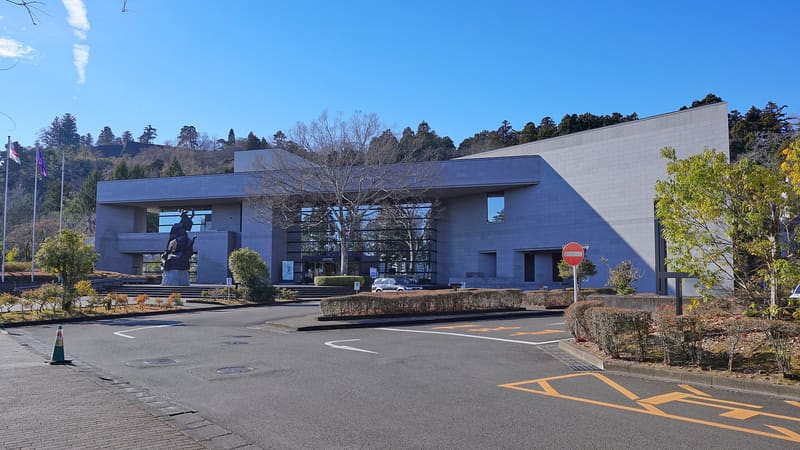 Sendai City Museum500 mphoto by 掬茶 · CC BY-SA 4.0
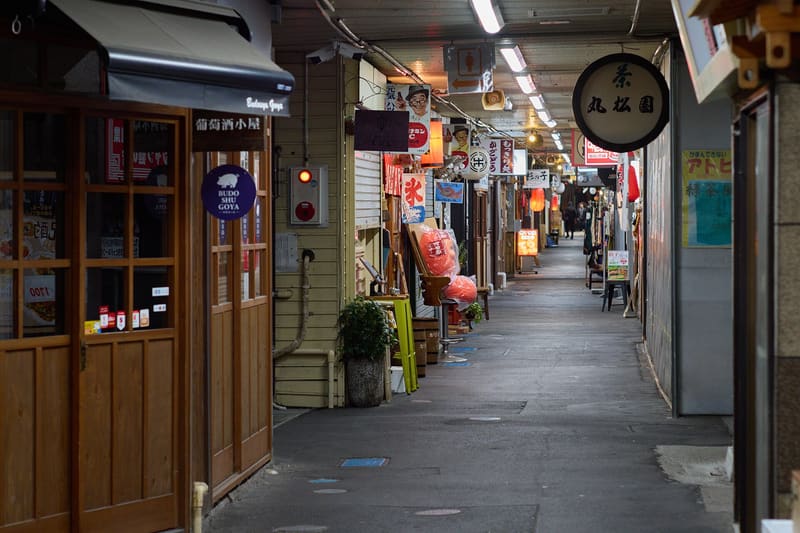 Iroha Yokochō1.7 kmphoto by lumoplank · CC0
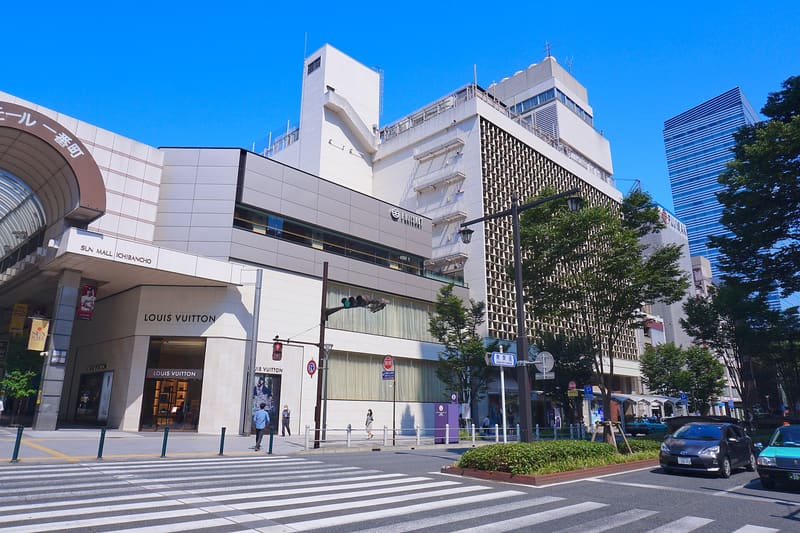 Fujisaki Department Store1.7 kmphoto by 掬茶 · CC BY-SA 4.0