
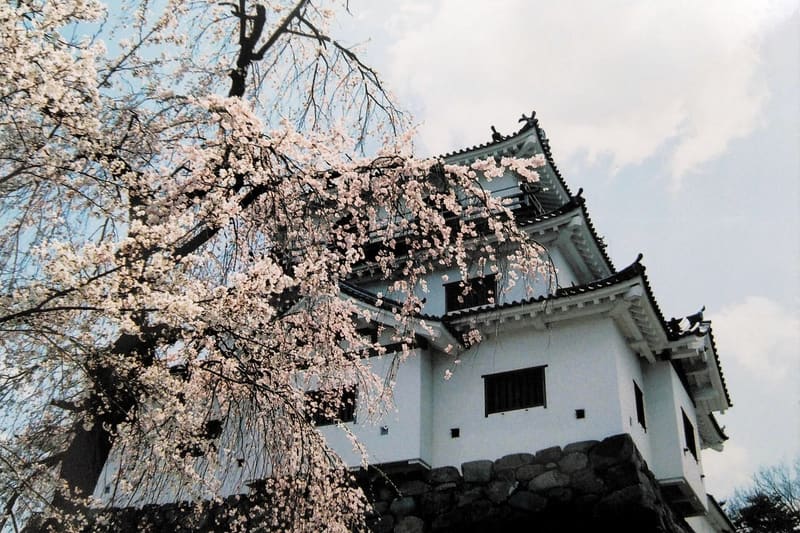
Rebuilt in 1995 entirely in wood, not in concrete like almost all Japanese towers.
You climb up to Masuoka Park and the three-storey tower comes into view whole, with its timbers exposed. Inside there are no display cases or lifts: you climb a steep wooden staircase, as in a real castle, and from the top floor you can see the town below. It has been rebuilt in solid wood, not in concrete like almost all the Japanese towers rebuilt after the war, and you can feel the difference underfoot. At the foot of the hill you can go into a samurai house from 1730.
In 1602 Katakura Kojūrō Kagetsuna, the right-hand man of Date Masamune, settled here, and the Katakura stayed for eleven generations, more than 260 years, until the end of samurai rule; before that the castle had passed through the hands of Toyotomi Hideyoshi and then of Masamune himself, after the Battle of Sekigahara in 1600. When in 1615 the ‘one domain, one castle’ law ordered the secondary fortresses to be pulled down, the Sendai domain obtained an exception and kept two: Sendai and Shiroishi. The three-storey tower you see today reproduces the one that Katakura Munekage had rebuilt in 1823, after the fire of 1819; the original was demolished in 1874, when the new Meiji government dismantled the castles of the domains that had opposed it, and for a hundred and twenty years a park stood in its place. The reconstruction, in wood and with the old techniques, began in 1992 and was finished in March 1995: 16.7 metres high from the top edge of the stone wall, nine bays by six at the base and five by three at the top, it is among the largest wooden towers rebuilt in post-war Japan.
ℹ️ Open from 9:00 to 17:00 from April to October and from 9:00 to 16:00 from November to March, with last entry half an hour before closing; closed from 28 to 31 December. The castle costs 400 yen, 200 from elementary school to high school, free under six; the samurai residence 200; the combined ticket for the castle, the three-dimensional cinema and the residence 800 (400 for students). With twenty people it drops to 320 and 160. The history museum next door is free, and tickets are sold there. Holders of a disability handbook get in free by showing it at the ticket desk. At weekends and on public holidays from April to November there are volunteer guides, from 9:00 to 15:00. The staircase inside the tower is wooden and steep. It is fifteen minutes on foot from Shiroishi Station, and five minutes by car from the shinkansen station.
🚉 Shiroishi · 14 min walk
Holidays in Japan? Plan them with us.Over 2,000 real places, a day-by-day itinerary.FreeOpen the map →Sources: shiro-f.jp · shiro-f.jp · shiro-f.jp · kojodan.jp
Nearby
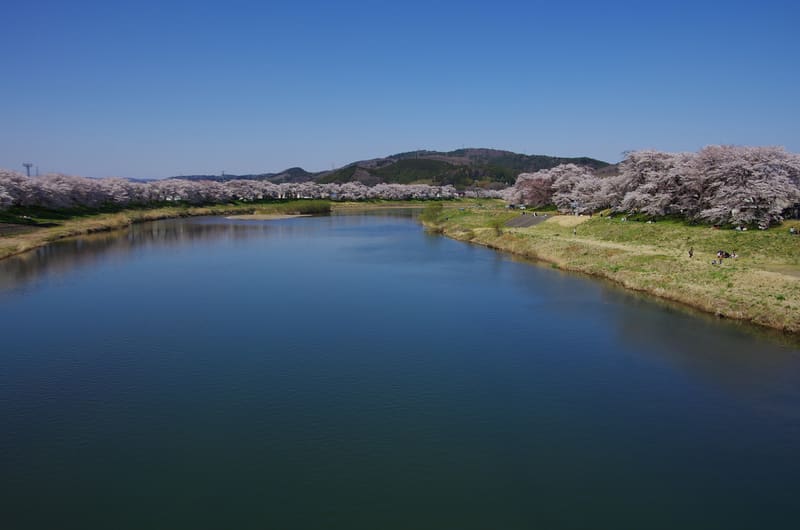 Shiraishi River embankment — Hitome Senbonzakura11.9 kmphoto by Tomofumi Sato · CC BY-SA 3.0
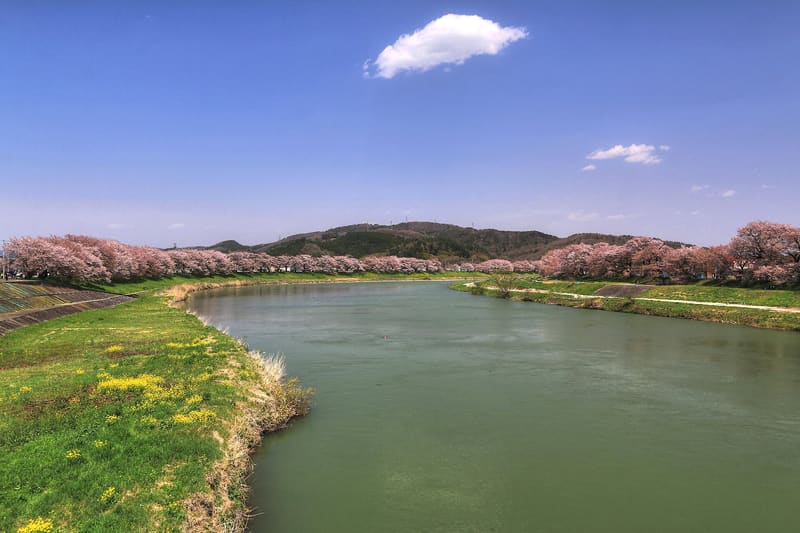 Ichimoku Senbon Zakura15 kmphoto by くろふね · CC BY-SA 4.0
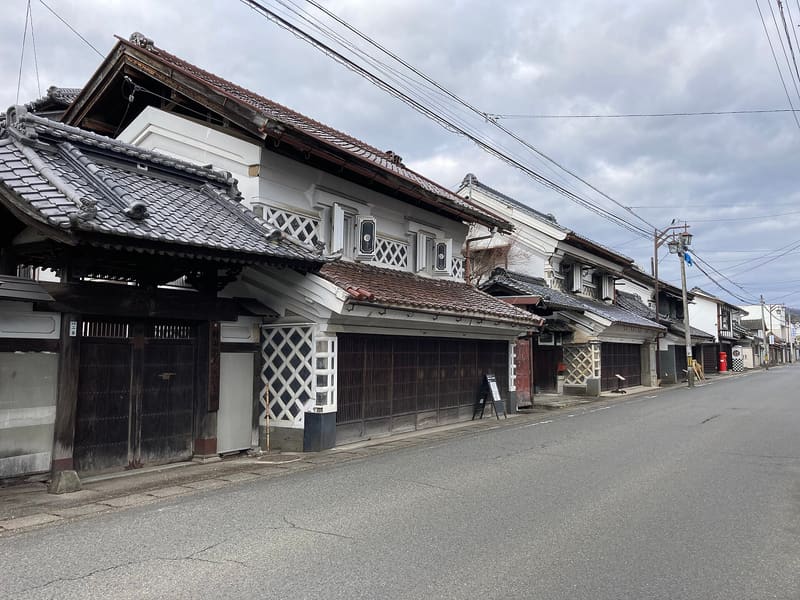 Yamashō Memorial Museum15.9 kmphoto by 皓月旗 · CC BY-SA 4.0