
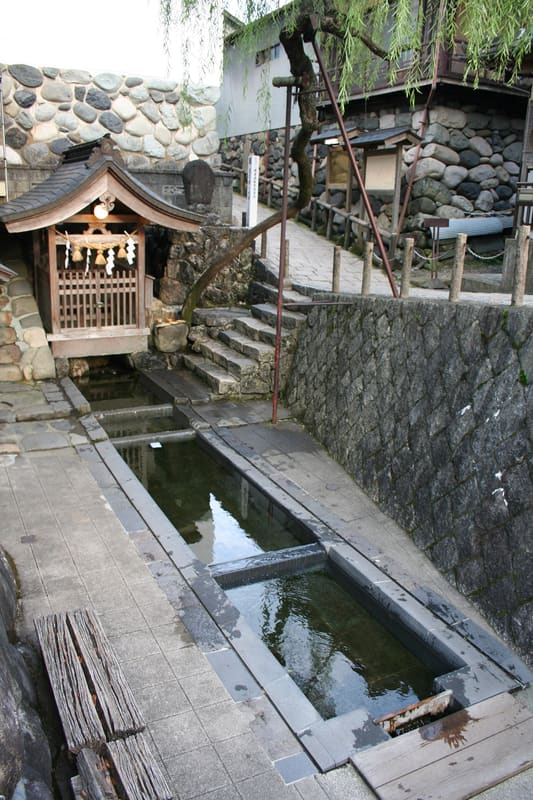
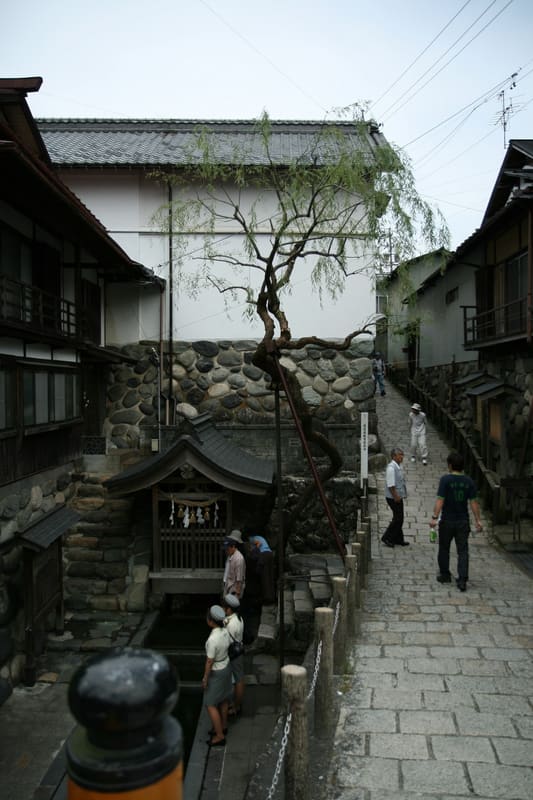
The first entry, in 1985, on the official list of Japan's 100 most famous waters.
In 1471 the renga poet Iio Sōgi lived in a hermitage beside this spring, which has borne his name ever since. The water, filtered through the limestone caves of the area, runs cool in summer and tepid in winter through a system of stepped basins (mizubune) – for drinking, then for washing vegetables, and finally for laundry – still managed by a residents’ association. In 1985 it was the first entry on the official list of Japan's 100 famous waters, and since 1974 it has been a Gifu Prefecture historic site.
Urban spring in the historic centre of Gujo Hachiman, known since at least the fifteenth century and still in daily use by the residents of the neighbourhood.
ℹ️ Free, open access at all times: it is a street corner, not a fenced-off site.
🚉 Gujō-Hachiman · 18 min walk
Holidays in Japan? Plan them with us.Over 2,000 real places, a day-by-day itinerary.FreeOpen the map →Sources: tabitabigujo.com · serai.jp
Nearby
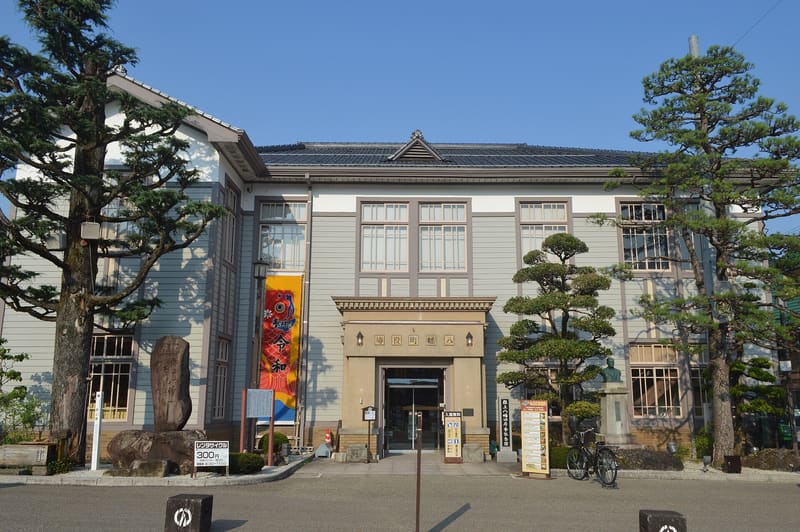 Gujo Hachiman Old Town Hall300 mphoto by Asturio Cantabrio · CC BY-SA 4.0
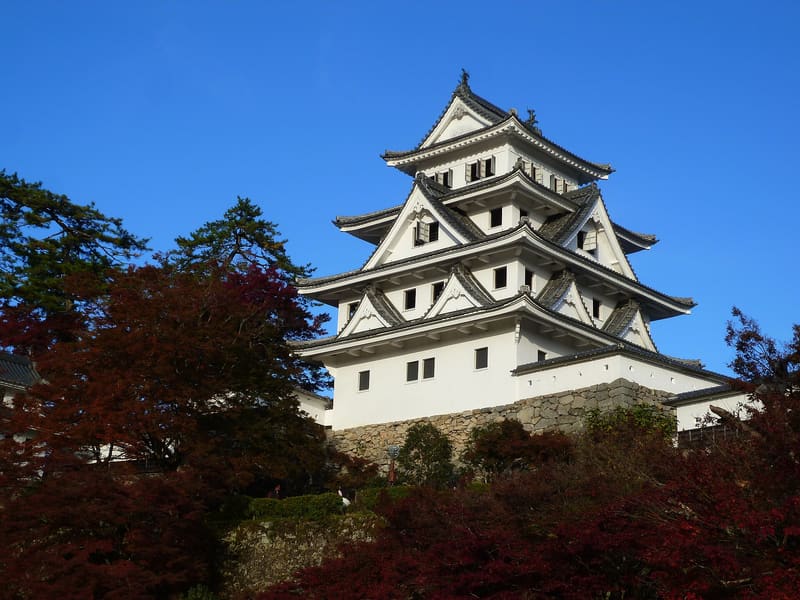 Gujo Hachiman Castle600 mphoto by Kitimi · CC BY-SA 4.0
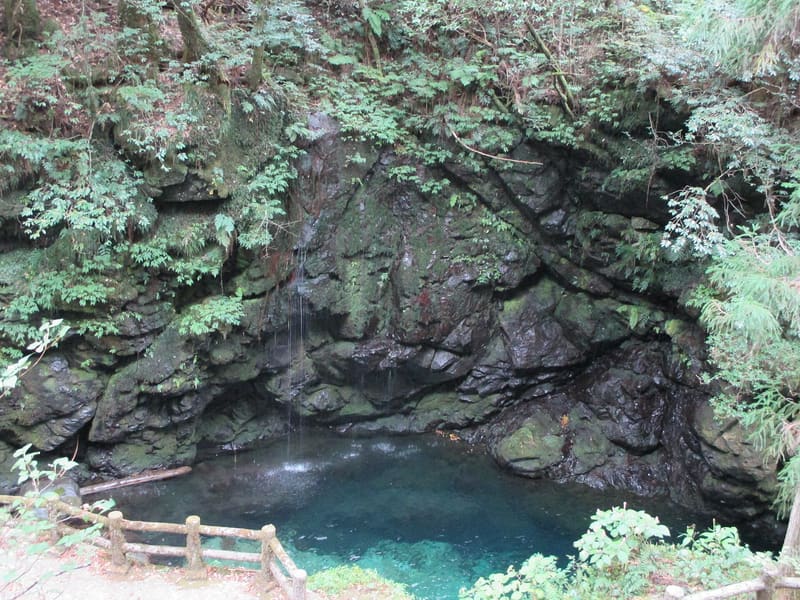 Yano-ga-fuchi10 kmphoto by 大野 一将 · CC BY-SA 3.0
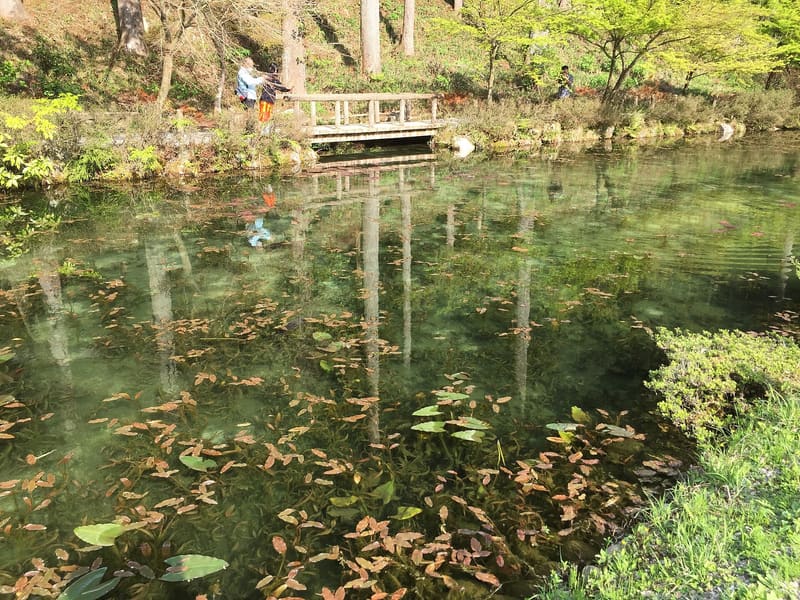 The pond at Nedo Shrine, ‘Monet's Pond’16.3 kmphoto by Hmori1960.earthbound · CC BY-SA 4.0