
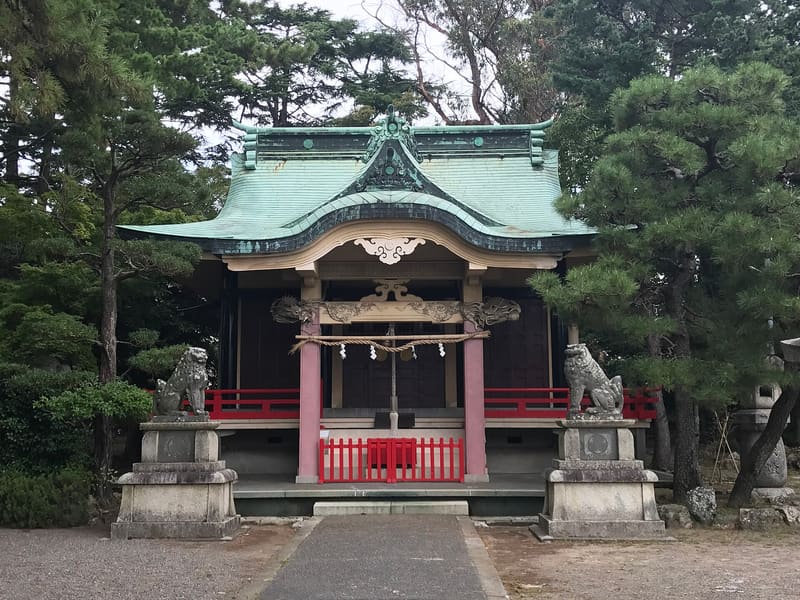
On the site of Hikuma Castle, where Ieyasu lived: burnt down in 1945, rebuilt in 1958.
The shrine stands on a corner of Hikuma Castle (引間城), the small fort that Ieyasu enlarged in 1570, turning it into Hamamatsu Castle. On 18 June and 29 July 1945 air raids burnt the honden: only the stone torii from that time survives. Since 2015 two bronze statues of Tokugawa Ieyasu and Toyotomi Hideyoshi, installed for the 400th anniversary of Ieyasu's death, have made it a stopping point for people seeking good fortune in their careers, the same theme as the nearby castle, known as the castle ‘of promotion’.
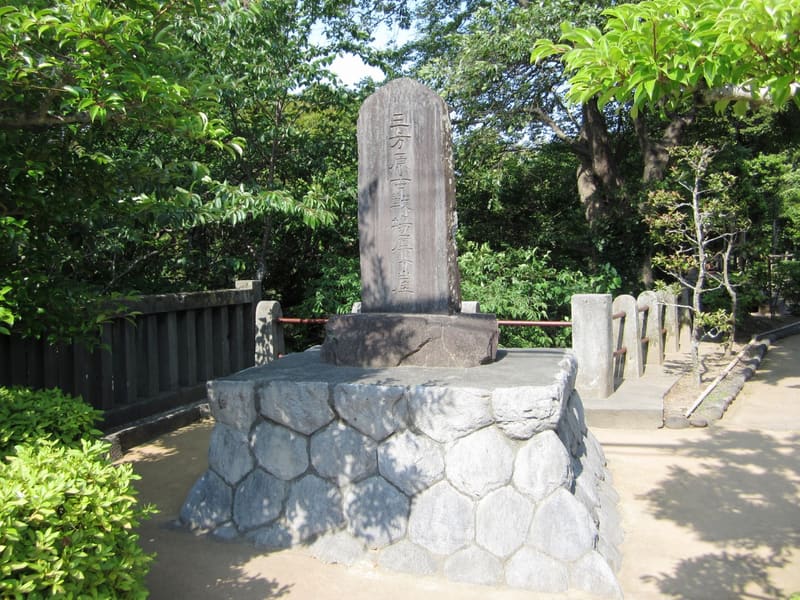
In 1877 Inoue Enryō (井上延陵), a former retainer of the shogunate and former governor of Hamamatsu Castle for the Shizuoka domain, decided to build a Tōshō-gū on the spot where Ieyasu had lived; work began around 1884–1885 (the completion date is not known), paid for by donations from the prefectural governor and the residents, with stone brought from Enryō's home prefecture, Miyazaki. In 1887 Enryō entrusted its management to the nearby Tōtōmi Hōtoku-sha (now Dai Nihon Hōtoku-sha). For a long time the shrine remained unconnected to the residents of Motoshiro-chō, a neighbourhood that had no local shrine of its own because it had been part of the old castle area: the lawyer and city councillor Ōishi Chikara (大石力), who lived there, obtained ownership from Enryō's grandchildren and management from the Hōtoku-sha, and in 1936 the transfer of rights to the neighbourhood was completed with a great festival. Burnt in the 1945 raids, the shrine was rebuilt in 1958 on the initiative of Ōishi himself, under Mayor Sakata Keizō: the current building, in fireproof reinforced concrete with a copper-sheet roof, is in the 権現造 style (gongen-zukuri, the architectural style associated with Tōshō-gū shrines). At the foot of the steps stands a 3.5-metre memorial stone to Inoue Enryō, erected in 1901.
ℹ️ The shrine has no official website and does not publish opening hours. The main festival (例祭) falls on 10 October. About 380 metres from the keep of Hamamatsu Castle.
🚉 Enshubyoin · 8 min walk
Holidays in Japan? Plan them with us.Over 2,000 real places, a day-by-day itinerary.FreeOpen the map →Sources: ja.wikipedia.org
Nearby
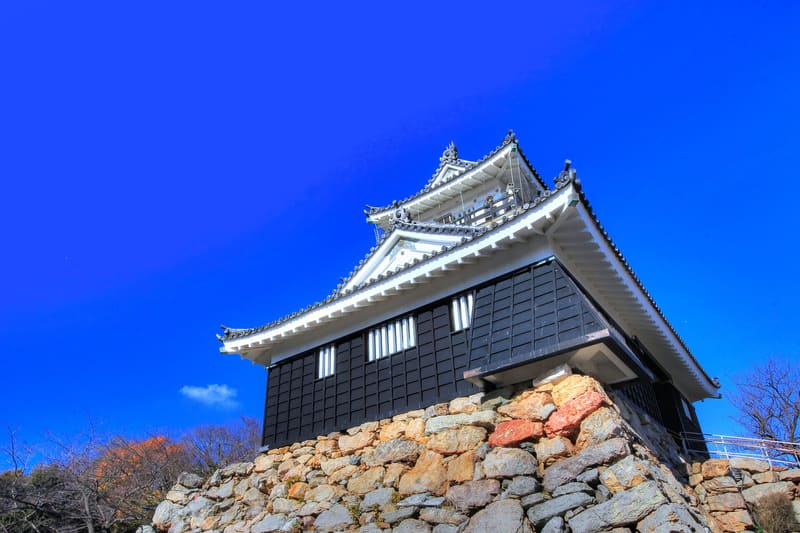 Hamamatsu Castle400 mphoto by くろふね · CC BY 3.0
 LOLO Cafe (Hamamatsu)700 m
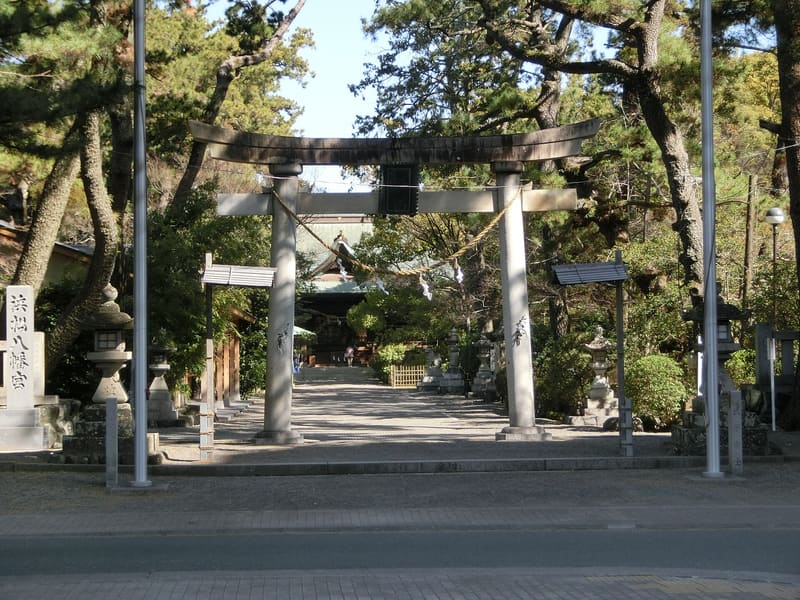 Hamamatsu Hachiman-gū800 mphoto by Abasaa · Pubblico dominio (dichiarazione dell'autore, PD-self)
 Saigagake: battlefield and archive hall1.1 kmphoto by 立花左近 · CC BY-SA 3.0