
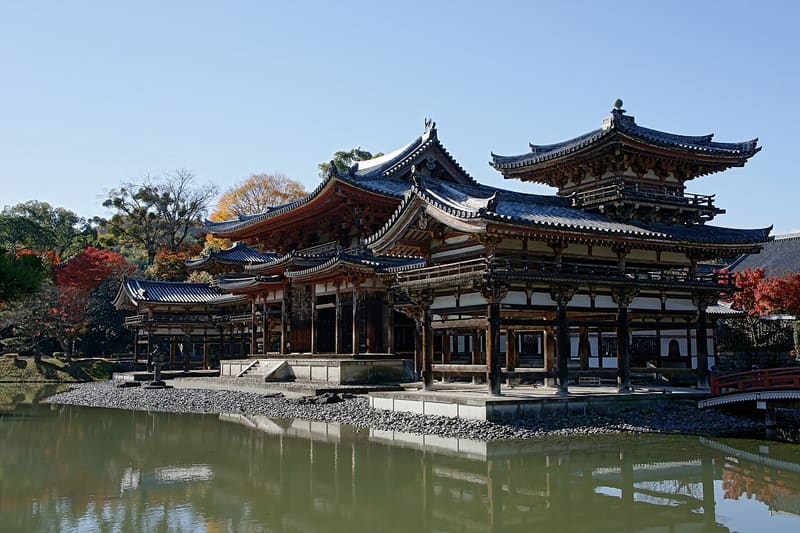
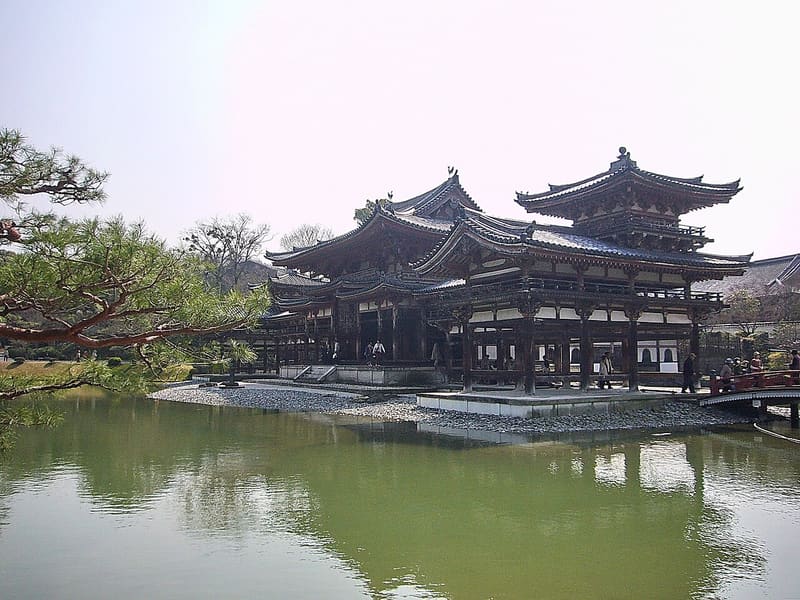
The Phoenix Hall is on the 10-yen coin; the phoenix, on the 10,000 banknote.
The Hōō-dō, ‘Phoenix Hall’, takes its name from the pair of gilt bronze statues (a mythological phoenix, hōō) that look out from the roof; the hall itself, seen from the front, spreads its two side wings like the wings of a bird over the water of the pond. It has been engraved on the 10-yen coin since 1953, and the phoenix alone has appeared on the back of the 10,000-yen banknote since 2004: few other buildings in the world appear together on a coin and a banknote of the same country.
Built in 1053 as a prayer pavilion dedicated to the Amida Buddha (the Buddha of infinite light, worshipped for welcoming the faithful into his western paradise after death) on a family villa of the Fujiwara, the clan that dominated the imperial court at the time. A UNESCO World Heritage Site since 1994.
ℹ️ Garden open 8:45–17:30 (last entry 17:15), 700 yen; Hōshōkan museum 9:00–17:00, included in the garden ticket; tours of the interior of the Phoenix Hall 9:30–16:10 in timed groups, max 50 people, 300 yen extra.
🚉 Uji · 9 min walk
Holidays in Japan? Plan them with us.Over 2,000 real places, a day-by-day itinerary.FreeOpen the map →Sources: byodoin.or.jp · byodoin.or.jp · ja.wikipedia.org
Nearby
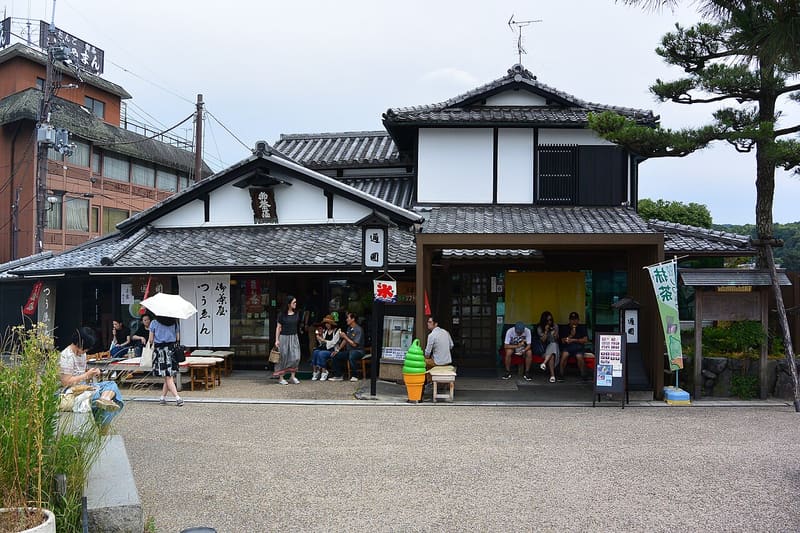 Tsuen (Uji tea house)400 mphoto by Miya.m · CC BY-SA 4.0
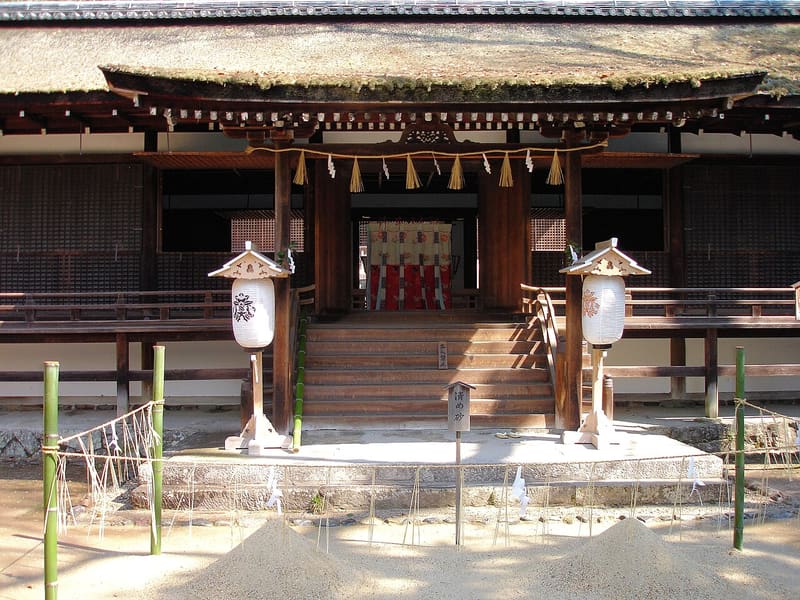 Ujigami-jinja500 mphoto by Jim Gateley · CC BY 3.0
 Nintendo Museum2.1 kmphoto by Nagomijirap · CC BY-SA 4.0
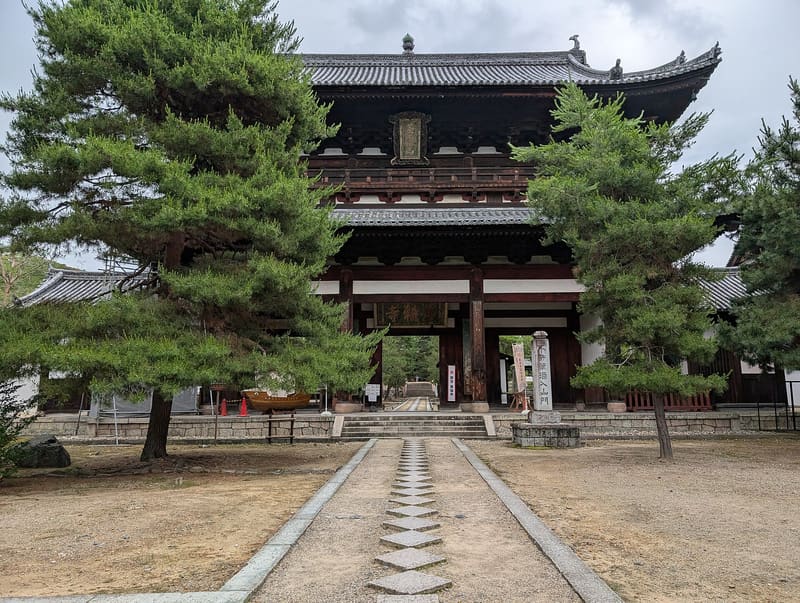 Manpuku-ji2.7 kmphoto by ONO Masanobu · CC0