
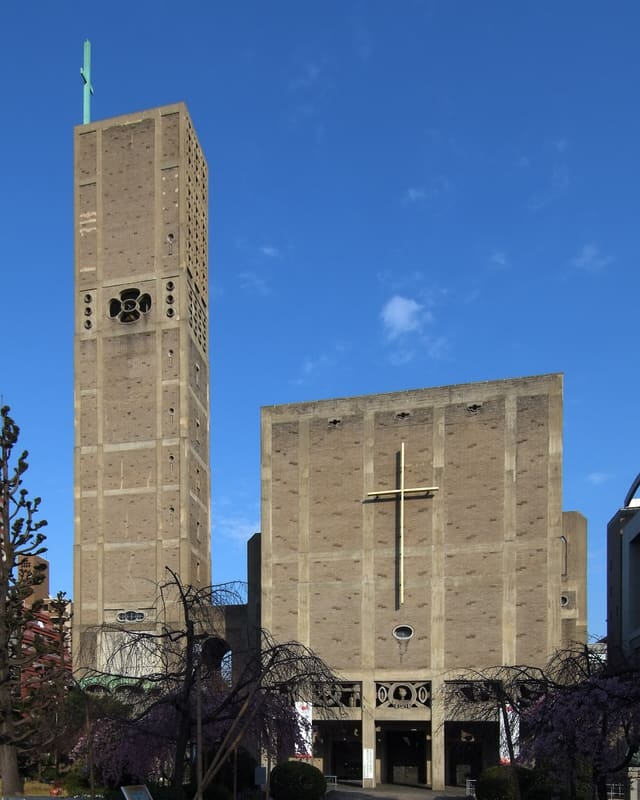
Consecrated on 6/8/1954: in 2006, one of the first two post-war buildings to become a national cultural property.
The three-aisled basilica is made of reinforced concrete, but the façade is built of grey concrete bricks, cast on site with sand from the river at Hiroshima. Above the dome of the chancel, petal-shaped like that of the side chapel, a phoenix perches on a globe. Pope John Paul II stopped here on 25 February 1981.
Where the cathedral stands today there stood, from 1902, the small wooden Japanese-style church of the Noborichō parish. On 6 August 1945, about 1.2 km from the hypocentre, the bomb knocked it down and burned it completely, together with the presbytery built in 1936. The German parish priest Hugo Lassalle, himself a survivor of the bomb (who in 1948 became a Japanese citizen under the name Enomiya Makibi), decided to build not only a church for the dead but a cathedral that would be a gathering point for friendship and peace in the world: having won the support of Pope Pius XII, he travelled for more than a year through Germany, the rest of Europe, the United States, Brazil and Argentina to raise funds. In 1948 the Asahi Shimbun newspaper launched the design competition ‘Architectural competition for the Hiroshima Catholic memorial cathedral of peace’: no design was judged worthy of first prize (Tange Kenzō, the future architect of the Peace Memorial Museum, came second), and it was one of the judges, the architect Murano Tōgo, who designed it himself, giving up his own fee in view of the controversy over the fairness of the competition. Work began on 6 August 1950 and the cathedral was consecrated on 6 August 1954. On 5 July 2006 it was designated 重要文化財 (a cultural property of national importance), together with Tange's Peace Memorial Museum: they were the first post-war buildings to receive that designation.
ℹ️ ⚠️ Opening hours and admission price not found in any source, not even by reopening the parish website in a second attempt: the page gives only the address and telephone number (082-221-0621). As it is a working church, it is plausible that entry is free, but no source states this. A review from November 2018 found it under restoration, with no access to the interior.
🚉 Hiroshima · 14 min walk
Holidays in Japan? Plan them with us.Over 2,000 real places, a day-by-day itinerary.FreeOpen the map →Sources: noboricho.catholic.hiroshima.jp · ja.wikipedia.org · 4travel.jp
Nearby
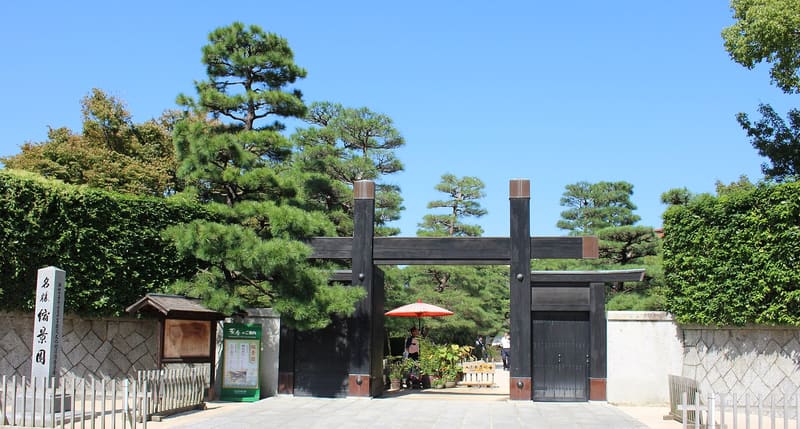 Shukkeien400 mphoto by Yoshio Kohara · CC BY 3.0
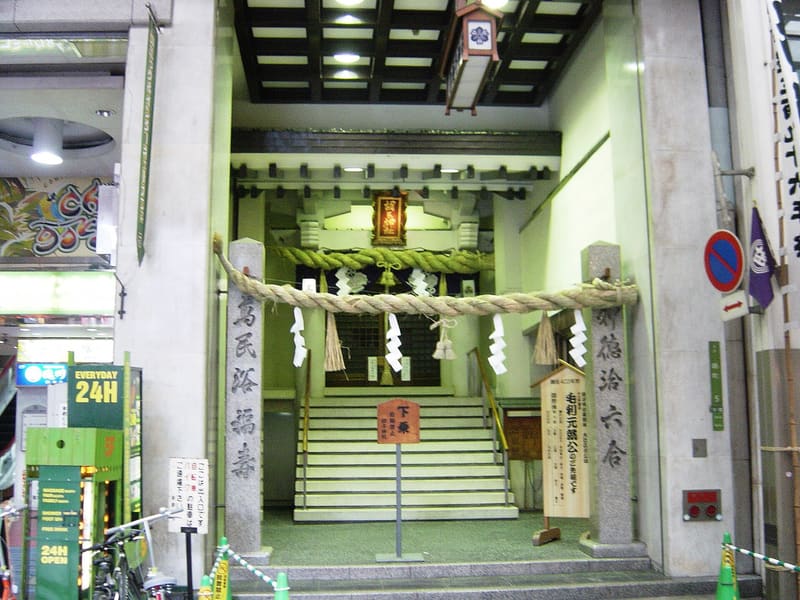 Ebisu Shrine, Hiroshima500 mphoto by Taisyo · CC BY 3.0
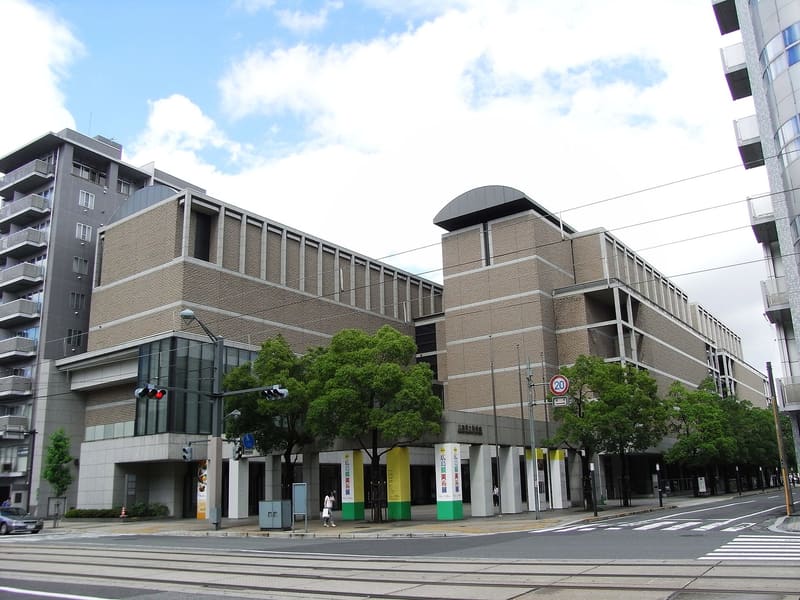 Hiroshima Prefectural Art Museum500 mphoto by Taisyo at Japanese Wikipedia · CC BY 3.0
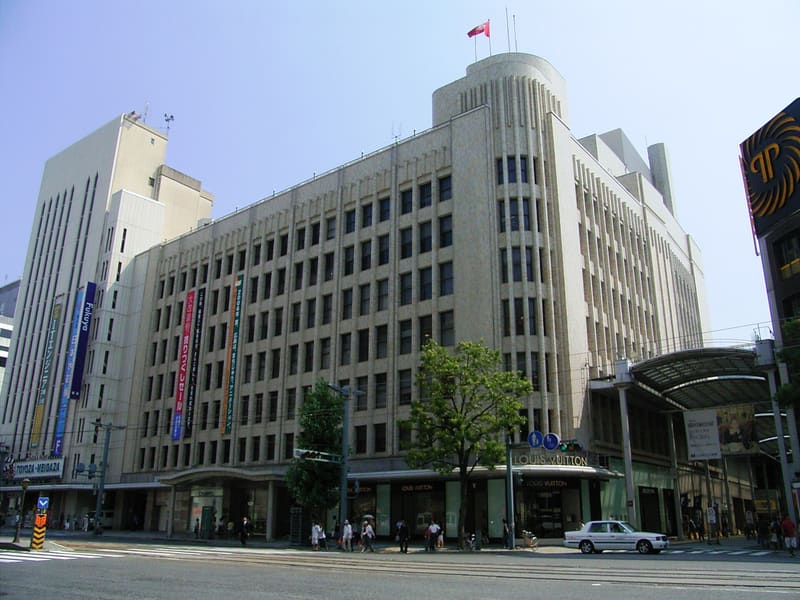 Fukuya Hatchōbori department store500 mphoto by Taisyo · CC BY 3.0