
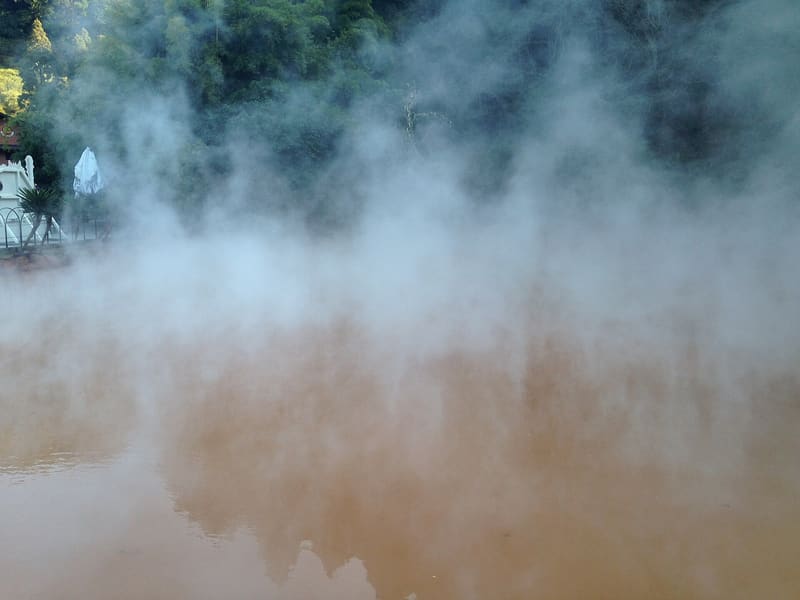
The Fudoki of Bungo (8th cent.) already mentions it as the ‘red spring’.
Considered the oldest natural hell in Japan: it appears in the Fudoki of Bungo Province, a text compiled in the Nara period, under the name ‘akayusen’ (red spring). The red thermal mud, coloured by iron oxides, was for centuries the raw material of a medicinal ointment for skin diseases, still on sale today. Designated a national Place of Scenic Beauty in 2009.
Chinoike Jigoku, in Beppu's Noda district, is a pond of thermal mud with an intense red colour given by iron oxides in solution. It is the oldest of Beppu's ‘hells’ documented in a written source: the Fudoki of Bungo Province, an administrative text of the Nara period (8th century), already mentions it as ‘akayusen’, red spring – over 1300 years of recorded history. The mud was traditionally extracted to make an ointment for skin diseases (today's ‘Chinoike nankō’) and to dye fabrics and wood. The site was designated a national Place of Scenic Beauty in 2009. It is physically separate from the group of jigoku in Kannawa where Umi Jigoku and Kamado Jigoku are found.
ℹ️ Hours: 8:00–17:00, open all year round. Ticket: adults 500¥, children 200¥. Free footbath for all visitors.
Holidays in Japan? Plan them with us.Over 2,000 real places, a day-by-day itinerary.FreeOpen the map →Sources: chinoike.com
Nearby
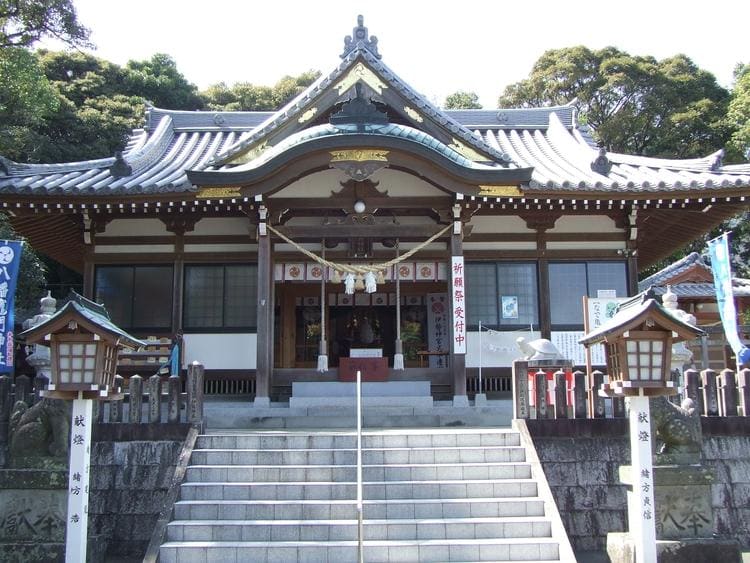 Hachiman Kamado Shrine — Beppu800 m
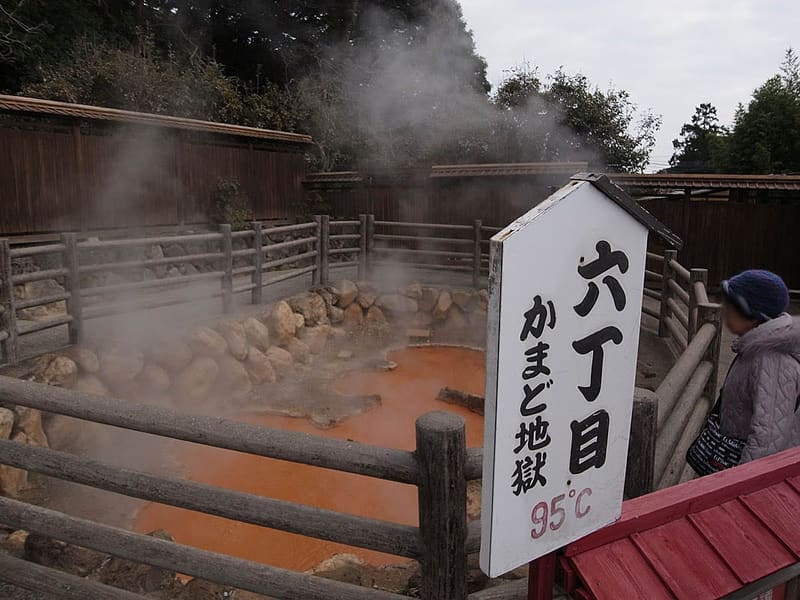 Kamado Jigoku — Beppu1.2 kmphoto by z tanuki · CC BY 3.0
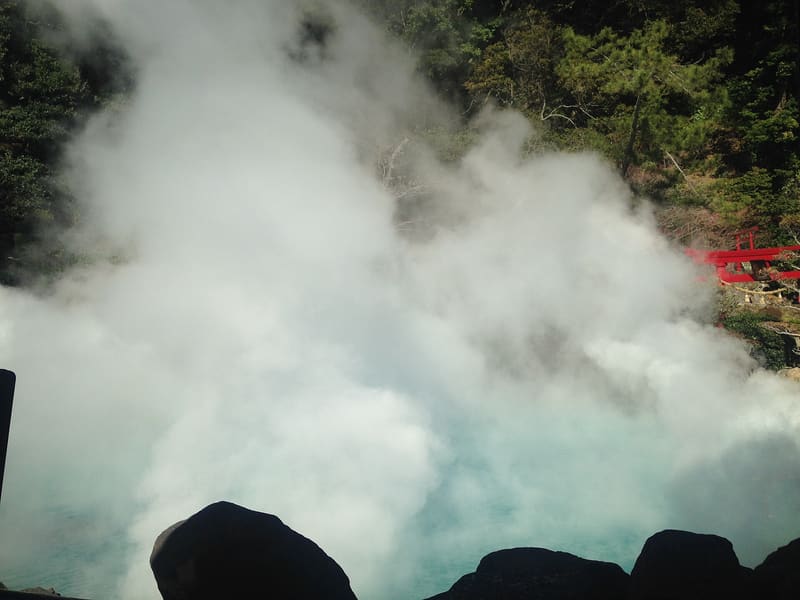 Umi Jigoku — the Sea Hell1.4 kmphoto by そらみみ (Soramimi) · CC BY-SA 4.0
 Hyotan Onsen1.4 kmphoto by Everjean · CC BY 2.0