
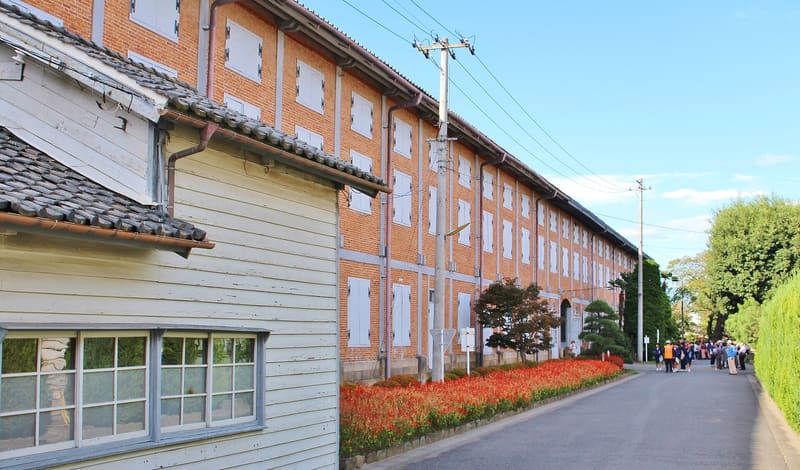
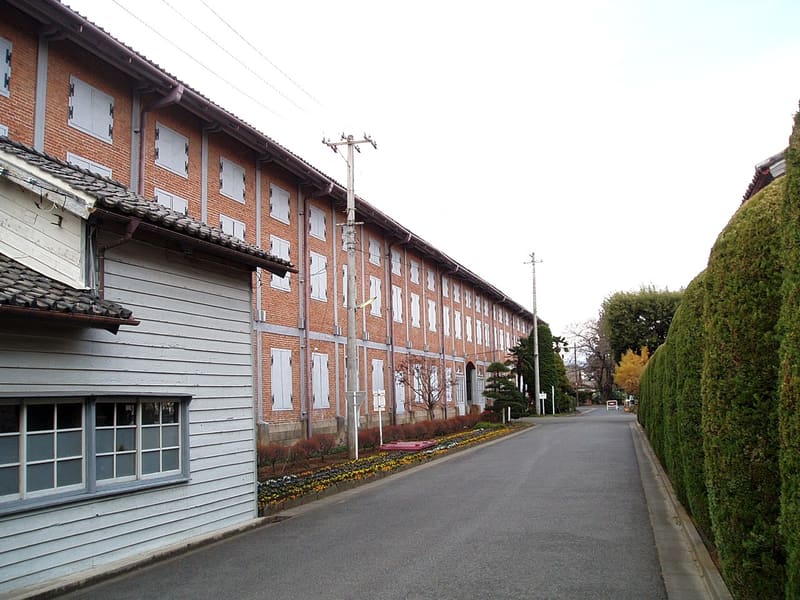
It opened in 1872 with 300 female workers; in 2014 UNESCO declared it a World Heritage Site.
The Meiji government opened it in 1872, with French technicians overseeing the installation of Western machinery for silk reeling: about 300 female workers in traditional dress worked there, and for its time it was among the largest factories of its kind in the world. It remained in operation until 1987. Three buildings (the reeling hall and the two warehouses, east and west) went from National Cultural Property (2006) to National Treasure in 2014, the year in which UNESCO inscribed the whole site on the World Heritage List.
In 1872 the newly formed Meiji government built a model factory here to introduce mechanised silk reeling to Japan on an industrial scale, with advice from French technicians. The reeling building and the two cocoon warehouses, east and west, combine Western building techniques (brick and roof trusses) with local materials and craftsmen. The factory stayed in operation for a hundred and fifteen years, until 1987, and then passed to the management of the city of Tomioka. In 2006 the three main buildings became National Cultural Properties, in 2014 National Treasures, and in the same year UNESCO inscribed the site, together with others linked to the silk production chain in Gunma, on the World Heritage List.
ℹ️ Open 9:00–17:00, last entry 16:30. Closed 29–31 December. Tickets: adults 1,000 yen, high school and university students (with student ID) 250 yen, elementary and junior high school pupils 150 yen; Tomioka residents enter free.
🚉 Joshu-Tomioka · 11 min walk
Holidays in Japan? Plan them with us.Over 2,000 real places, a day-by-day itinerary.FreeOpen the map →Sources: tomioka-silk.jp · tomioka-silk.jp
Nearby
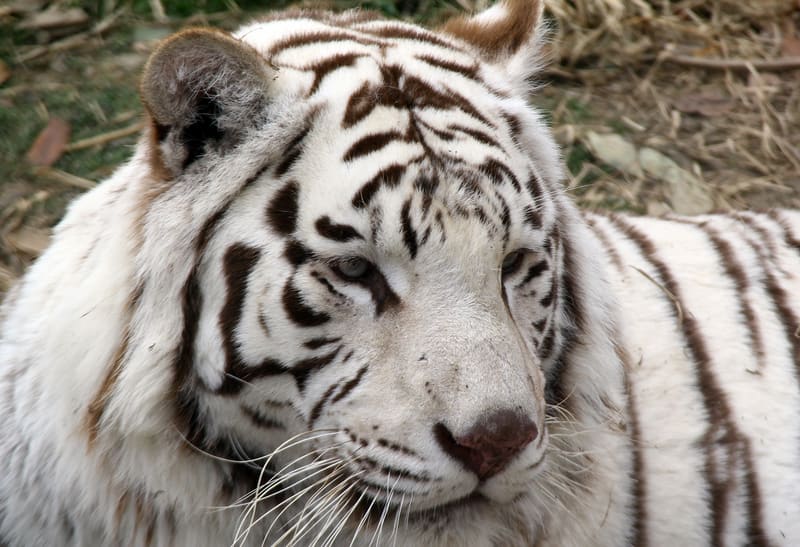 Gunma Safari Park3.3 kmphoto by diloz さん https://www.flickr.com/photos/diloz/ · CC BY 2.0
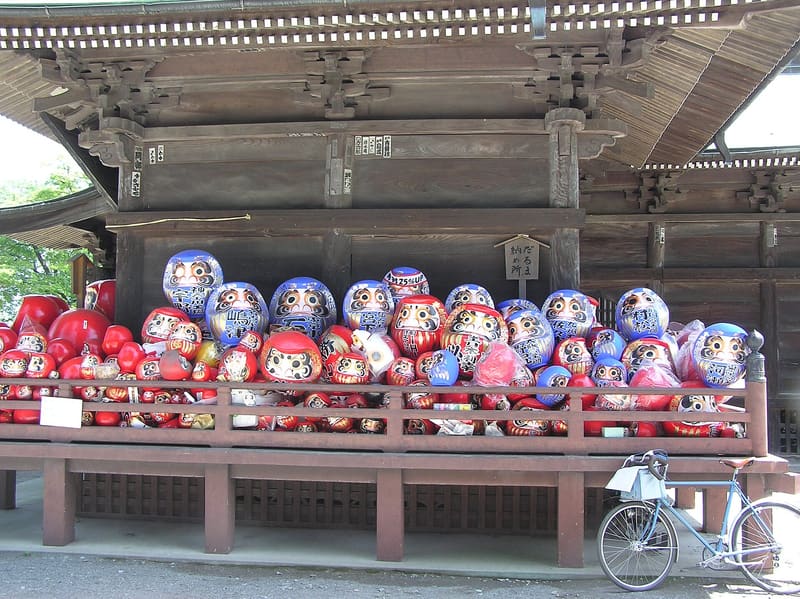 Shōrinzan Darumaji10.4 kmphoto by fum3670045 · CC BY 3.0
 Yanagawa-mura13.1 kmphoto by 妖精書士 · CC BY-SA 4.0
 Sayamall Shopping Arcade13.1 km