
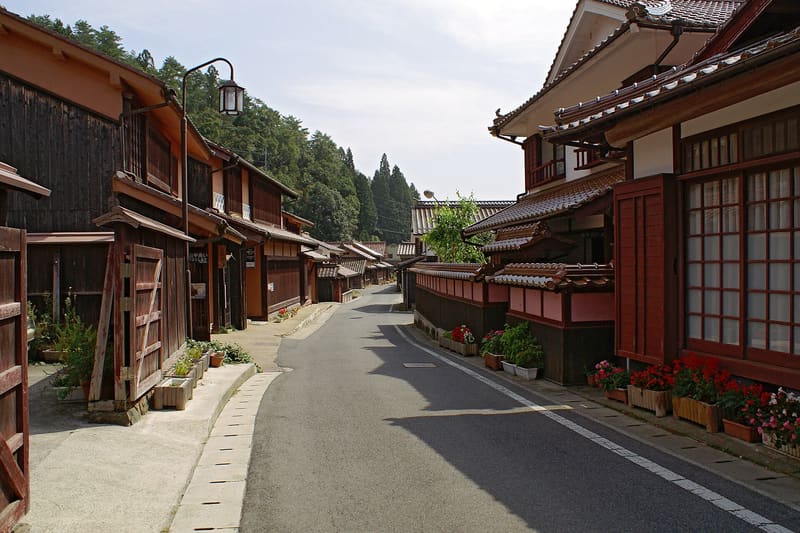
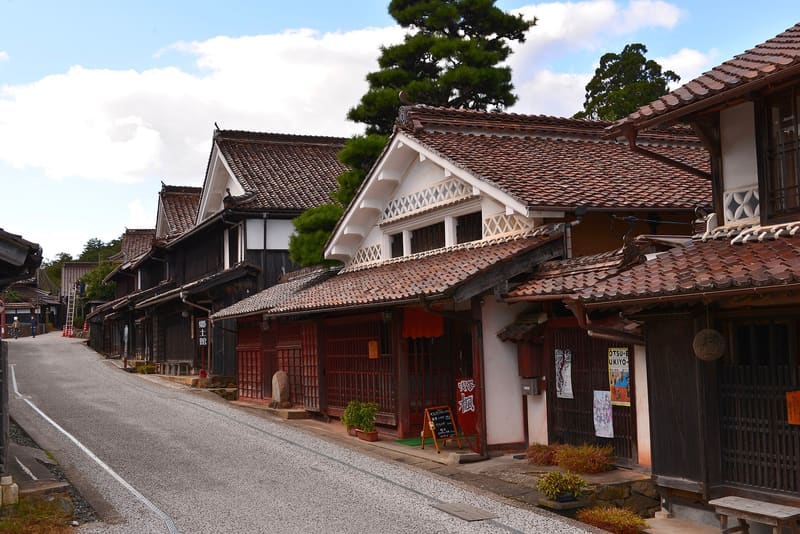
Houses and roof tiles in the same iron red, at 550 metres, by craftsmen who came from Iwami.
At 550 metres above sea level, the village is united in a single colour: tiles of reddish copper and walls in bengara (the red pigment made from iron oxide extracted from the local copper mines) on every building, a uniformity rare for the period. The houses, built between the late Edo period and the Meiji era by master carpenters from Iwami province (now Shimane), belonged to merchants who had grown rich on copper and bengara, and were arranged with the look of the whole village in mind, not of the single house.
Fukiya's wealth came from the copper mines and from processing iron sulphide ore into bengara. The municipality designated it an ‘original home village’ of Okayama Prefecture in 1974, the Agency for Cultural Affairs recognised it as an Important Preservation District for Groups of Traditional Buildings in 1977, and in 2020 it became part of Japan Heritage (日本遺産) in the story of ‘Japan Red’, the origin of the colour.
ℹ️ The village streets can be walked at any time. The house museums open to the public (such as the Kyū-Katayama villa) have their own tickets and opening hours, generally daytime; the village is about 15 km north of the centre of Narikawa-chō, on a mountain road.
Holidays in Japan? Plan them with us.Over 2,000 real places, a day-by-day itinerary.FreeOpen the map →Sources: takahasikanko.or.jp · city.takahashi.lg.jp
Nearby
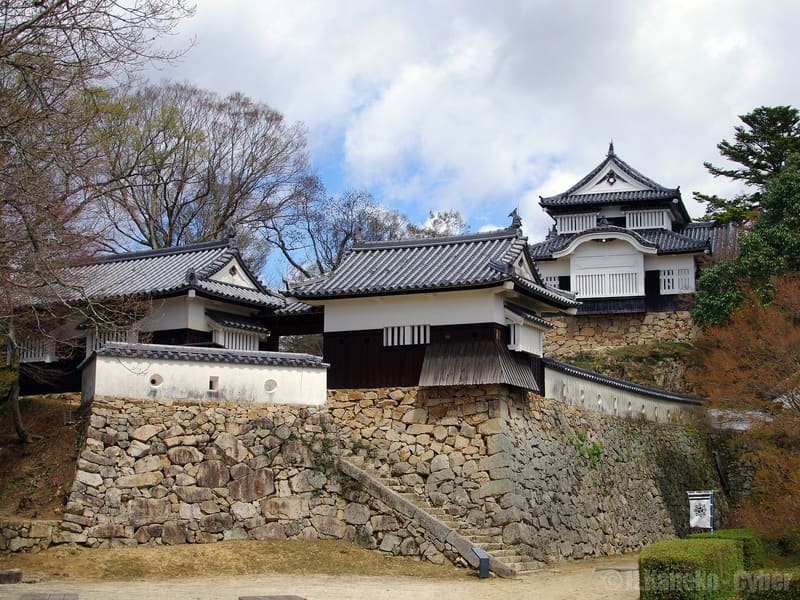 Bitchū Matsuyama Castle14.9 kmphoto by Hiroaki Kaneko · CC BY-SA 3.0