
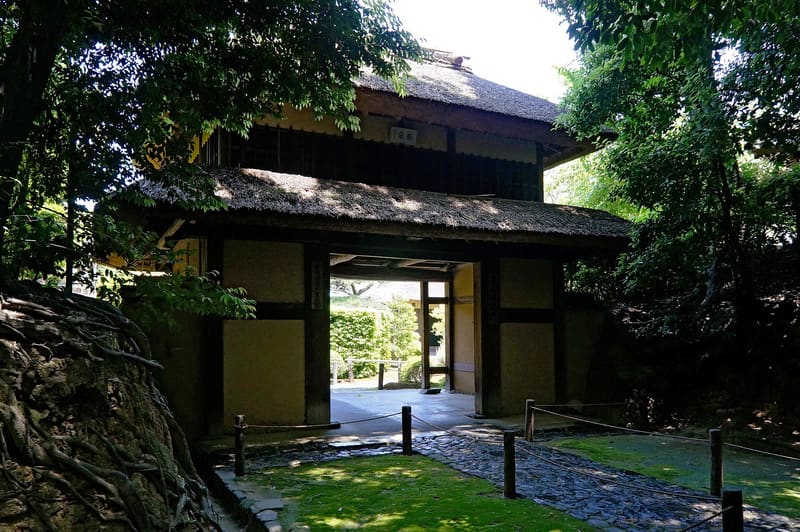
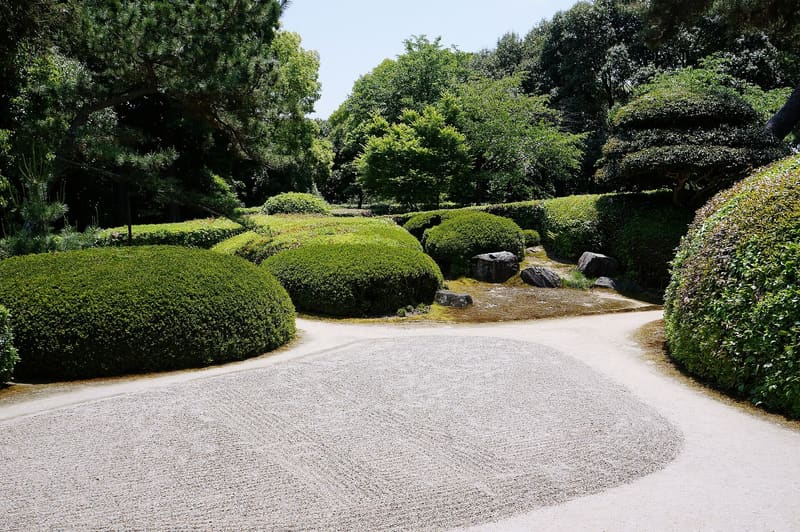
The daimyo Katagiri Sekishū built it in 1663 and founded his own school of tea there.
From the temple veranda, hedges of azalea, camellia and sakaki (an evergreen) frame the Yamato plain as if it were part of the garden itself: this is the technique of borrowed scenery. The tea room, the water basin for purifying your hands and the shoin (the reception hall) are national Important Cultural Properties.
The temple was founded in 1663 by the daimyo (feudal lord) and tea master Katagiri Sekishū as a memorial to his father, and he designed it himself: it was here that Sekishū founded his own school of the tea ceremony, the Sekishū-ryū. The garden is counted among the ‘three great gardens of Yamato’ and is designated a 名勝 at national level; the source does not give the year, only the year the temple was founded.
🚉 Yamato-Koizumi · 16 min walk
Holidays in Japan? Plan them with us.Over 2,000 real places, a day-by-day itinerary.FreeOpen the map →Sources: oniwa.garden
Nearby
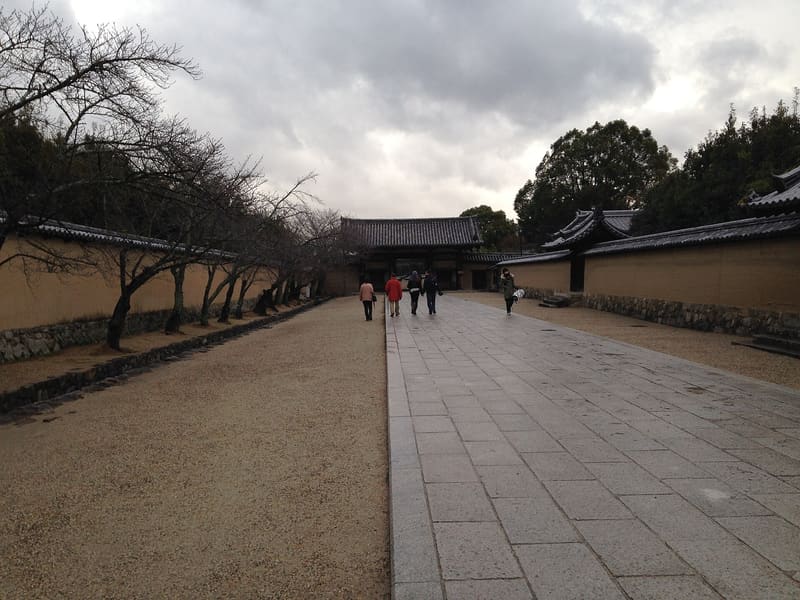 Hōryū-ji2.9 kmphoto by そらみみ · CC BY-SA 3.0
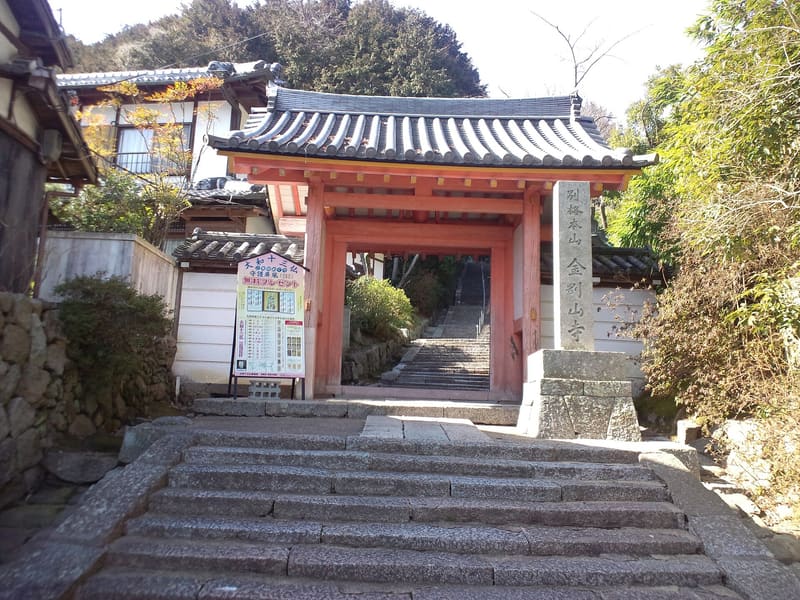 Yata-dera (the hydrangea temple)2.9 kmphoto by Yanajin33 · CC BY-SA 3.0
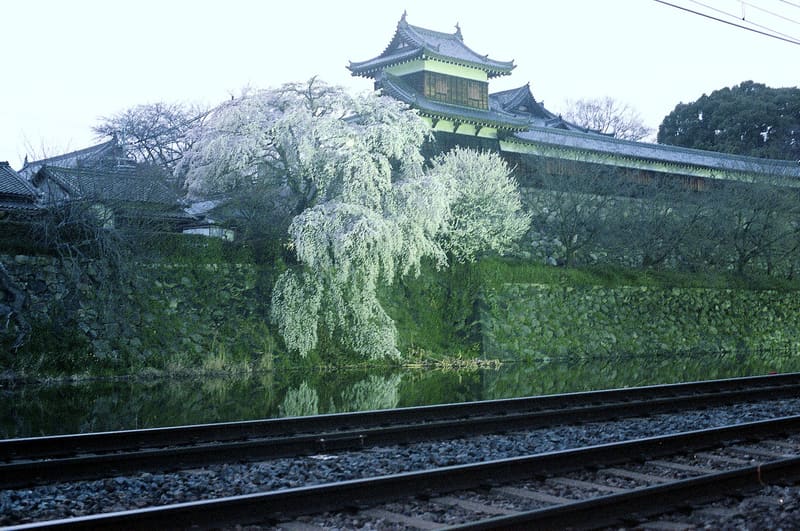 Kōriyama Castle2.9 kmphoto by shikabane taro · CC BY 3.0
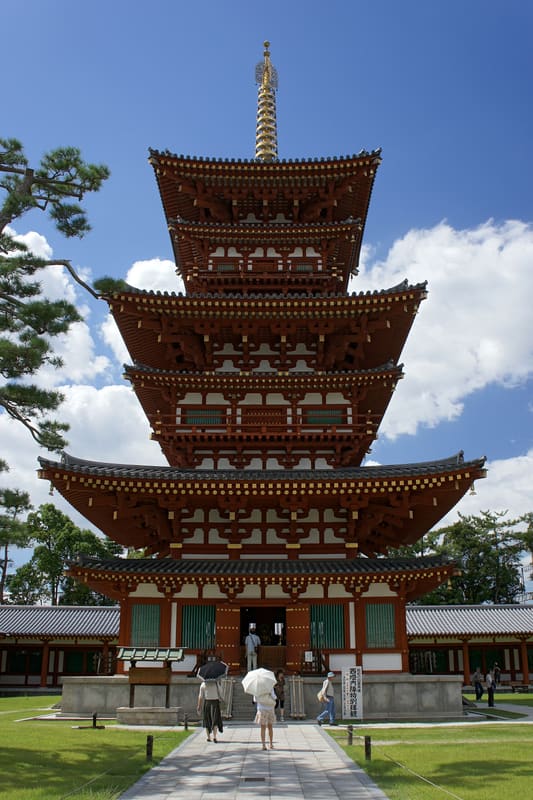 Yakushi-ji4.7 kmphoto by 663highland · CC BY 2.5