The Anime Trip
🌐 EN ▾
ItalianoEnglish繁體中文(台灣)繁體中文(香港)日本語
PLAN YOUR TRIPMy tripSign in / Sign upSign in / Sign up
Ginzan Onsen
photo by lumoplank · CC0
Ginzan Onsen
photo by lumoplank · CC0

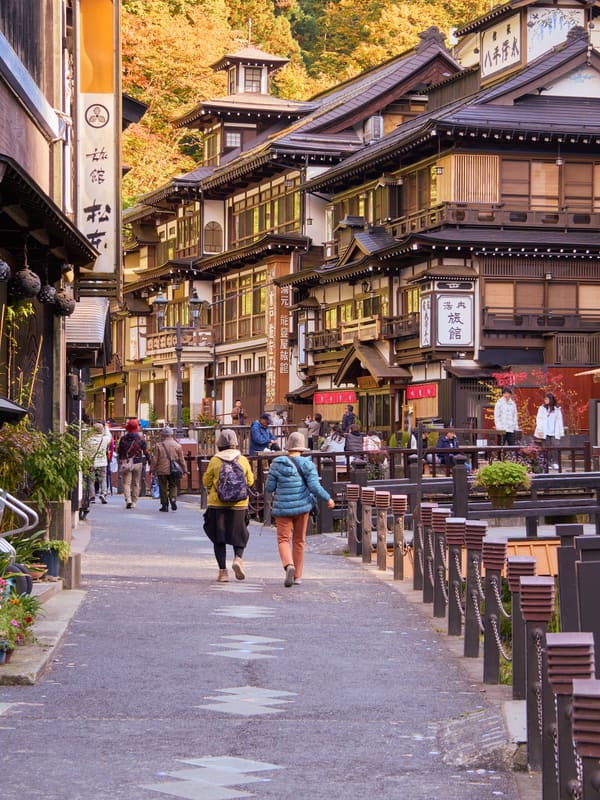
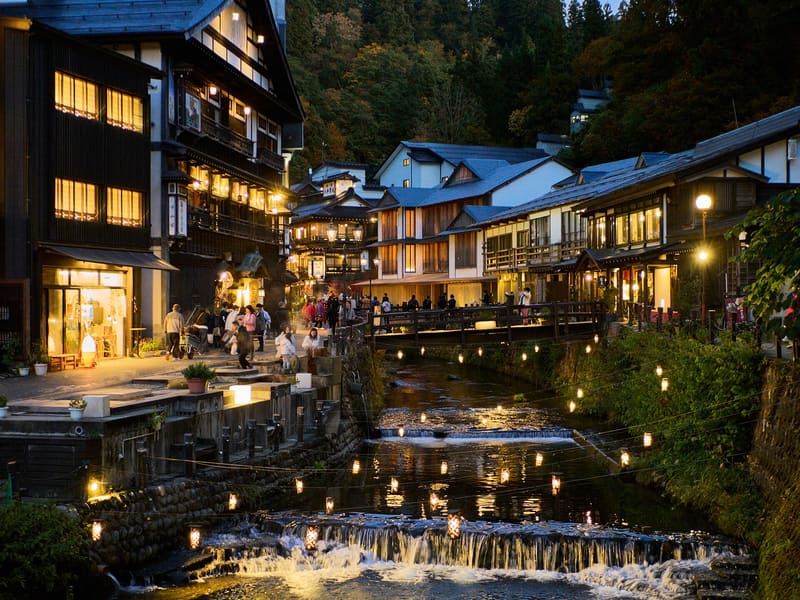
Rebuilt after the 1913 flood, every evening it lights up with gas lamps.

The three- and four-storey wooden inns face the Ginzan River from both banks, linked by small bridges: today's look, in Taishō style, dates from after the 1913 flood that destroyed the earlier buildings, when local notables paid for the rebuilding. Cars do not enter the main street: you arrive on foot or by shuttle, and at sunset the gas lamps along the paving are lit.

The hot spring was discovered between the Keichō (1596–1615) and Kan'ei (1624–1644) periods by miners from the nearby Enzan silver mine (延沢銀山), active from 1456 and closed in 1689: since then the village has lived off its waters. The administrative centre is Ōbanazawa, in the Ginzan Shinhata district.

ℹ️ Pedestrian main street, free and always accessible; cars banned, car parks at the entrance to the village with shuttles to the ryokan. The individual public baths and the inns have their own opening hours and tickets; the evening atmosphere with the gas lamps is the most photographed moment.

Holidays in Japan? Plan them with us.Over 2,000 real places, a day-by-day itinerary.FreeOpen the map →

Sources: ja.wikipedia.org · ginzanonsen.jp

All series · Open the map

Ginzan Onsen
Open on the mapwith over 1,800 wonders of Japan
Ginzan Onsen
photo by lumoplank · CC0
Ginzan Onsen
photo by lumoplank · CC0

Rebuilt after the 1913 flood, every evening it lights up with gas lamps.

The three- and four-storey wooden inns face the Ginzan River from both banks, linked by small bridges: today's look, in Taishō style, dates from after the 1913 flood that destroyed the earlier buildings, when local notables paid for the rebuilding. Cars do not enter the main street: you arrive on foot or by shuttle, and at sunset the gas lamps along the paving are lit.

The hot spring was discovered between the Keichō (1596–1615) and Kan'ei (1624–1644) periods by miners from the nearby Enzan silver mine (延沢銀山), active from 1456 and closed in 1689: since then the village has lived off its waters. The administrative centre is Ōbanazawa, in the Ginzan Shinhata district.

ℹ️ Pedestrian main street, free and always accessible; cars banned, car parks at the entrance to the village with shuttles to the ryokan. The individual public baths and the inns have their own opening hours and tickets; the evening atmosphere with the gas lamps is the most photographed moment.

Holidays in Japan? Plan them with us.Over 2,000 real places, a day-by-day itinerary.FreeOpen the map →

Sources: ja.wikipedia.org · ginzanonsen.jp