
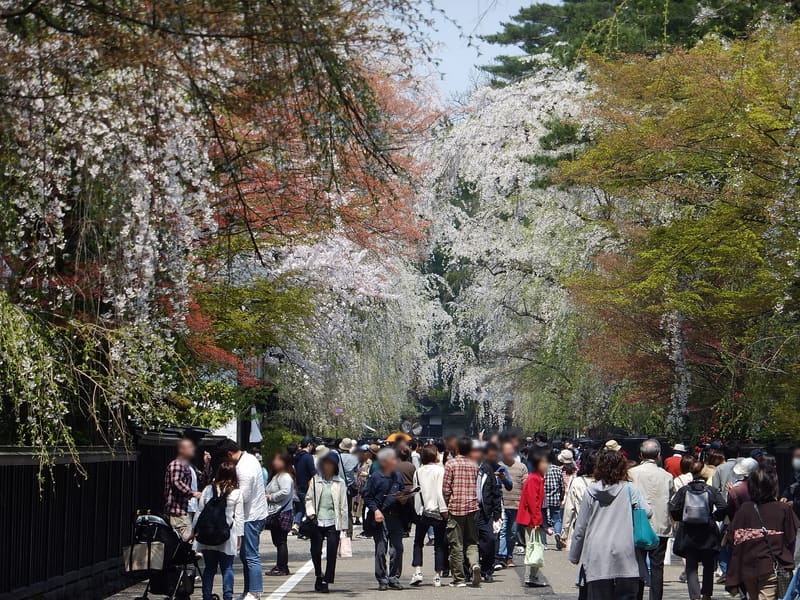
162 weeping willows are a national monument: they came from Kyoto, in a bridal trousseau, 360 years ago.
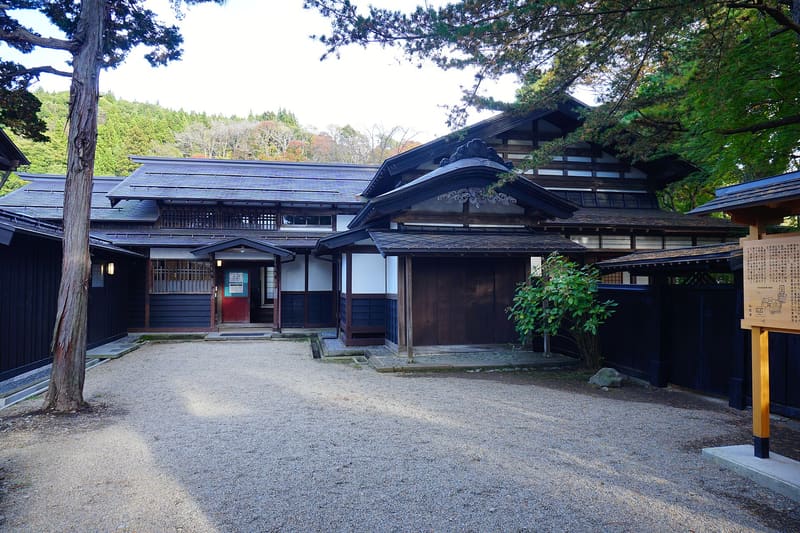
Behind black wooden fences, avenues of weeping willows (shidarezakura) bend their branches over the street: 162 of the roughly 400 trees are a national Natural Monument. Six residences of the Satake samurai remain open to the public, with weapons and furniture still in the rooms. In 1976 the district was one of the first seven areas in Japan to be designated an Important Preservation District for Groups of Traditional Buildings, covering just 6.9 hectares.
Created after 1656, when the northern branch of the Satake settled in Kakunodate under the Akita domain, the district housed the middle- and high-ranking samurai in the service of the clan. The willows were planted from three cuttings brought from Kyoto in the bridal trousseau of the wife of the second lord, Satake Yoshiaki: the roughly 400 trees of today descend from those three. The district is nicknamed ‘the little Kyoto of Michinoku’.
ℹ️ Public street, always open. The houses open to visitors (Aoyagi, Ishiguro, Kawarada, Iwahashi, Matsumoto, Odano) have their own hours, mostly 9:00–17:00 from April to November and 9:00–16:00 in winter, with admission ranging from free to 500¥. 15–25 minutes on foot from JR Kakunodate Station.
🚉 Kakunodate · 17 min walk
Holidays in Japan? Plan them with us.Over 2,000 real places, a day-by-day itinerary.FreeOpen the map →Sources: city.semboku.akita.jp · city.semboku.akita.jp · bunka.go.jp · jalan.net
Nearby
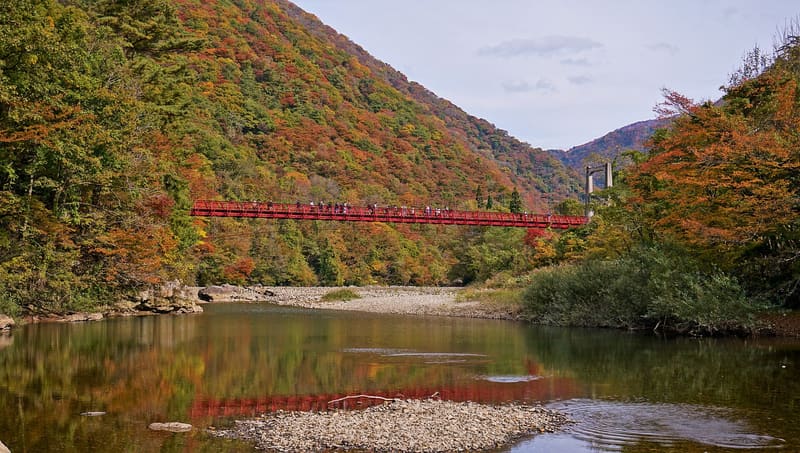 Dakigaeri Gorge7.9 kmphoto by 掬茶 · CC BY-SA 4.0
 Ōmagari Hanabi — National Fireworks Competition17.4 kmphoto by 掬茶 · CC BY-SA 4.0
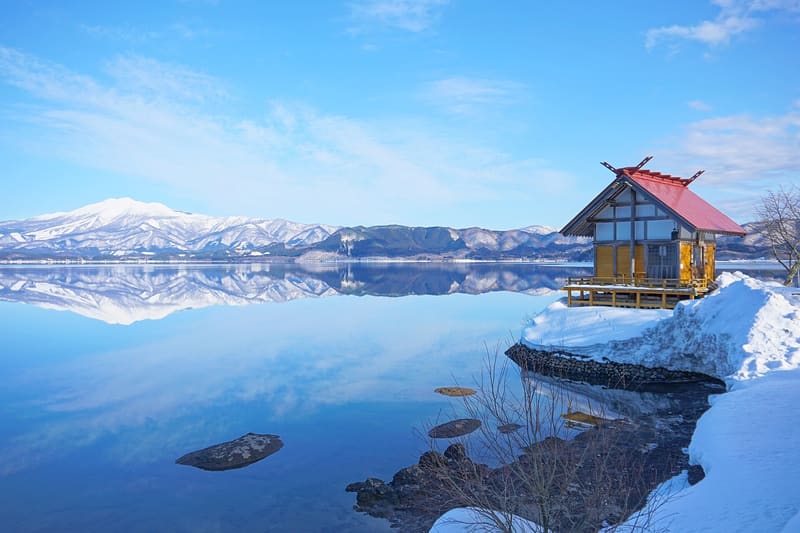 Lake Tazawa18.7 kmphoto by (Tea-making tea) 掬茶 · CC BY-SA 4.0