
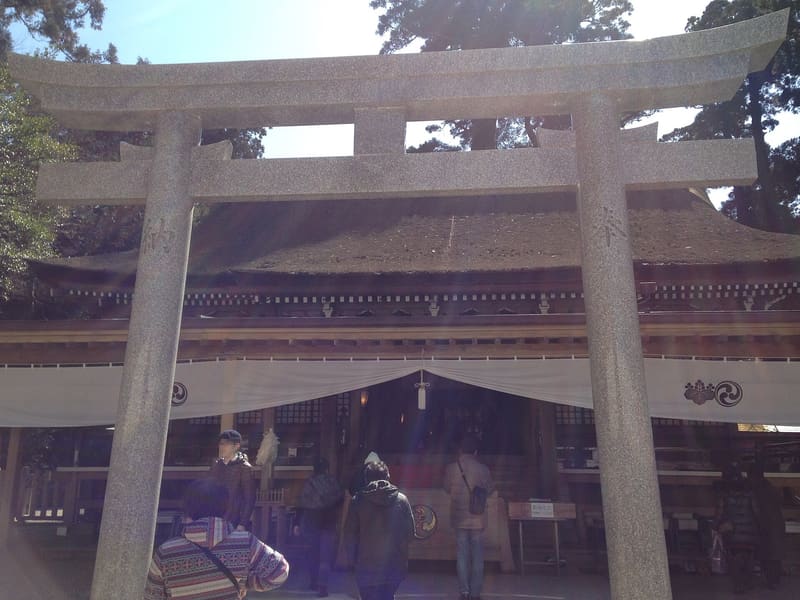
The Kaname-ishi, tradition says, holds down the head of the earthquake catfish.
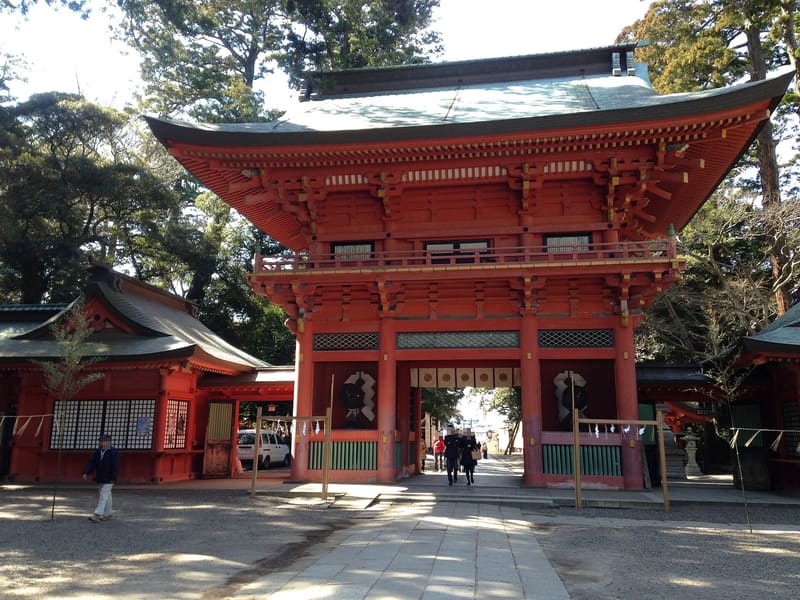
Beyond the red rōmon, thirteen metres tall and donated in 1634 by the first lord of Mito, the avenue crosses a forest of more than six hundred species protected as a natural monument. The path reaches the Kaname-ishi, the stone that according to tradition holds down the head of the catfish that causes earthquakes, and continues to the Mitarashi-ike, where more than 400,000 litres of spring water a day let you see the bottom.
Shrine dedicated to Takemikazuchi no Ōkami, a warrior deity revered as the protector of eastern Japan, one of only three shrines in the country already called ‘jingū’ in the Engishiki (together with Ise and Katori). The present complex reflects the restorations commissioned by the Tokugawa: the rōmon of 1634, donated by the first lord of Mito, and the honden buildings of 1619, donated by the second shogun Hidetada, are both Important Cultural Properties. The sacred cypress in the grounds is about 1,300 years old and 40 metres tall.
ℹ️ The grounds are open 24 hours a day; the office for amulets, prayers and goshuin is open 8:30–16:30. Four free car parks; the closest to the Mitarashi-ike is the one of the same name. At the Mitarashi-ike there are a kiosk, toilets and drinkable spring water.
🚉 Kashima-Jingu · 8 min walk
Holidays in Japan? Plan them with us.Over 2,000 real places, a day-by-day itinerary.FreeOpen the map →Sources: kashimajingu.jp · ja.wikipedia.org
Nearby
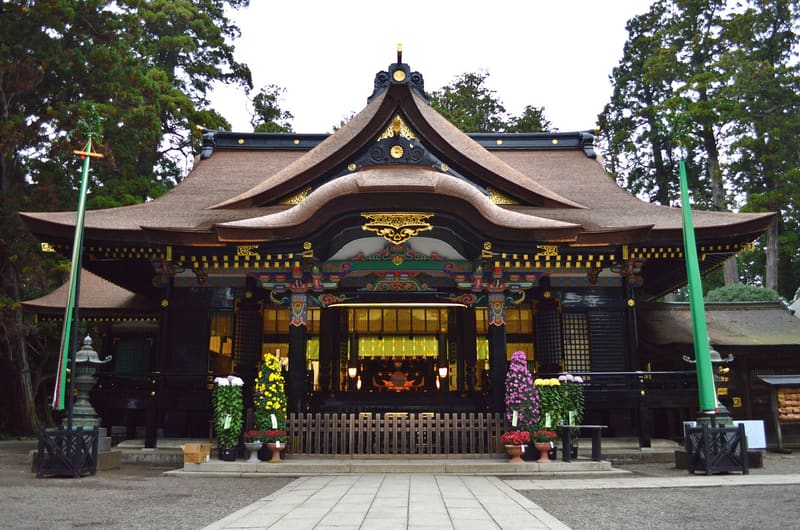 Katori Shrine (Katori Jingū)13 kmphoto by Saigen Jiro · CC0
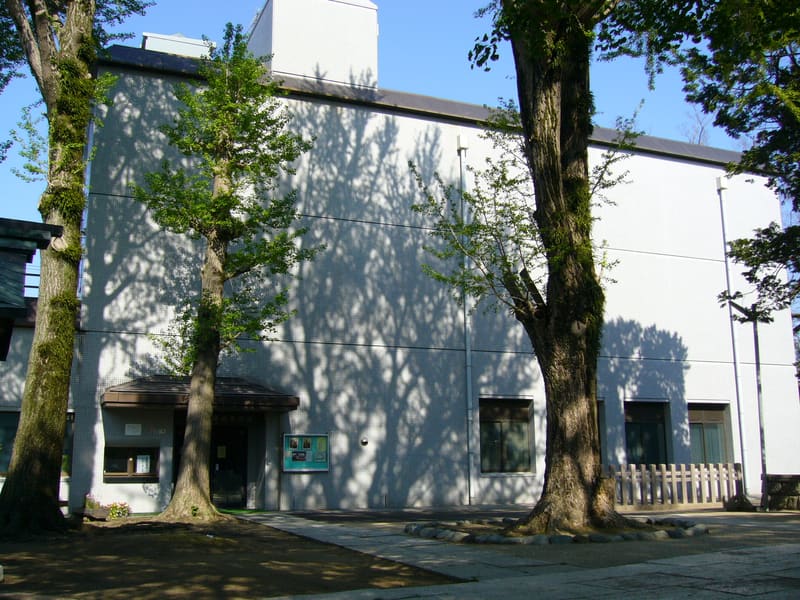 Sawara Float Museum (Suigō Sawara Dashi Kaikan)14.7 kmphoto by katorisi · CC BY 2.5
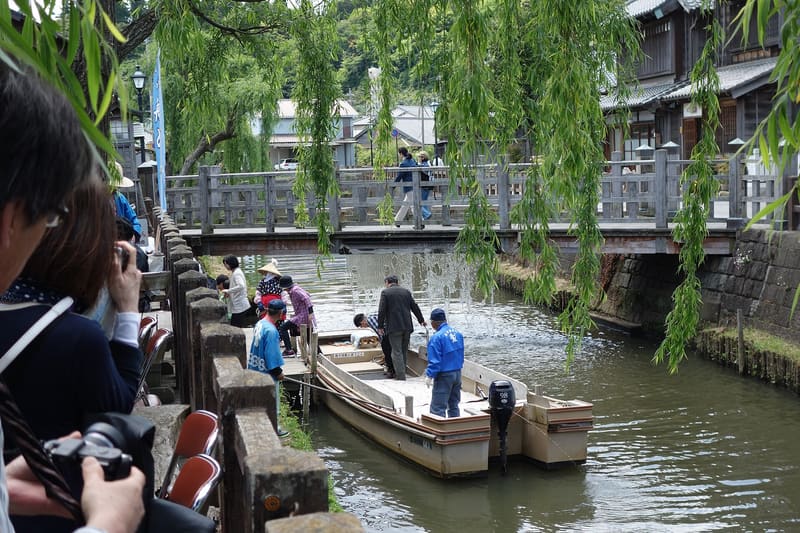 Sawara historic district14.9 kmphoto by Toshihiro Matsui · CC BY-SA 3.0
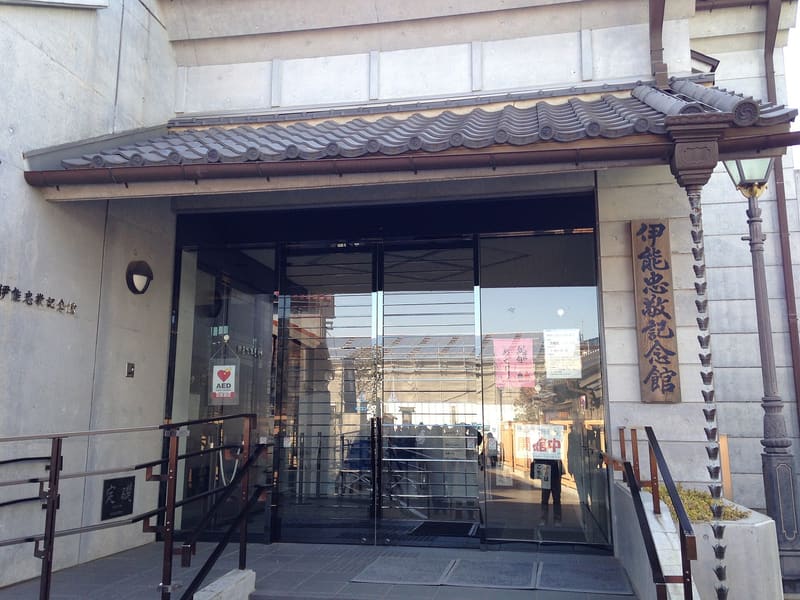 Inō Tadataka Memorial Museum15 kmphoto by そらみみ · CC BY-SA 3.0