
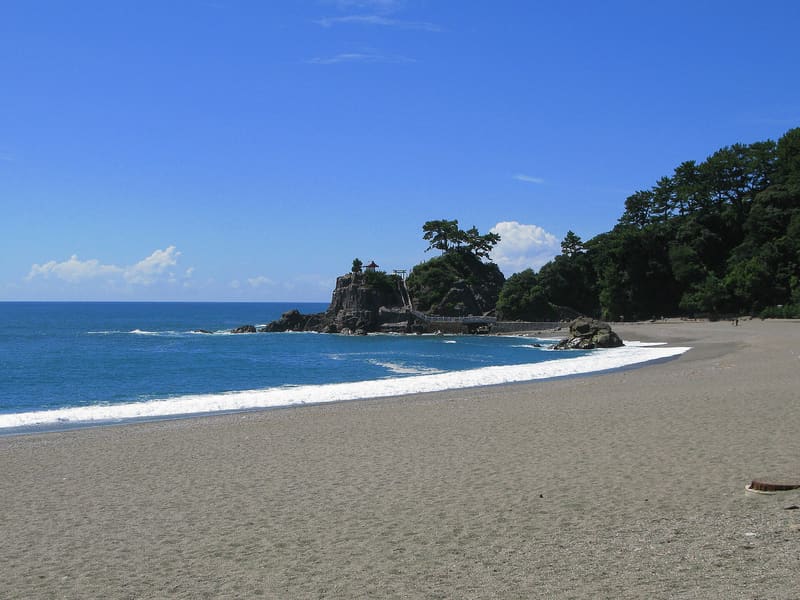
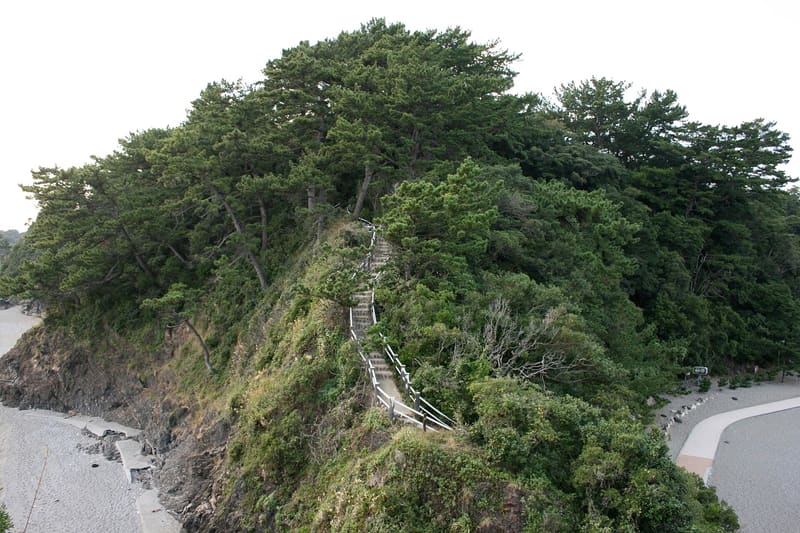
Sudden waves mean swimming is banned: rescue drills have been held since 2011, after a drowning.
A crescent-shaped beach between the Ryūzu and Ryūō headlands, with white sand and pines that the Tosa folk song Yosakoi-bushi mentions by name. Swimming is banned: the waves can change suddenly, and since several children drowned here in 2011, rescue drills have been held every year. At the end of the headland, a bronze statue of Sakamoto Ryōma (5.3 m, 13.5 with the pedestal) looks out over the Pacific: it was unveiled on 27 May 1928, paid for with about 25,000 yen of the time raised by young volunteers from the prefecture. For about two months around 15 November (the date of Ryōma's birth and death), a temporary platform lets you look out over the ocean from the same height as the statue.
The area now occupied by the park was the site of Urado Castle (1591), built by Chōsokabe Motochika; it was abandoned when Yamauchi Kazutoyo moved the seat of the domain to Kochi Castle in 1603. Today the park includes Katsurahama Aquarium and the Sakamoto Ryōma Memorial Museum (opened in November 1991, new wing in April 2018).
ℹ️ Beach and park with free entry, accessible at all times. Swimming is banned along the whole stretch.
🚉 Katsurahama · 11 min walk
Holidays in Japan? Plan them with us.Over 2,000 real places, a day-by-day itinerary.FreeOpen the map →Sources: ja.wikipedia.org · city.kochi.kochi.jp · nippon.com
Nearby
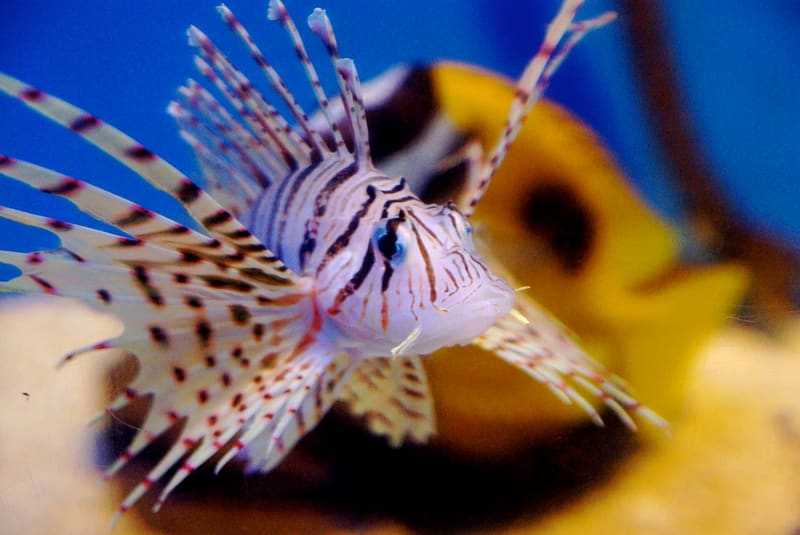 Katsurahama Aquarium400 mphoto by pelican from Tokyo, Japan · CC BY-SA 2.0
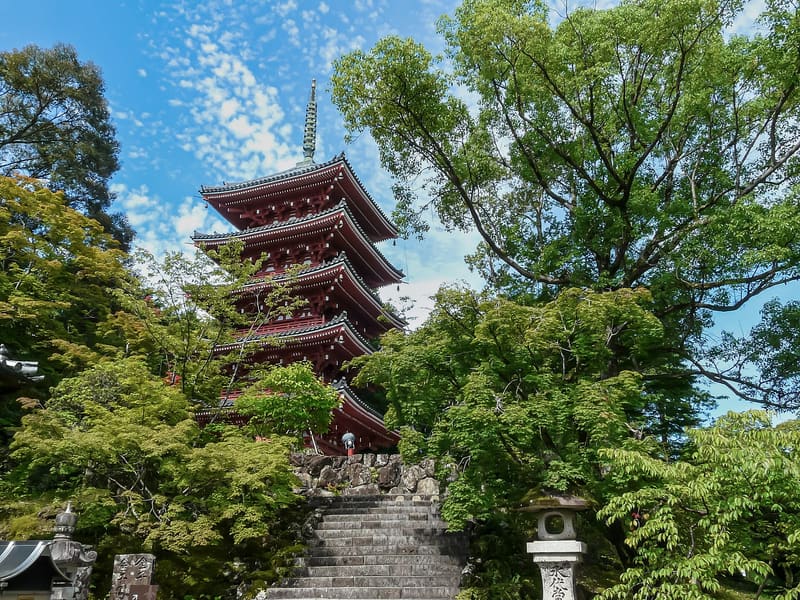 Chikurin-ji — temple 31 of the Shikoku Henro5.7 kmphoto by Naokijp · CC BY-SA 4.0
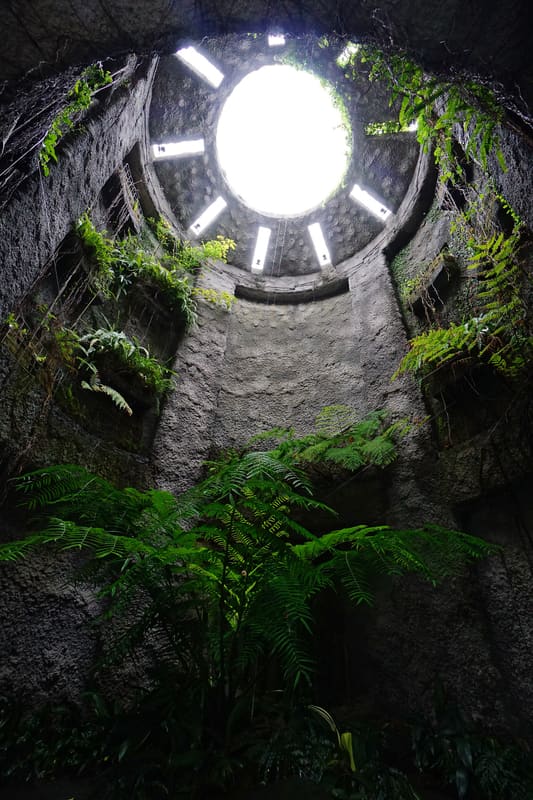 Makino Botanical Garden5.8 kmphoto by 663highland · CC BY-SA 4.0
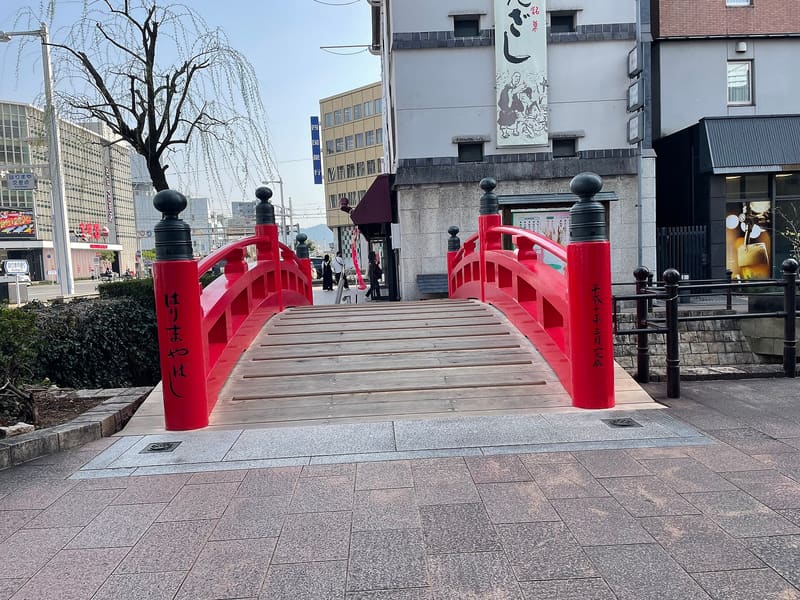 Harimaya-bashi7.4 kmphoto by Higa4 · CC0