
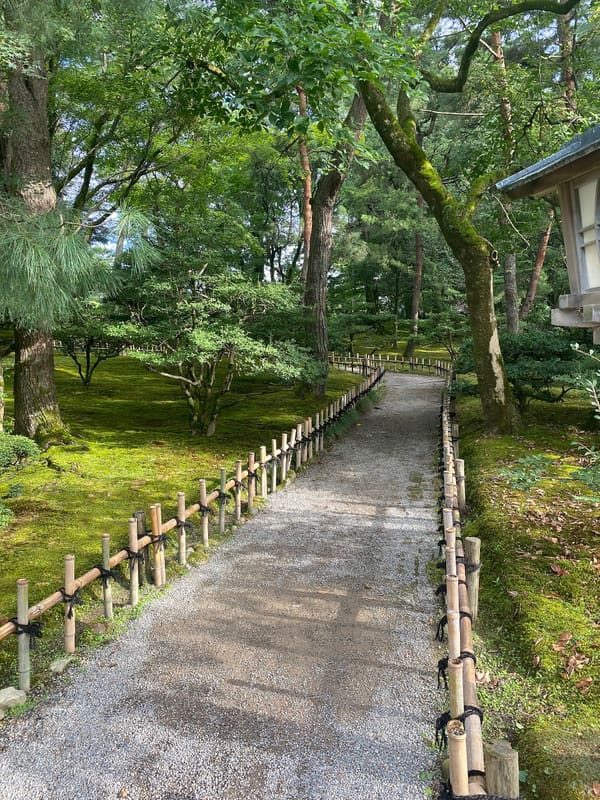
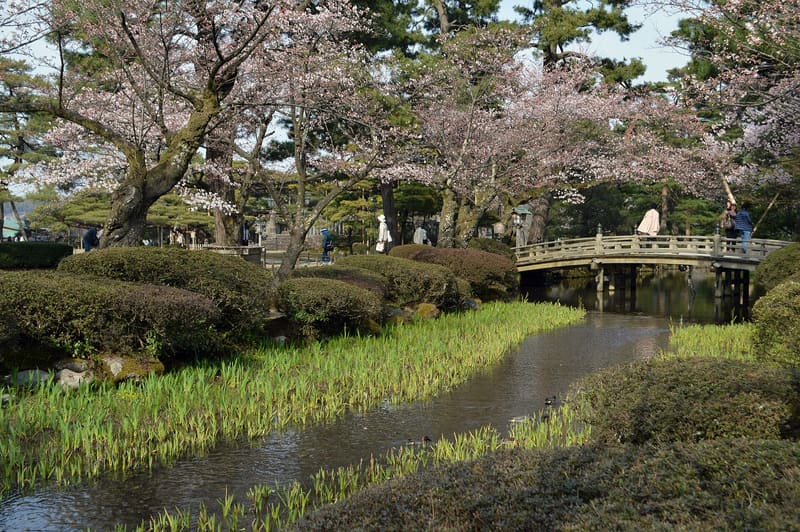
Open to the public since 1874, a hundred years after the project began in 1676.
As its very name says, the garden brings together six qualities that Chinese treatises considered incompatible in pairs within a single garden: spaciousness, seclusion, artifice, antiquity, watercourses and views. On the shore of Kasumigaike Pond stands the Kotoji-tōrō lantern, on two legs of unequal length. Every 1 November the gardeners begin the winter roping of the pines (雪吊り): the Karasaki pine is the first to be roped and the last to be untied, around mid-March, with ropes stretched in a cone from the top to the ground against the weight of the snow.
Begun in 1676 by the daimyo Maeda Tsunanori as the garden of the villa next to Kanazawa Castle, it was rebuilt after the fire of 1759 and enlarged over the following decades by the Maeda lords. The present name, Kenroku-en, was adopted in 1822 from the six qualities that a Chinese treatise considered incompatible in pairs in a single garden. Opened to the public in 1874, six years after the end of the shogunate, while the rest of the castle complex remained military land.
ℹ️ Open 7:00–18:00 (1 March–15 October) and 8:00–17:00 (16 October–end of February); free early admission in the first hours of the morning in some months. Ticket: adults 320 yen, ages 6–18 100 yen, free from age 65 with ID. 3 minutes’ walk from the ‘Kenrokuen-shita, Kanazawa-jō’ bus stop.
🚉 Hokutetsu Kanazawa · 30 min walk
Holidays in Japan? Plan them with us.Over 2,000 real places, a day-by-day itinerary.FreeOpen the map →Sources: hot-ishikawa.jp · pref.ishikawa.lg.jp · shiro-niwa.pref.ishikawa.lg.jp · ishikawa-inshokuouen.jp
Nearby
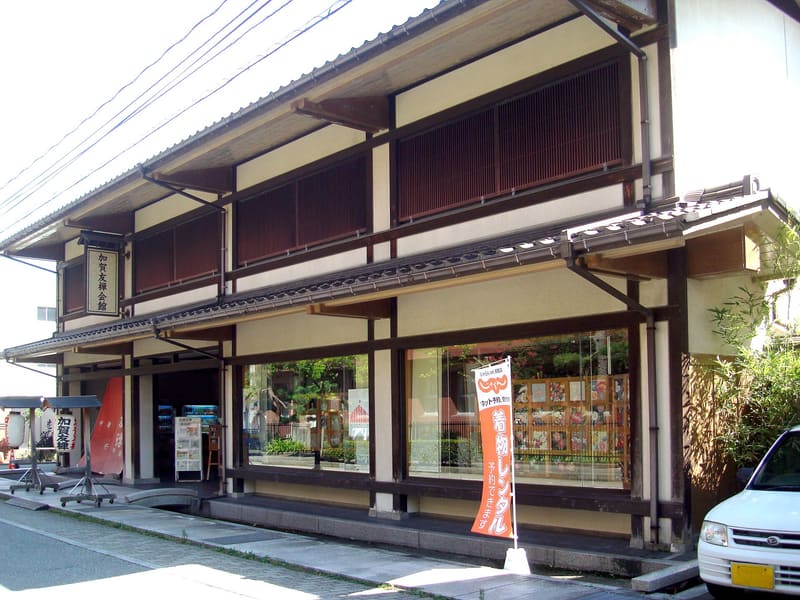 Kaga Yūzen Kaikan300 mphoto by 藤谷良秀(Yoshihide Fujitani) · CC BY-SA 4.0
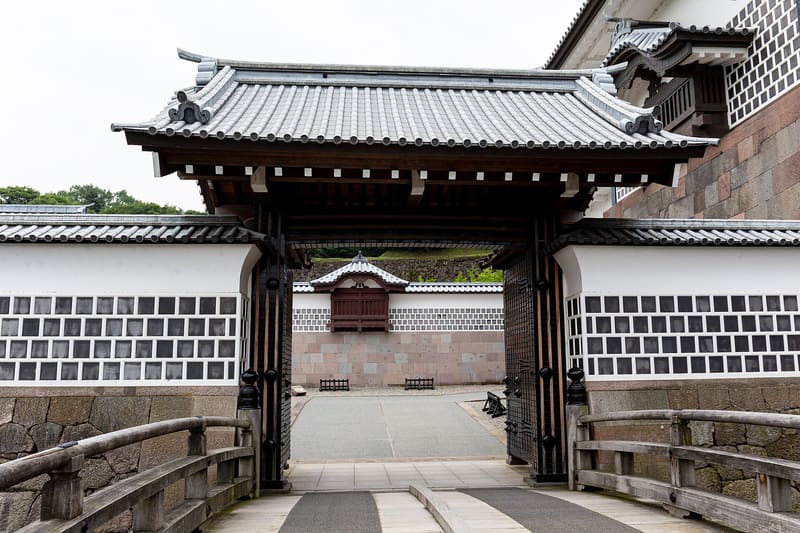 Kanazawa Castle (park)300 mphoto by Balon Greyjoy · CC0
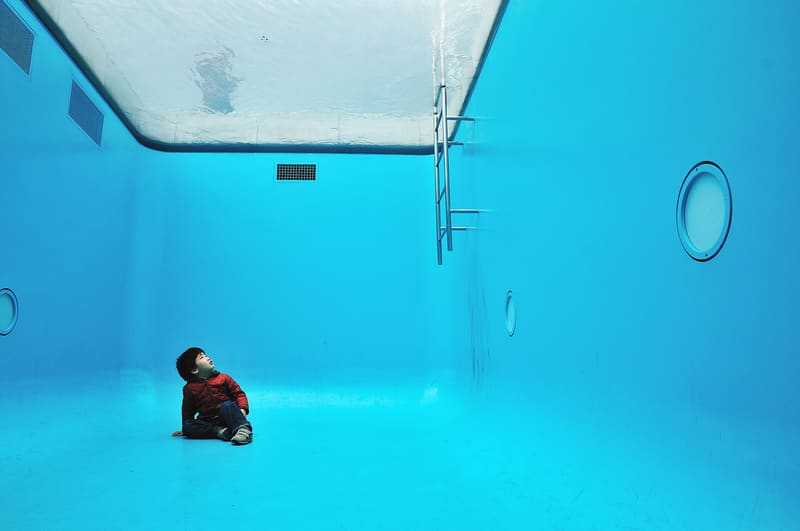 21st Century Museum of Contemporary Art, Kanazawa500 mphoto by ajari from Japan · CC BY 2.0
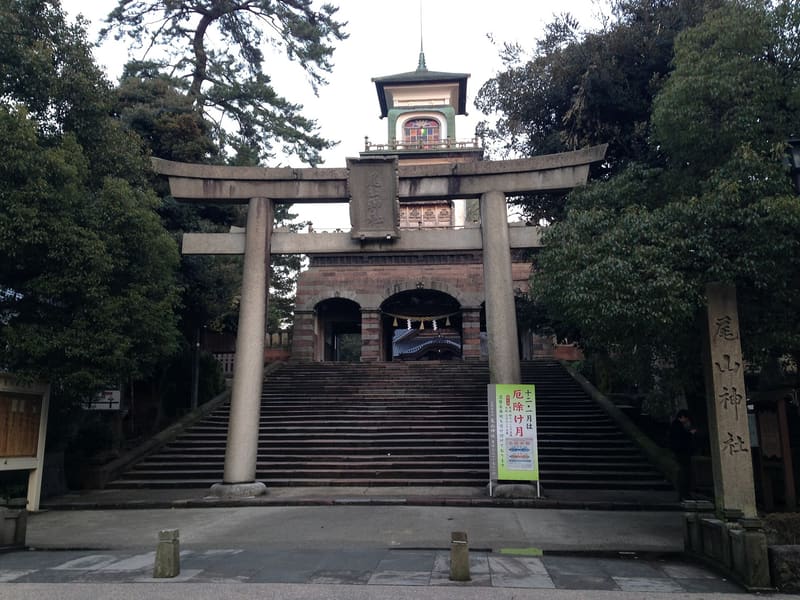 Oyama Shrine700 mphoto by そらみみ · CC BY-SA 4.0