
The toll rose from 310 to 500 yen on 1 September 2026, to restore the bridge.
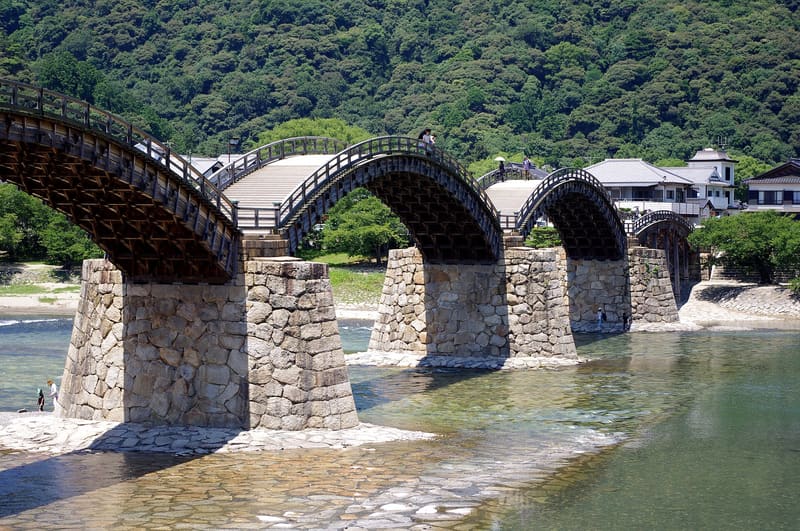
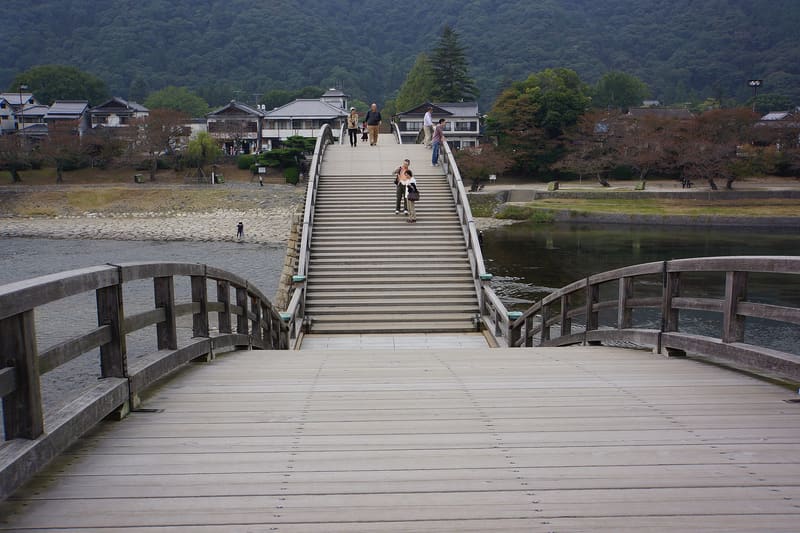
Five wooden arches over 193.3 metres, fitted together without nails (継手・仕口 joints, held by metal bands): the third lord of Iwakuni, Kikkawa Hiroyoshi, built it in 1673 after floods on the Nishiki River had swept away every bridge attempted before. It collapsed the following year in a flood and was rebuilt at once; it then stood for 276 years, until Typhoon Kijia destroyed it in September 1950. It was rebuilt in wood in 1953, and a second complete rebuilding of the wooden parts, between 2001 and 2004, cost 2.6 billion yen using only Japanese timber.
A national Place of Scenic Beauty (名勝) since March 1922, it is counted among the three most famous bridges in Japan. It crosses the Nishiki River, linking Iwakuni's samurai district to Kikkō Park, at the foot of the mountain on which the castle stands.
ℹ️ Ticket office open 8:00–17:00, with seasonal extensions until 18:00 or 19:00; the bridge can still physically be crossed outside these hours, but it is unstaffed. Toll (from 1 September 2026): adults 500 yen return, children (elementary school) 250 yen, under-6s free; before that date it was 310/150 yen. Combined ticket with Iwakuni Castle and ropeway: 1,550 yen adults / 700 yen children. Reference address: 山口県岩国市横山2丁目.
🚉 Kawanishi · 18 min walk
Holidays in Japan? Plan them with us.Over 2,000 real places, a day-by-day itinerary.FreeOpen the map →Sources: kintaikyo.iwakuni-city.net · kintaikyo.iwakuni-city.net · city.iwakuni.lg.jp · iwakuni-kanko.com · ja.wikipedia.org · kankou.iwakuni-city.net
Nearby
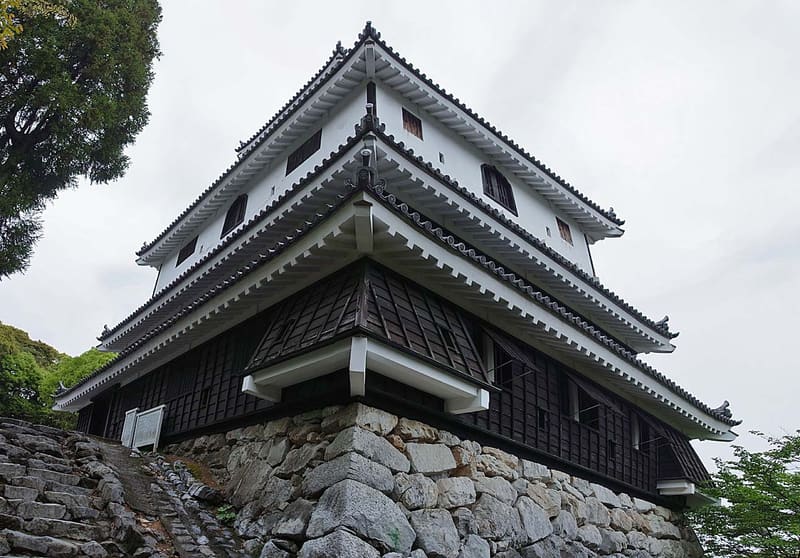 Iwakuni Castle900 mphoto by z tanuki · CC BY 3.0
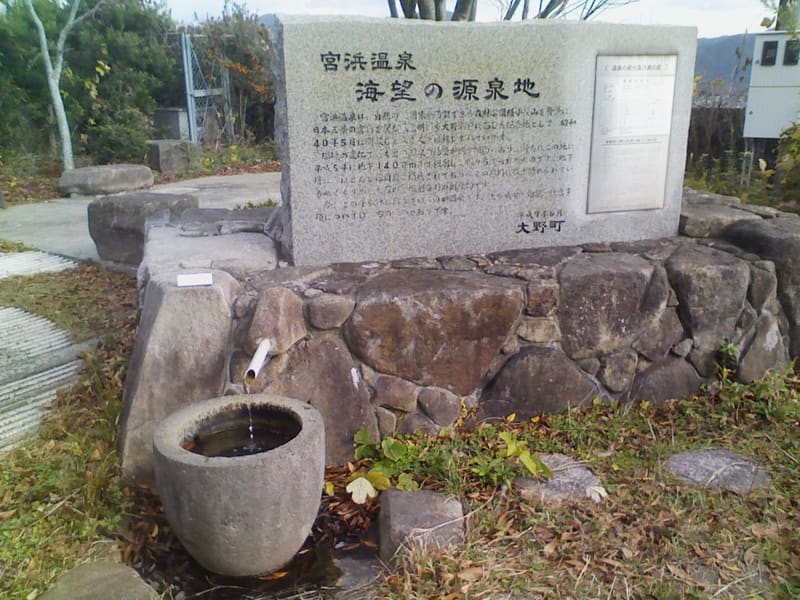 Miyahama Onsen13.5 kmphoto by noppo3 · CC BY-SA 3.0
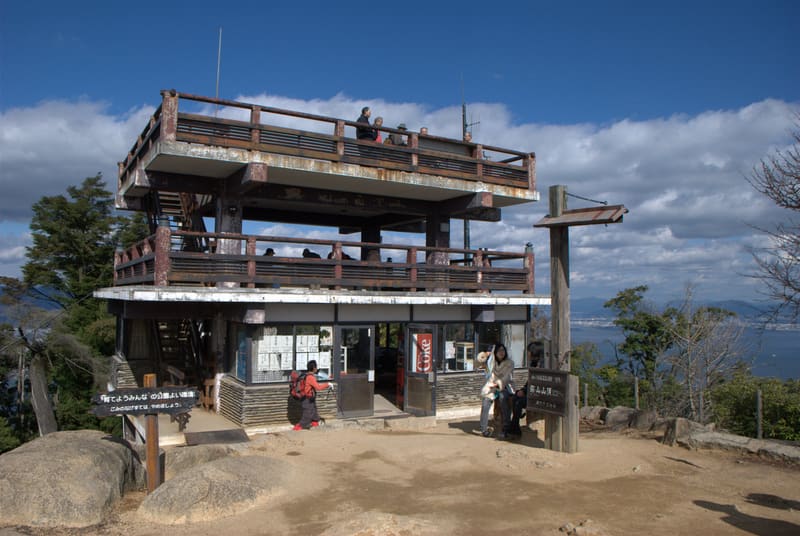 Mount Misen18 kmphoto by OS6 · CC BY-SA 3.0
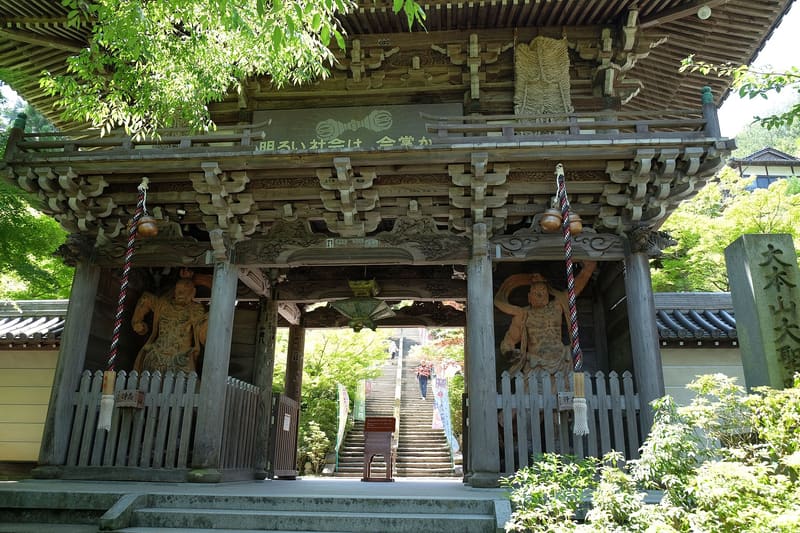 Daishō-in18.4 kmphoto by sk01 · CC BY-SA 3.0