
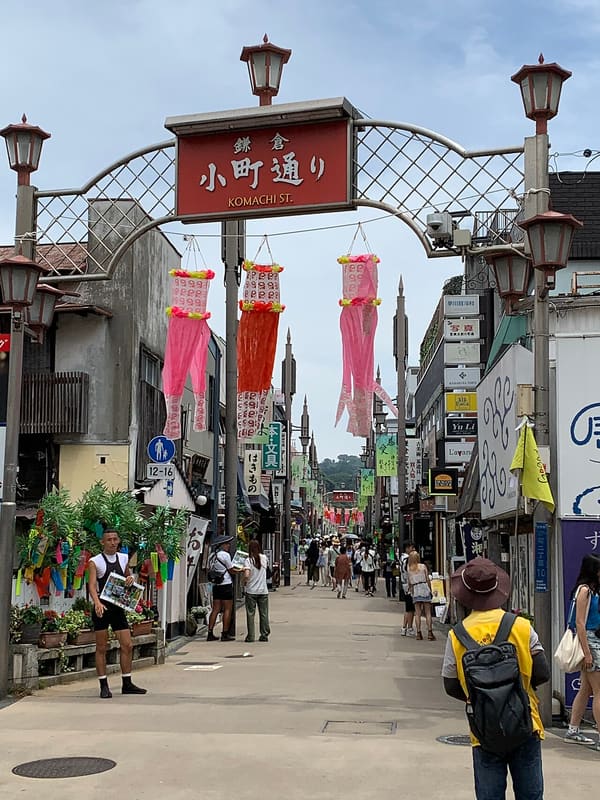
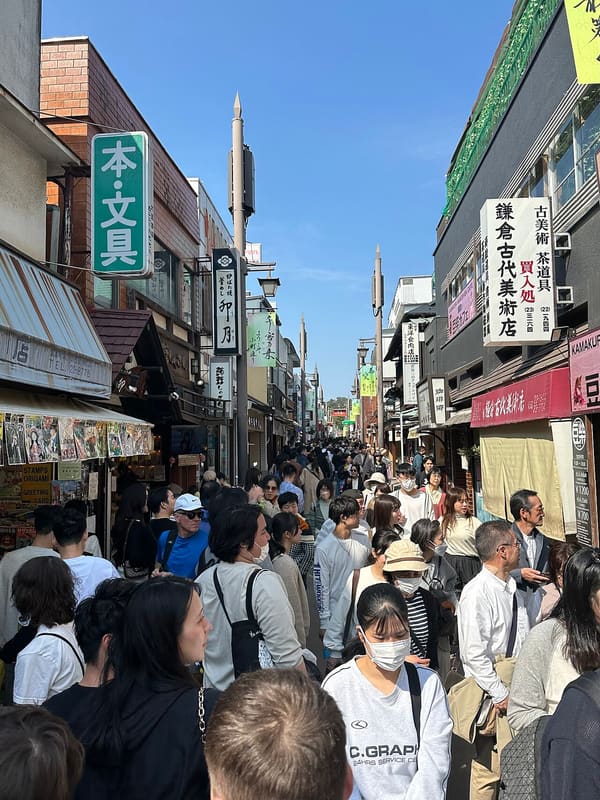
In a few hundred metres, 250 shops: the power cables have only been underground since 2013.
It runs parallel to the main street leading to the Tsurugaoka Hachimangu shrine, and about 250 shops selling street food, souvenirs and crafts line it. Until the Edo period, trade in Kamakura was only permitted on Komachi Ōji, a different street: this one began as a farm track, known as ‘Seto land’, and only developed after the railway station opened in 1889. The overhead power cables typical of urban Japan were put underground between 2007 and 2013 to give it back a more historic look.
A pedestrian shopping street linking Kamakura Station to the entrance of the Tsurugaoka Hachimangu shrine; it took shape as a shopping district after the Kantō earthquake of 1923.
ℹ️ Public street, always open to walk along; the shops keep their own hours, generally 10:00–18:00/19:00.
🚉 Kamakura · 4 min walk
Holidays in Japan? Plan them with us.Over 2,000 real places, a day-by-day itinerary.FreeOpen the map →Sources: ja.wikipedia.org · kamakura-komachi.com
Nearby
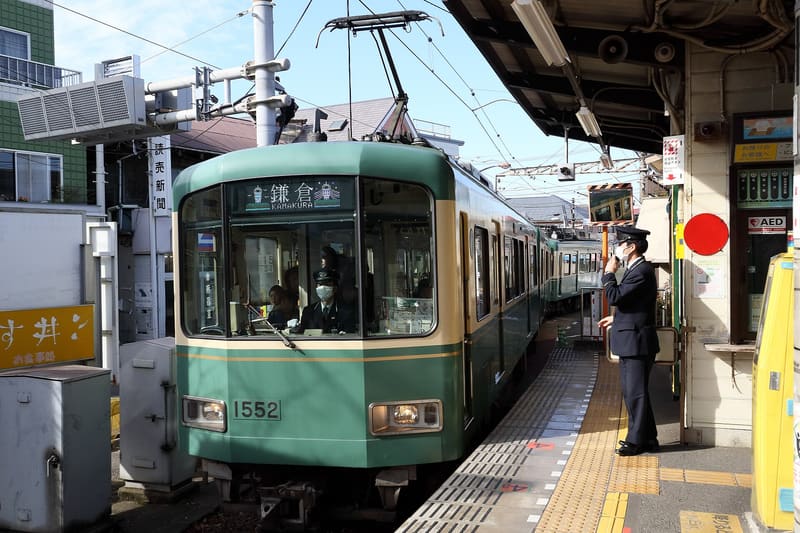 Enoden, the Enoshima Electric Railway300 mphoto by MiNe · CC BY 2.0
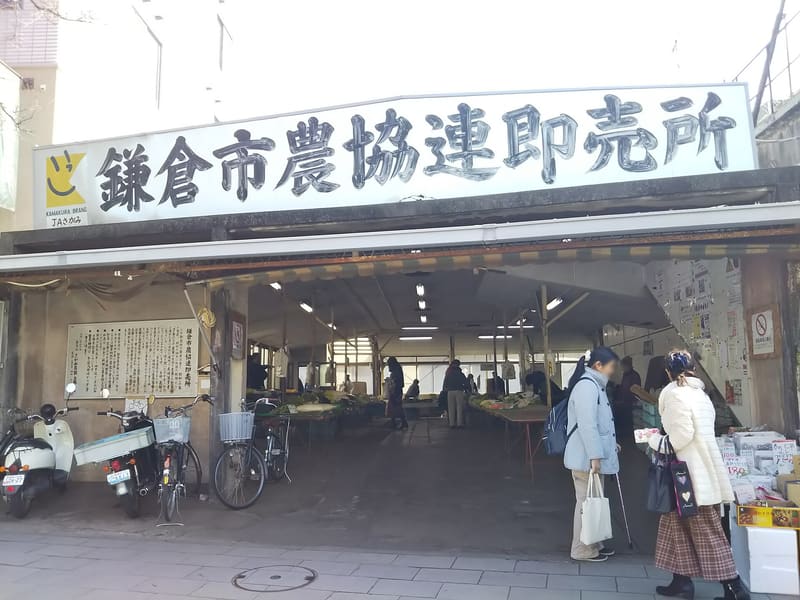 Kamakura Farmers' Market, the Renbai400 mphoto by 妖精書士 · CC0
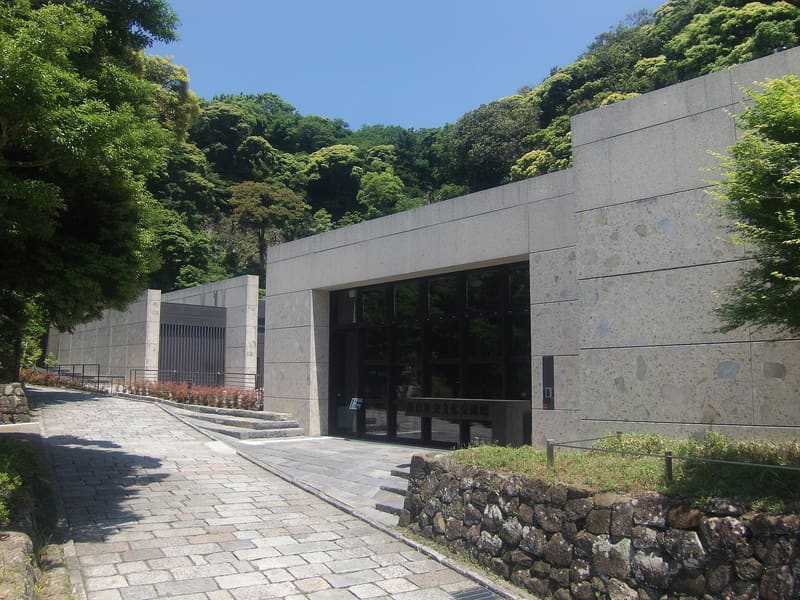 Kamakura Museum of History and Culture400 mphoto by Indiana jo · CC BY-SA 4.0
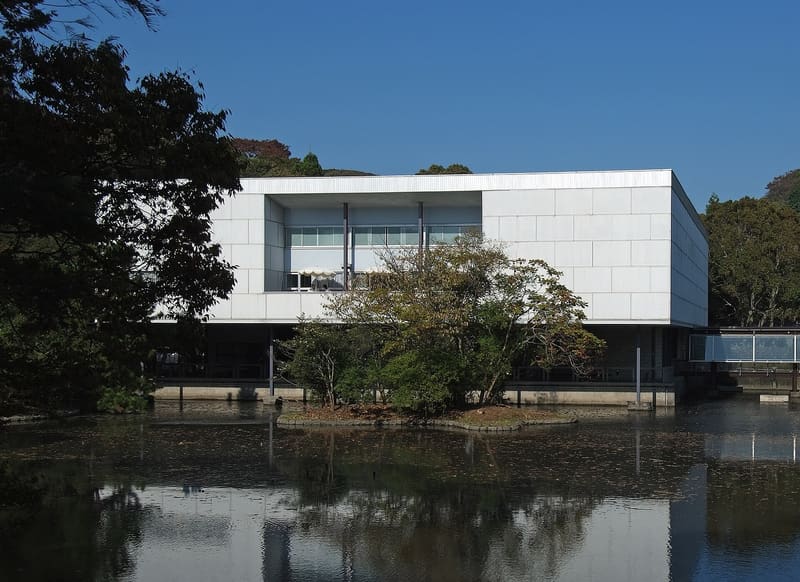 Kamakura Bunkakan Tsurugaoka Museum500 mphoto by Wiiii · CC BY-SA 3.0