
The sand goes ‘ku ku’ underfoot, and a 2001 regulation bans smoking on it.
You walk barefoot and the sand answers: a clear ‘ku ku’ at every step, because the quartz grains are all the same size and rounded, and as they rub against one another they make a sound. But only when dry: wet, the sand falls silent. In the central stretch, the ‘drum beach’, under the sand there is a slab of rock with a hollow, and stamping your foot or thumping your fist on it makes a deep boom.
One kilometre and eight hundred metres of coastline on the Sea of Japan, divided into three stretches by 太鼓浜, the central ‘drum beach’. The singing sand depends on how uniform in size the quartz grains are, which is the technical reason for the sound. Behind the beach runs an ancient dune about fifty metres high. A national Natural Monument and Place of Scenic Beauty since 26 July 2007 (notification no. 106, criteria 八 and 九), and before that listed among the hundred soundscapes of Japan to be preserved (1996), the hundred beaches of white sand and pines (1987) and the two hundred natural environments of Kyoto Prefecture (1993). It is mentioned in poetry by Hosokawa Yūsai and by Hosokawa Gracia, and later by the Yosano couple.
ℹ️ Open at all times and free. ⚠️ The thing to know before going is not an opening time but a ban, and it is a regulation, not a courtesy: in 2001 the town of Amino (now Kyōtango) passed an ordinance declaring the beach a special protection area, and banning smoking, setting off fireworks, cooking and camping on the sand, because these are the things that dirty it, and dirty sand stops singing. In summer, members of the association that looks after the beach patrol it. On the shore there is also a hot spring bath, but ⚠️ it works as a full bath only in July and August: from mid-April to the end of June and from September to November it is only a footbath. ⚠️ If the sand is damp it does not sing, and in that case the alternative is the museum next door (K381), where the test bed is kept dry.
🚉 琴引浜 · 10 min walk
Holidays in Japan? Plan them with us.Over 2,000 real places, a day-by-day itinerary.FreeOpen the map →Sources: kunishitei.bunka.go.jp · online.bunka.go.jp · nakisuna.jp · nakisuna.jp · kyotango.gr.jp · uminokyoto.jp
Nearby
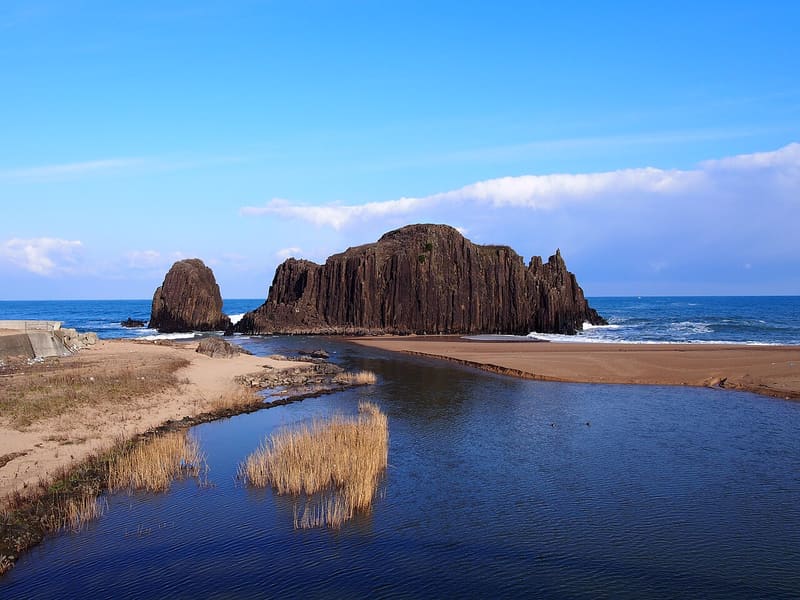 Tateiwa6.6 kmphoto by VinayaMoto · CC BY-SA 4.0
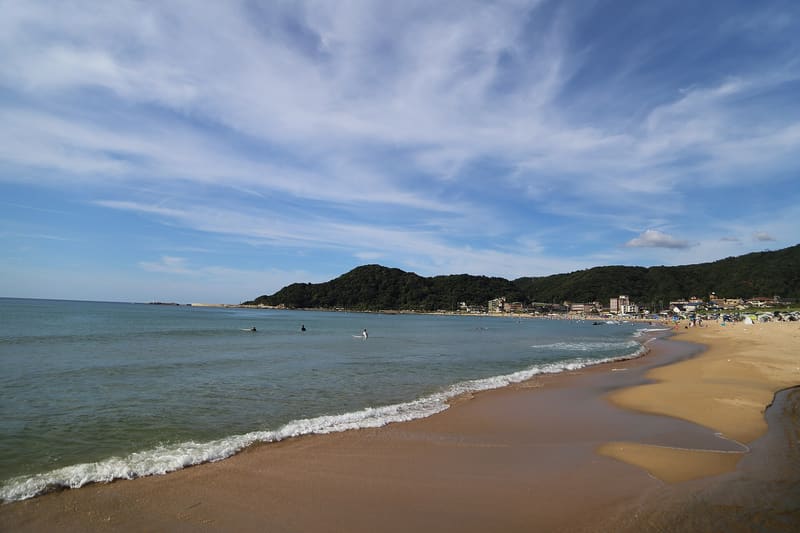 Yūhigaura, the sunset beach8.5 kmphoto by Araisyohei · CC BY-SA 4.0
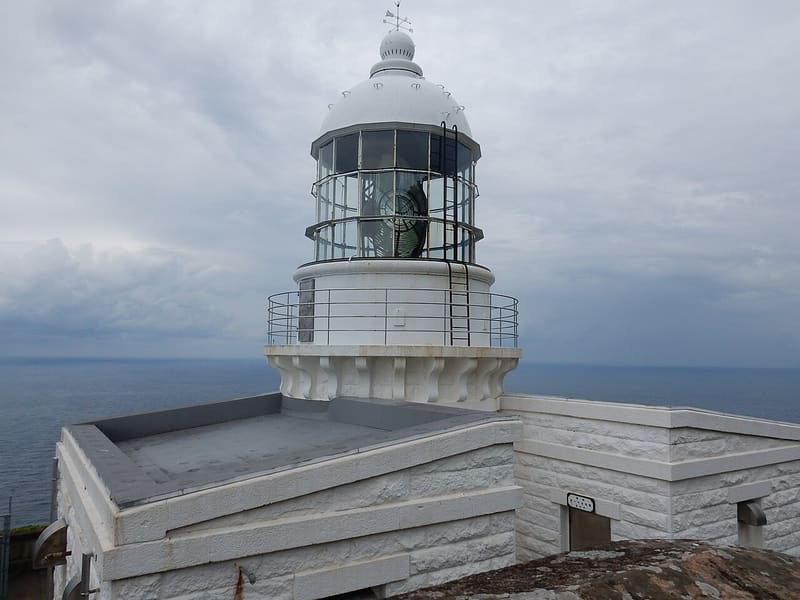 Kyogamisaki Lighthouse17.5 kmphoto by VinayaMoto · CC BY-SA 4.0
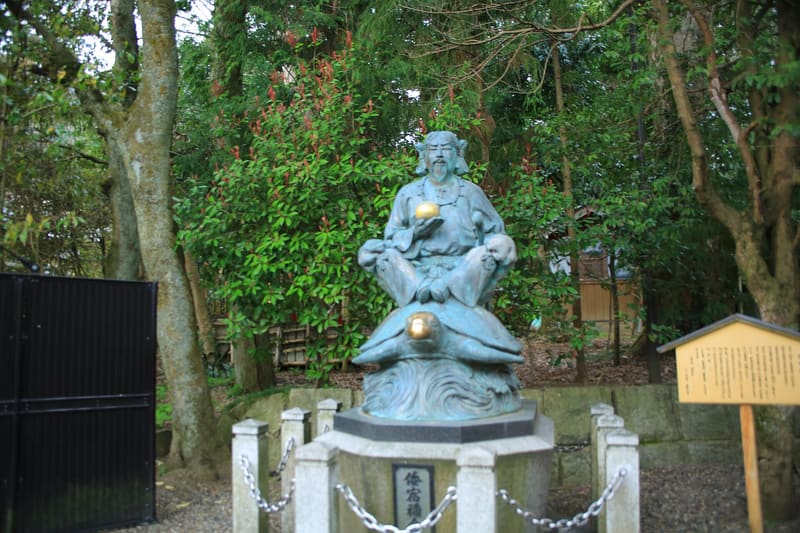 Motoise Kono-jinja18.7 kmphoto by Ray Swi-hymn from Sijhih-Taipei, Taiwan · CC BY-SA 2.0