The Anime Trip
🌐 EN ▾
ItalianoEnglish繁體中文(台灣)繁體中文(香港)日本語
PLAN YOUR TRIPMy tripSign in / Sign upSign in / Sign up
Lake Ezu (江津湖)
photo by MK Products · CC BY-SA 3.0
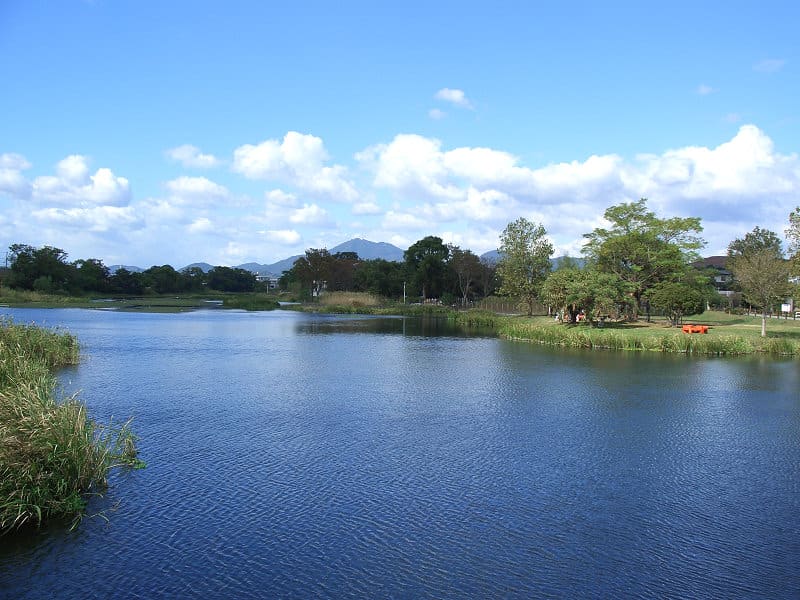
Lake Ezu (江津湖)
photo by Kuzeo · CC BY-SA 3.0

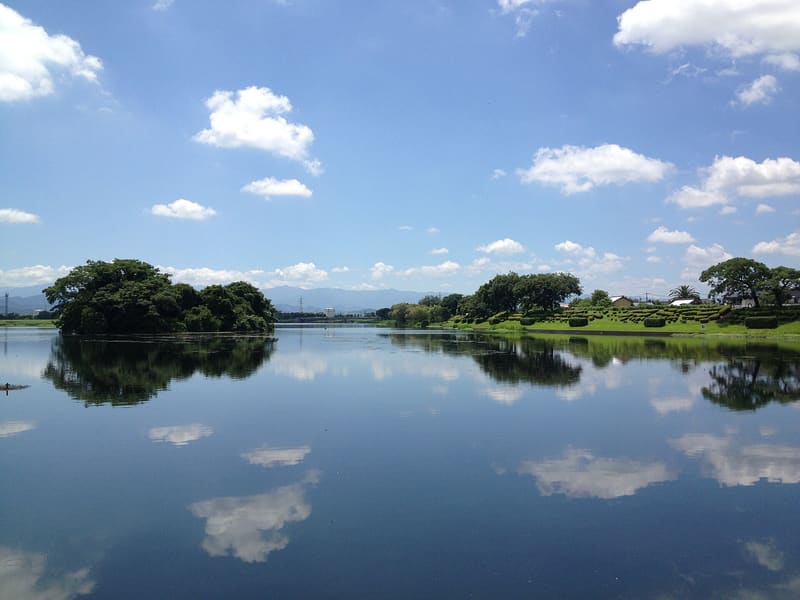
Spring-fed lake in the city, in two basins; the rare suizenji-nori alga grows in the Kami-Ezu.

From the Hatchōbaba tram stop it is only five minutes on foot to the upper arm of the lake, the Kami-Ezu. A small island, the Nakanoshima, is joined to both banks by bridges, and there is the shallow pond where children play in the water. Further downstream the lake opens into the Shimo-Ezu, with the zoo and the botanical garden on the shore, and walking and running tracks run along the banks.

The lake is 2.5 kilometres long, covers about 50 hectares and is shaped like a gourd (ひょうたん, hyōtan) because it is made of two basins: the Kami-Ezu upstream and the Shimo-Ezu downstream. It is said to have formed when Katō Kiyomasa, the lord who built Kumamoto Castle, had the Ezu embankment built in the Keichō period (1596–1615) and the spring water collected on the east side. The park's website points out that all the drinking water of Kumamoto's roughly 700,000 inhabitants is groundwater, and that the water gushing up in the Suizenji garden flows towards this lake. The banks have been a park since 1966; in April 2012 management passed from the prefecture to the municipality. On 3 June 2008 the Ministry of the Environment included the springs of Suizenji and Ezu among the ‘hundred waters of the Heisei era’ (平成の名水百選). In the Kami-Ezu grows the alga suizenji-nori (スイゼンジノリ), a rare freshwater alga.

ℹ️ The park is free and, according to its FAQ page, has no closing days or opening hours. The five car parks close their gates at 20:00: if you are still inside with your car, you cannot get out. Kami-Ezu area: tram towards Kengunmachi to the Hatchōbaba stop (5 minutes on foot); Suizenji area: Shiritsu Taiikukan-mae stop (1 minute); Shimo-Ezu: Dōshokubutsuen-iriguchi stop, the zoo entrance (15 minutes on foot). The area furthest downstream, Hirogi, has the service centre with 224 parking spaces, but from the tram it is 20 minutes on foot. ⚠️ After the earthquake of 28/07/2026 no official page says ‘open’: the park's website reports no closures and publishes regularly (latest article of 18/10/2026), but the notice of 10/09/2026 cancels the October ‘Minamo’ festival ‘taking into account the damage situation’. Reviews report that the water is not always clear.

🚉 Shin-Suizenji · 26 min walk

Holidays in Japan? Plan them with us.Over 2,000 real places, a day-by-day itinerary.FreeOpen the map →

Sources: ezuko-park.com · ezuko-park.com · ezuko-park.com · ezuko-park.com · ezuko-park.com · ja.wikipedia.org · city.kumamoto.jp · pref.kumamoto.jp
Nearby

All series · Open the map

Lake Ezu (江津湖)
Open on the mapwith over 1,800 wonders of Japan
Lake Ezu (江津湖)
photo by MK Products · CC BY-SA 3.0
Lake Ezu (江津湖)
photo by Kuzeo · CC BY-SA 3.0

Spring-fed lake in the city, in two basins; the rare suizenji-nori alga grows in the Kami-Ezu.

From the Hatchōbaba tram stop it is only five minutes on foot to the upper arm of the lake, the Kami-Ezu. A small island, the Nakanoshima, is joined to both banks by bridges, and there is the shallow pond where children play in the water. Further downstream the lake opens into the Shimo-Ezu, with the zoo and the botanical garden on the shore, and walking and running tracks run along the banks.

The lake is 2.5 kilometres long, covers about 50 hectares and is shaped like a gourd (ひょうたん, hyōtan) because it is made of two basins: the Kami-Ezu upstream and the Shimo-Ezu downstream. It is said to have formed when Katō Kiyomasa, the lord who built Kumamoto Castle, had the Ezu embankment built in the Keichō period (1596–1615) and the spring water collected on the east side. The park's website points out that all the drinking water of Kumamoto's roughly 700,000 inhabitants is groundwater, and that the water gushing up in the Suizenji garden flows towards this lake. The banks have been a park since 1966; in April 2012 management passed from the prefecture to the municipality. On 3 June 2008 the Ministry of the Environment included the springs of Suizenji and Ezu among the ‘hundred waters of the Heisei era’ (平成の名水百選). In the Kami-Ezu grows the alga suizenji-nori (スイゼンジノリ), a rare freshwater alga.

ℹ️ The park is free and, according to its FAQ page, has no closing days or opening hours. The five car parks close their gates at 20:00: if you are still inside with your car, you cannot get out. Kami-Ezu area: tram towards Kengunmachi to the Hatchōbaba stop (5 minutes on foot); Suizenji area: Shiritsu Taiikukan-mae stop (1 minute); Shimo-Ezu: Dōshokubutsuen-iriguchi stop, the zoo entrance (15 minutes on foot). The area furthest downstream, Hirogi, has the service centre with 224 parking spaces, but from the tram it is 20 minutes on foot. ⚠️ After the earthquake of 28/07/2026 no official page says ‘open’: the park's website reports no closures and publishes regularly (latest article of 18/10/2026), but the notice of 10/09/2026 cancels the October ‘Minamo’ festival ‘taking into account the damage situation’. Reviews report that the water is not always clear.

🚉 Shin-Suizenji · 26 min walk

Holidays in Japan? Plan them with us.Over 2,000 real places, a day-by-day itinerary.FreeOpen the map →

Sources: ezuko-park.com · ezuko-park.com · ezuko-park.com · ezuko-park.com · ezuko-park.com · ja.wikipedia.org · city.kumamoto.jp · pref.kumamoto.jp

Nearby