
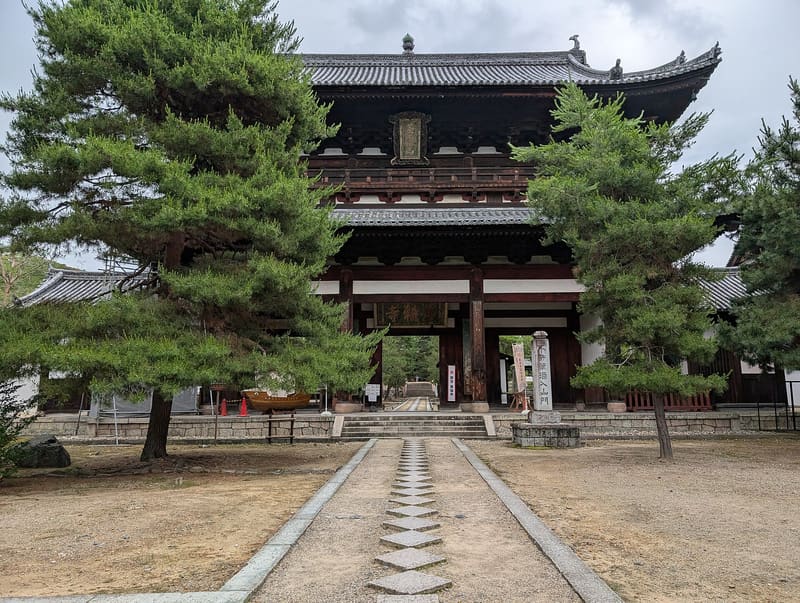
Founded in 1661 by a Chinese monk: it follows Ming models, not Japanese ones.
Five minutes from Ōbaku Station and you are inside a Chinese temple built in Japan: the covered corridors link the buildings in a straight line, and the roofs and statues follow the models of the Ming dynasty. Three halls are National Treasures. Here the monks cook fucha ryōri, the Chinese vegetarian cuisine that the founder brought with him.
Head temple of the Ōbaku school, the third branch of Japanese Zen alongside Rinzai and Sōtō, founded in 1661 by the Chinese master Ingen Ryūki. Three buildings (Tennōden, Daiyūhōden and Hattō) are National Treasures, and more than twenty other structures in the grounds are Important Cultural Properties. With Ingen, his monastery cuisine also came to Japan.
ℹ️ Adults ¥500. Open 9:00–17:00, but admission closes at 16:30, as does the goshuin desk (the calligraphed seals that visitors get added to their own book), and the shop closes at 16:00. Closing days are not stated. Five minutes on foot from Ōbaku Station, which is served by two lines; the car park costs ¥600 for the first hour and a half. ⚠️ For eating fucha ryōri, the price and how to book are not on the official pages that were read: ask the temple beforehand.
🚉 Obaku · 5 min walk
Holidays in Japan? Plan them with us.Over 2,000 real places, a day-by-day itinerary.FreeOpen the map →Sources: obakusan.or.jp · obakusan.or.jp
Nearby
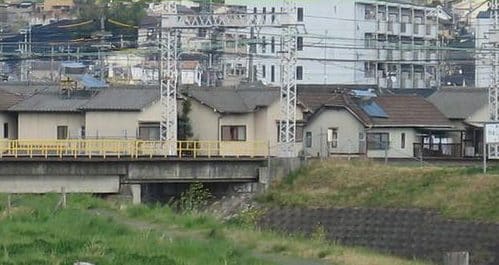 Keihan Uji Line Railway Bridge over the Yamashina River2.3 km
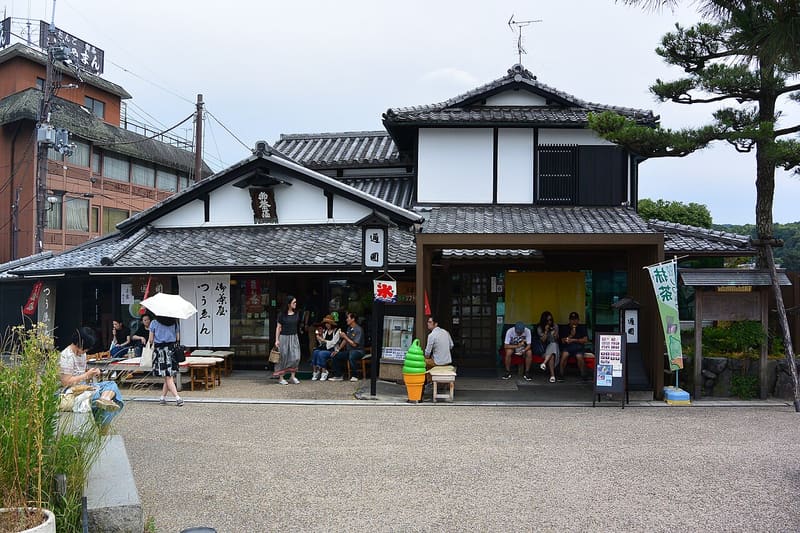 Tsuen (Uji tea house)2.4 kmphoto by Miya.m · CC BY-SA 4.0
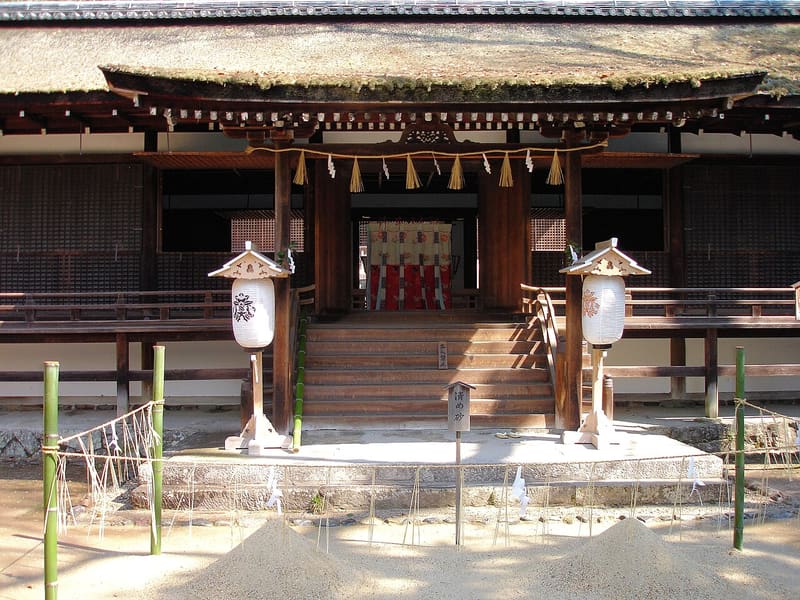 Ujigami-jinja2.5 kmphoto by Jim Gateley · CC BY 3.0
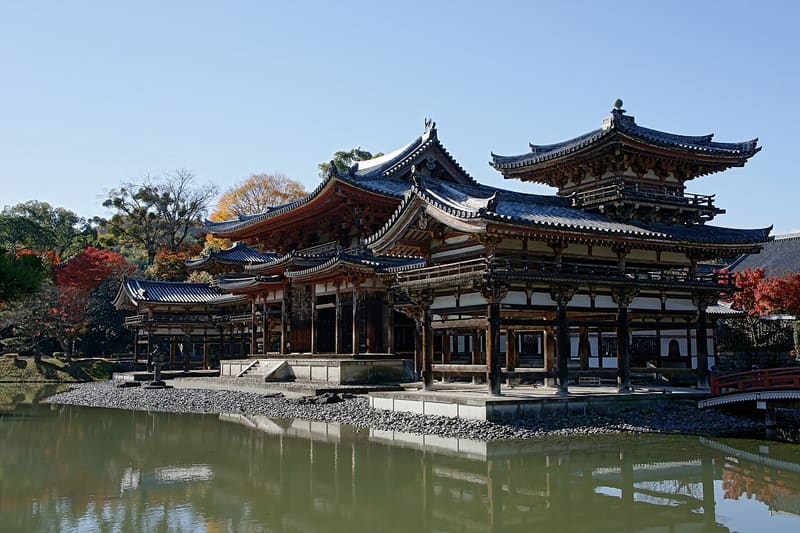 Byodo-in2.7 kmphoto by 663highland · CC BY 2.5