
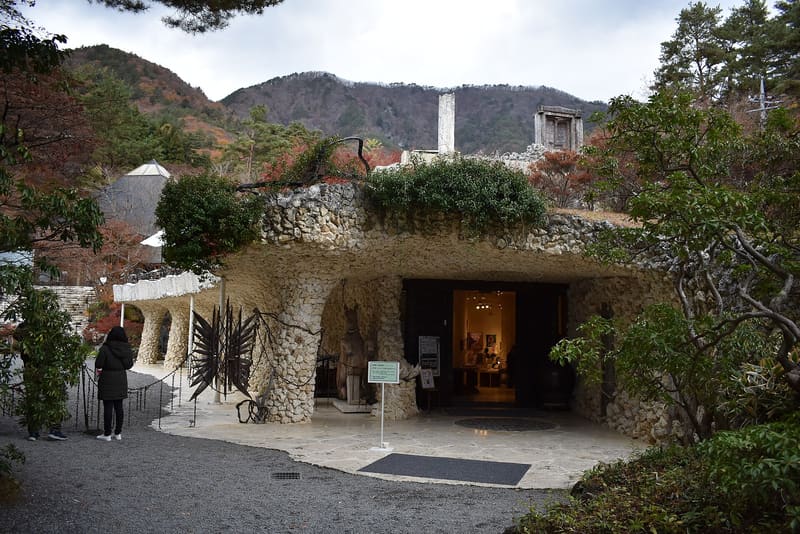
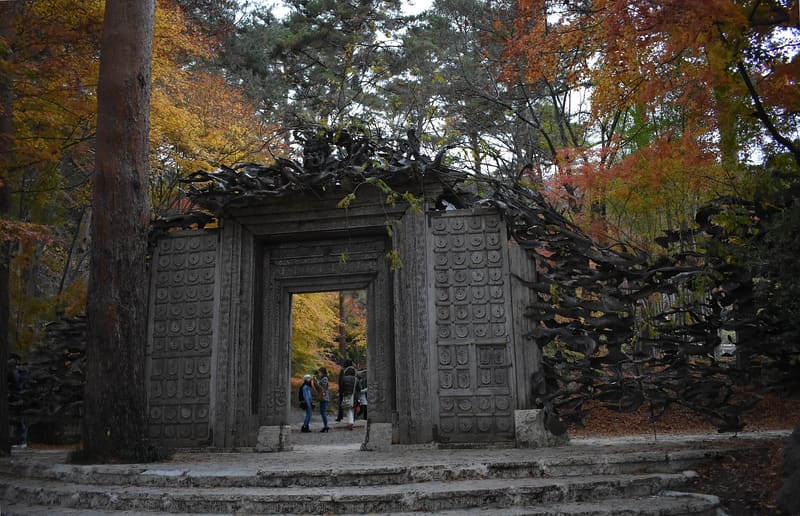
A gateway like an Indian fortress opens onto a pavilion inspired by Park Güell: three Michelin stars.
The entrance gate recalls an ancient Indian fortress; beyond it, a free-form building is reminiscent of Gaudí's Park Güell in Barcelona. The main pavilion, in Ryūkyū limestone on sixteen central pillars (大黒柱) in a pyramid layout, houses the ‘Itchiku Tsujigahana’ kimono collection: three stars in the Michelin Green Guide.
Museum opened in 1994 (Heisei 6) on the shore of Lake Kawaguchi, entirely devoted to the work of Kubota Itchiku: garden, building and furnishings are part of the same artistic vision. Kubota Itchiku (1917–2003) rediscovered on his own, at twenty, the tsujigahana dyeing technique, lost since the Muromachi period, and held his first exhibition in 1977, at sixty, after forty years of research. He designed 80 kimono for the ‘Symphony of Light’ series, completing 40.
ℹ️ April–November 10:00–17:00 (last entry 16:30), December–March 10:00–16:30 (last entry 16:00). Closed every Tuesday (open if a public holiday, closed the following day; closed on the first Tuesday of January regardless), 26–29 December; no weekly closure in October and November. Ticket 1,300 yen adults, 900 yen high school students. Wheelchair accessible.
🚉 Itchiku Kubota Art Museum (17) · 9 min walk
Holidays in Japan? Plan them with us.Over 2,000 real places, a day-by-day itinerary.FreeOpen the map →Sources: yamanashi-kankou.jp · ja.wikipedia.org
Nearby
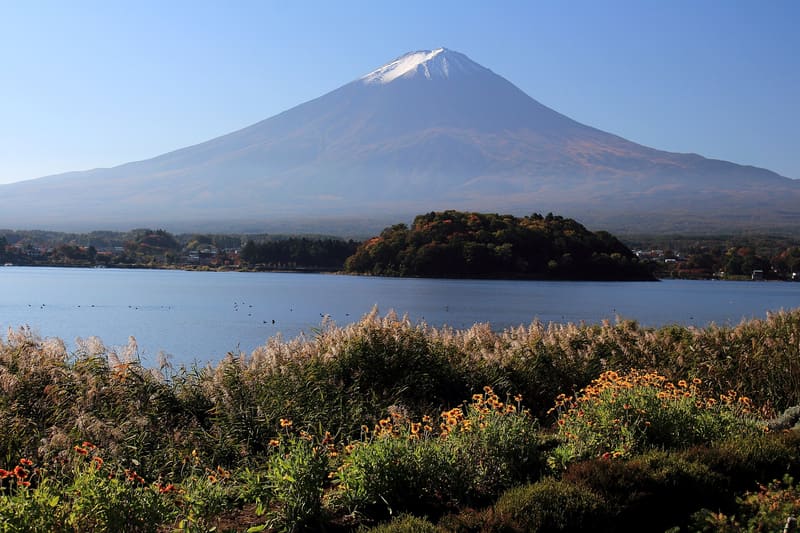 Ōishi Kōen1.8 kmphoto by Alpsdake · CC BY-SA 4.0
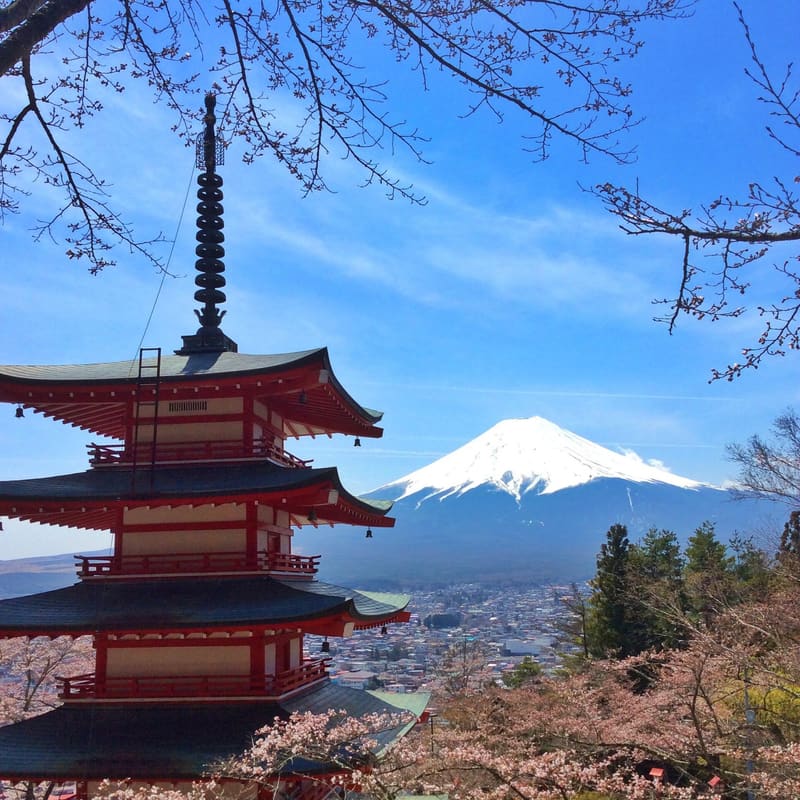 Arakurayama Sengen Kōen and Chūreitō5.1 kmphoto by ::::=UT=:::: · CC BY-SA 3.0
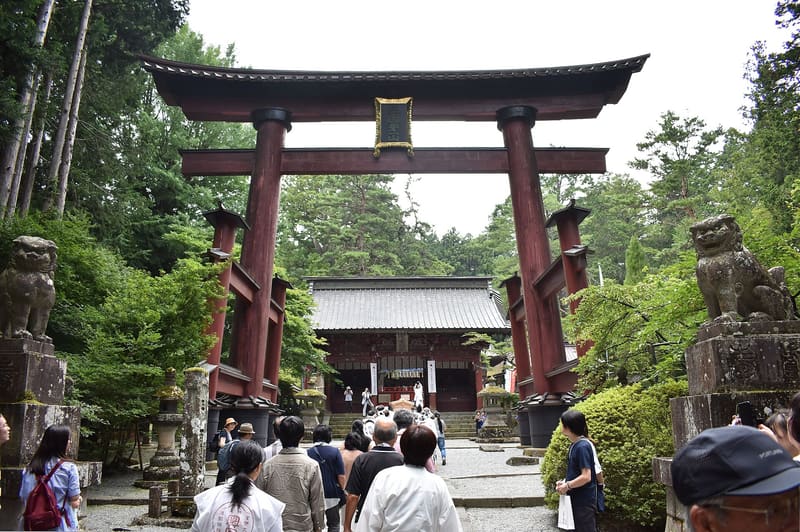 Kitaguchi Hongū Fuji Sengen Jinja7.3 kmphoto by 江戸村のとくぞう · CC BY-SA 4.0
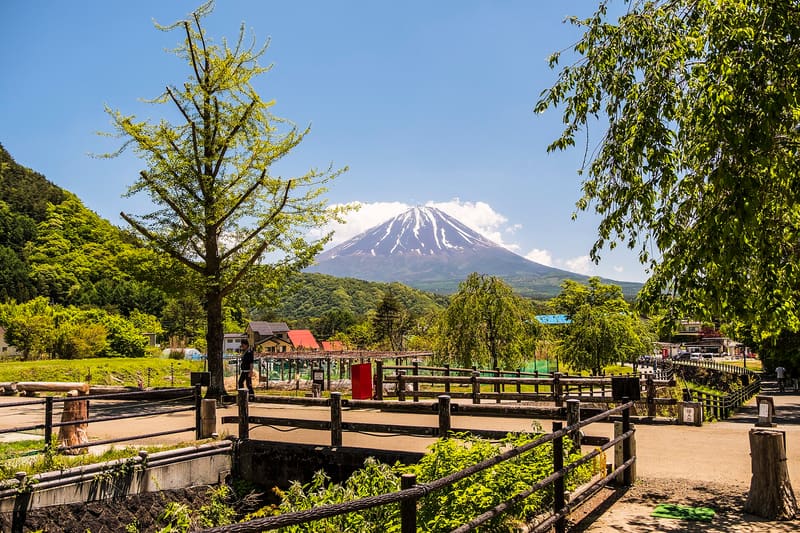 Saiko Iyashi no Sato Nenba9.1 kmphoto by Davide Mauro · CC BY-SA 4.0