The Anime Trip
🌐 EN ▾
ItalianoEnglish繁體中文(台灣)繁體中文(香港)日本語
PLAN YOUR TRIPMy tripSign in / Sign upSign in / Sign up

Miyagi

Japan Kokeshi Museum

日本こけし館

Open on the mapwith over 1,800 wonders of Japan

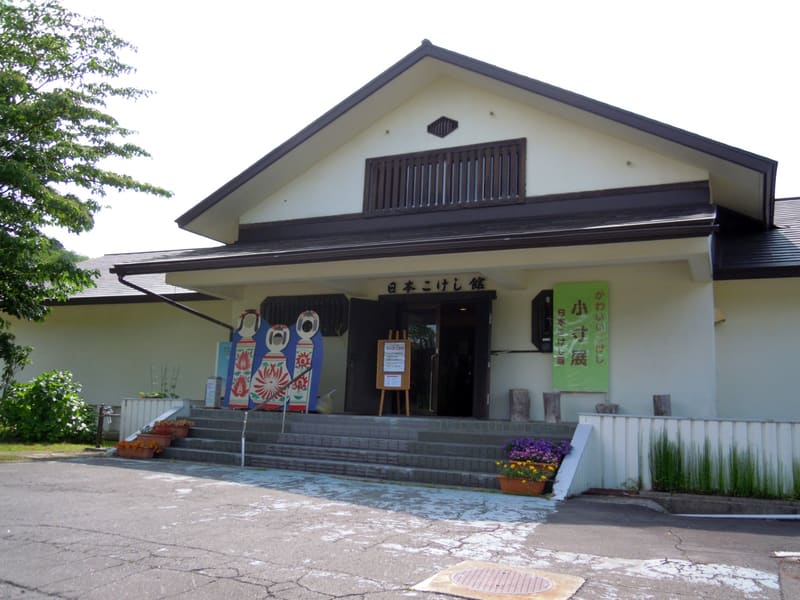
Japan Kokeshi Museum (日本こけし館)
photo by Yauchi · CC BY-SA 4.0

The first dolls date back to 1811, but the name ‘kokeshi’ was only fixed in 1940.

The hall tells the story of the doll's birth (in Naruko, the museum says, the oldest place where it is made) and you can see the two-handed lathe that hollows it out and paints it, with a different craftsman demonstrating every day. The collections come from three donations: that of the poet and children's writer Fukazawa Kaname, from 1953; that of Mizoguchi Saburō, made up of small pieces; and that of Prince Takamatsu, who visited Naruko several times and whose collection was donated by his wife after his death. Next to it, a small shrine, the Kōtai Myōjin, is dedicated to the god of the lathe, and visitors hang handwritten requests there.

The museum grew out of the collection that the poet and children's writer Fukazawa Kaname donated in 1953 to the town of Naruko (now part of the municipality of Ōsaki), and out of the dolls that, from 1957, craftsmen from all over Japan went on offering every year at the Kokeshi Festival: seven years of construction, opening in 1975. The doll itself, according to the museum's reconstruction, was born in the hot-spring area of Tōhoku between 1804 and 1830, when the woodworkers who turned bowls and trays (木地師) began to make them too, as souvenirs for children visiting the hot springs, with a style of decoration influenced by papier-mâché dolls, Tsutsumi dolls and poppy-seed dolls; a document from 1811 already refers to them as ‘dolls’. The name ‘kokeshi’, written in three hiragana syllables, was only fixed in 1940 by an assembly of collectors and craftsmen, to put an end to the babel of regional names (kogesu, kōgeshi, kokesunboko, kiboko, deko, deku) that made it hard even to order them. A document from 1862 calls them ‘kofukeshi’, reading in it the wish to be granted children (子授けし): the band pattern on the head, the mizuhikite, comes from the ceremonial court dolls of Kyoto, and this is why the kokeshi remains an auspicious gift for children's growth.

ℹ️ ⚠️ The official website, updated on 20 August 2026, gives different hours from almost all the guides around: 9:00–16:00 every day from April to December, last entry at 15:30, and no longer 8:30–17:00 from April to November as you can still read on tourist portals. Closed from January to March. The ticket, on the same official page, is 500 yen for adults, 300 for high school, 200 for junior high, 150 for elementary school (individuals; groups of twenty or more: 400/250/170/130); reduced to 450 yen for anyone who has the JAF card, the Miyagi safety association card, a shared taxi or the local ‘geta tegata’ voucher, is over seventy, or has the Kahopyon club card. ⚠️ It is a higher price than the one still circulating online (400/160/120 on sites such as the prefectural tourism board and the local Naruko tourist association, the latter dated 2023), consistent with the notice, on the same official site, that since 2025 mail-order sales have been suspended ‘for the price revision’ (通信販売は2025年値段改正の為中止中). Car park on site. Tel. 0229-83-3600, fax 0229-82-2589.

🚉 Naruko-Onsen · 31 min walk

Holidays in Japan? Plan them with us.Over 2,000 real places, a day-by-day itinerary.FreeOpen the map →

Sources: kokesikan.com · kokesikan.com · kokesikan.com · kokesikan.com · miyagi-kankou.or.jp · rurubu.jp · welcome-naruko.jp · city.osaki.miyagi.jp

Nearby
All series · Open the map

Japan Kokeshi Museum (日本こけし館)
Open on the mapwith over 1,800 wonders of Japan
Japan Kokeshi Museum (日本こけし館)
photo by Yauchi · CC BY-SA 4.0

The first dolls date back to 1811, but the name ‘kokeshi’ was only fixed in 1940.

The hall tells the story of the doll's birth (in Naruko, the museum says, the oldest place where it is made) and you can see the two-handed lathe that hollows it out and paints it, with a different craftsman demonstrating every day. The collections come from three donations: that of the poet and children's writer Fukazawa Kaname, from 1953; that of Mizoguchi Saburō, made up of small pieces; and that of Prince Takamatsu, who visited Naruko several times and whose collection was donated by his wife after his death. Next to it, a small shrine, the Kōtai Myōjin, is dedicated to the god of the lathe, and visitors hang handwritten requests there.

The museum grew out of the collection that the poet and children's writer Fukazawa Kaname donated in 1953 to the town of Naruko (now part of the municipality of Ōsaki), and out of the dolls that, from 1957, craftsmen from all over Japan went on offering every year at the Kokeshi Festival: seven years of construction, opening in 1975. The doll itself, according to the museum's reconstruction, was born in the hot-spring area of Tōhoku between 1804 and 1830, when the woodworkers who turned bowls and trays (木地師) began to make them too, as souvenirs for children visiting the hot springs, with a style of decoration influenced by papier-mâché dolls, Tsutsumi dolls and poppy-seed dolls; a document from 1811 already refers to them as ‘dolls’. The name ‘kokeshi’, written in three hiragana syllables, was only fixed in 1940 by an assembly of collectors and craftsmen, to put an end to the babel of regional names (kogesu, kōgeshi, kokesunboko, kiboko, deko, deku) that made it hard even to order them. A document from 1862 calls them ‘kofukeshi’, reading in it the wish to be granted children (子授けし): the band pattern on the head, the mizuhikite, comes from the ceremonial court dolls of Kyoto, and this is why the kokeshi remains an auspicious gift for children's growth.

ℹ️ ⚠️ The official website, updated on 20 August 2026, gives different hours from almost all the guides around: 9:00–16:00 every day from April to December, last entry at 15:30, and no longer 8:30–17:00 from April to November as you can still read on tourist portals. Closed from January to March. The ticket, on the same official page, is 500 yen for adults, 300 for high school, 200 for junior high, 150 for elementary school (individuals; groups of twenty or more: 400/250/170/130); reduced to 450 yen for anyone who has the JAF card, the Miyagi safety association card, a shared taxi or the local ‘geta tegata’ voucher, is over seventy, or has the Kahopyon club card. ⚠️ It is a higher price than the one still circulating online (400/160/120 on sites such as the prefectural tourism board and the local Naruko tourist association, the latter dated 2023), consistent with the notice, on the same official site, that since 2025 mail-order sales have been suspended ‘for the price revision’ (通信販売は2025年値段改正の為中止中). Car park on site. Tel. 0229-83-3600, fax 0229-82-2589.

🚉 Naruko-Onsen · 31 min walk

Holidays in Japan? Plan them with us.Over 2,000 real places, a day-by-day itinerary.FreeOpen the map →

Sources: kokesikan.com · kokesikan.com · kokesikan.com · kokesikan.com · miyagi-kankou.or.jp · rurubu.jp · welcome-naruko.jp · city.osaki.miyagi.jp

Nearby