
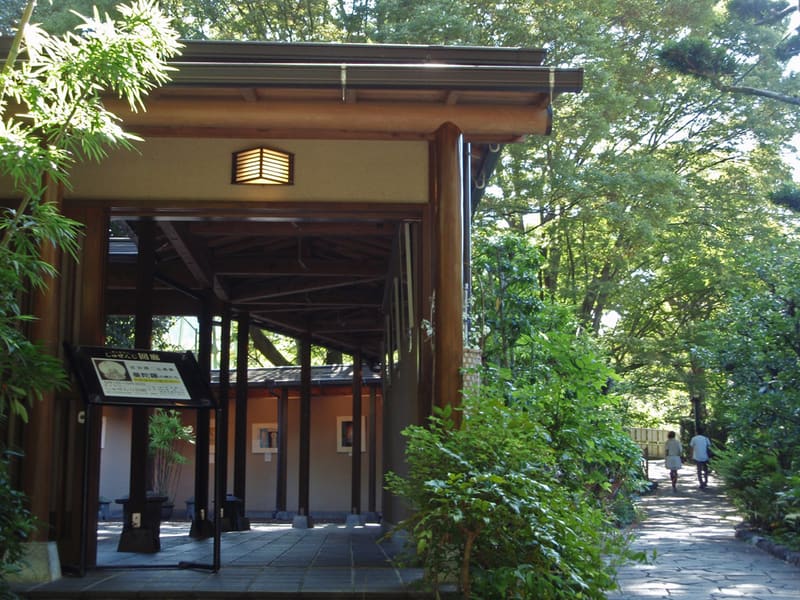
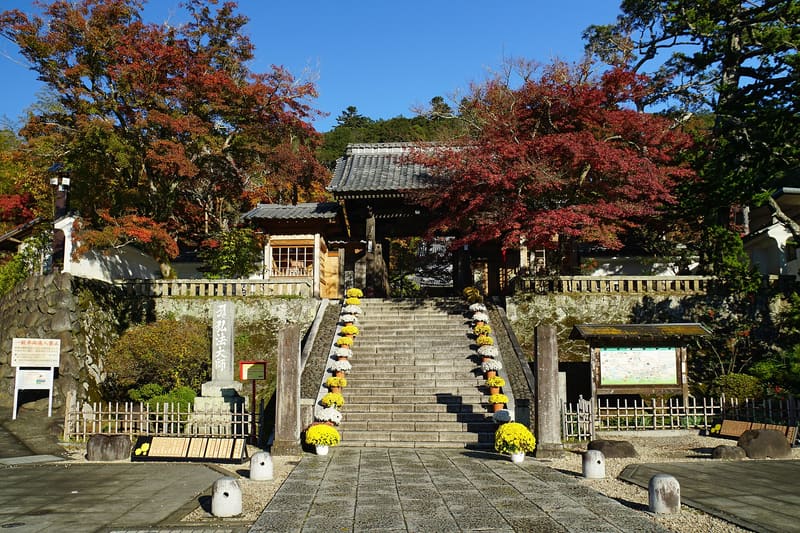
In 807 Kūkai split a rock with his vajra: from it sprang the oldest spring in Izu.
The legend that opens the history of the oldest onsen on the Izu Peninsula: the monk Kūkai (Kōbō Daishi), passing through in 807, saw a boy washing his sick father's body in the Katsura River and, moved by his filial piety, struck a rock with his vajra (独鈷), making hot-spring water gush out: the origin of the Tokko-no-yu, still visible on the riverbed. From there the bamboo path (竹林の小径) begins, about 400 metres between the red-lacquered Katsura-bashi bridge and the Taki-no-shita Bridge.
Shuzen-ji temple, founded according to tradition by Kūkai himself in 807, gives its name to the hot-spring town that grew up around it, often called ‘the little Kyoto of Izu’. The historic centre is squeezed along the Katsura River between ryokan, tea shops and footpaths.
ℹ️ The bamboo path and the Tokko-no-yu (today only a footbath that can be visited, not used for bathing) are always accessible and free. The temple has its own hours. From Shuzenji (Izuhakone Tetsudō station) about 8 minutes by bus plus 3 on foot to the terminus in the hot-spring centre.
🚉 Shuzenji-Syo Gakko · 5 min walk
Holidays in Japan? Plan them with us.Over 2,000 real places, a day-by-day itinerary.FreeOpen the map →Sources: ja.wikipedia.org · rurubu.jp · shuzenji-kankou.com
Nearby
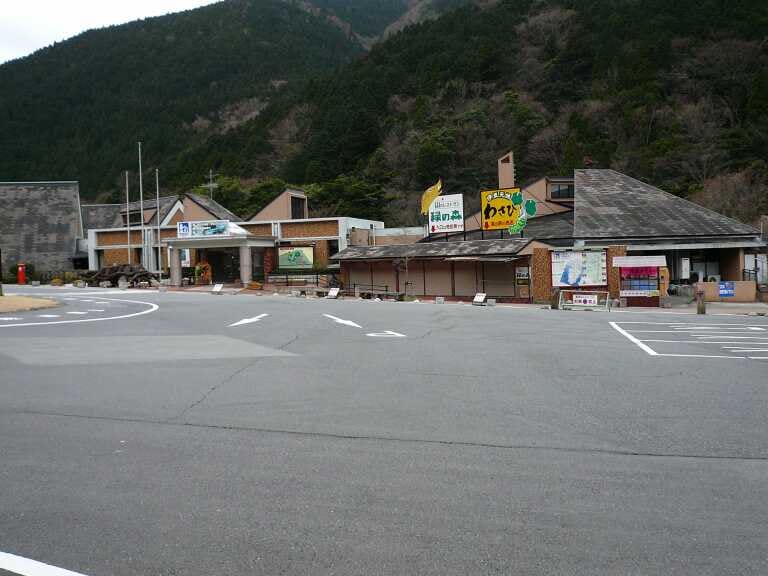 Amagi Wasabi Fields11.5 kmphoto by Zerozeroman00 · CC BY-SA 3.0
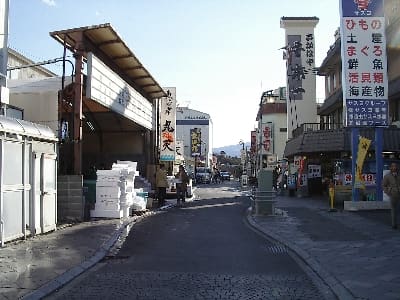 Numazu Port14 kmphoto by 木林森 · CC BY-SA 3.0
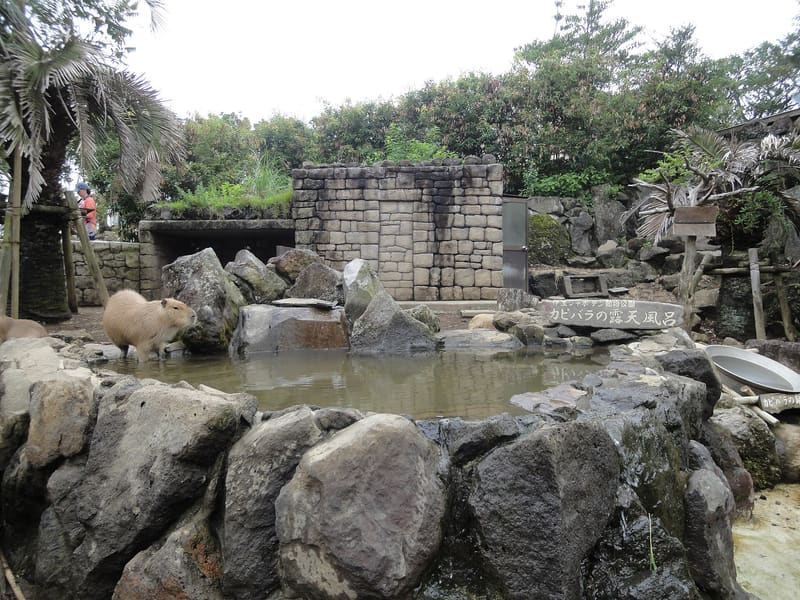 Izu Shaboten Zoo and Cactus Park17 kmphoto by inunami · CC BY 2.0
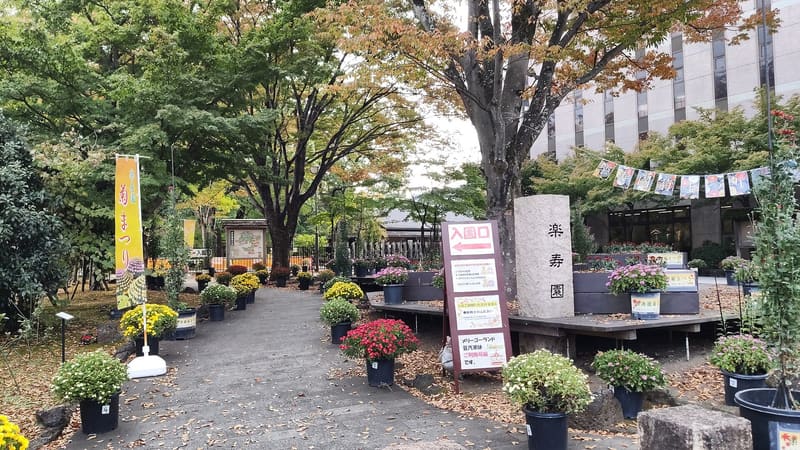 Rakuju-en Garden17.1 kmphoto by Drivephotographer · CC0